Marketing

    The World Got Flatter.

    0

    I write a good deal about pent up demand. When you develop a product or service for which there is pent up demand you tend to ride a nice wave of sales and market share gain. It’s a supply and demand thing. But what happens when you are a “beyond the dashboard” marketer and create a product with no demand at all. I’ve been there. It’s exciting. And nerve-wracking.

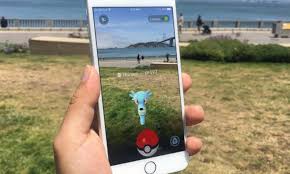
    Pokemon Go is a product for which there was pent up demand. Maybe. Ish. I spoke to a couple of kids who thought the idea silly – of an age where they tho0ugh tis was not cool. But there are gazillions of kids playing and enjoying it. Not looking over their shoulders, not over-analyzing it; just walking around with a heritage game evolved to use new VR technology.

    It’s genius. And transformational. It’s a social computing breakthrough that will change the world.

    Stay tuned. The world just got flatter.

    Peace.
     

    Empathy Tactics in Marketing.

    0

    I worked on a weight loss modality launch a couple of years ago called Ketofast.  A similar product was marketed in the U.S. called the Bride’s Diet by a physician in Florida. He targeted brides who wanted to lose 10% of their body weight in 10 days. As director of marketing for Ketofast I decided to target the morbidly obese. Big diff.

    One of the tactics I suggested in the marketing plan was a film documentary whereby we would follow for ten days (the time of one Ketofast fast) ten people using the weight loss regimen. For all the other ideas in the plan the documentary had the biggest upside for putting Ketofast on the map.  The key to the documentary was a deep dive to generate empathy. By following around morbidly obese and chronicling their lives and the weight loss experience, it would let others suffering from obesity know that someone really cares. That someone is in tune with their very real lives.

    Sadly, the launch never happened in the US. But the documentary and, really, the empathy angle has stuck. Every marketing plan needs an empathy tactic. Does your plan have one?

    Peace.  


    What Pokemon Go Means to Marketing.

    0

    pokemon go

    I talk about the branding and marketing value of a category or incipient category in which there is “pent up demand.”  The flash boom growth of Pokemon Go is one such example. I know because I live near a park that is a waypoint (gym?) in the VR world that is the game Pokemon Go.  Cops have closed the park entrance, overflow teens and mills walk the streets after dark near the park in hopes of a glimpse of a creature. They break the law, entering the park, after hours just to play. Kids (may I call them kids?), who grew up on sedentary video games, Gameboys, and consoles have been waiting a long time to be unleased. Rather than shoot up bad guys with and against global acquaintances (guns games are becoming passe for kids), they’re actually out and about, meeting people. Virtual world fun in the real world.

    In 10 years, many of these kids will be saying about their spouses “Remember meeting while playing Pokemon Go in the East Village?”

    Many thought porn would be the first virtual reality (VR) breakthrough. Wrong. It’s promotional gaming.  And we’ve only seen the beginning. Marketers will figure this one out in ways that will reinvent promotion. Imagine developing a game in which you can knock 50% off the price of a TV for a little walking around time investment? This ain’t no “treasure hunt” walk about my friends, it’s a VR learn and share experience that’s going to be a woosh for marketing development companies.

    Yesterday my dentist asked me to suggest a good marketing job for an intern. My answer today?  Get a marketing-development job that lets you dabble in VR. Bam!

    Peace.


    Would You Like “Trust” With That?

    0

    Chipotle is spending a shit ton of money on a short film produced by Creative Artists Agency Marketing with Brittany Howard lead singer of the Alabama Shakes and other bells and whistles in the hope that it can correct is loss of sales (said to be 1/3) due to its tainted food problems of last year.

    The New York Times reported the story to day and brand expert William G. Daddi was quoted as saying “Chipotle is trying to reassure its connection to wholesomeness and quality, but it does not address the fundamental issue here, which is a breakthrough of trust between the brand and the target audience, it risks leaving issues unresolved.” He goes on to say the company needs to share what it has done to resolve the problem – and there he is absolutely correct.  But it’s the first part of his quote I take issue with.  That’s the stuff that gives brand people a bad name. A breakthrough of trust?  Chipotle is a fast food restaurant, not a politician. Trust is not a core value of Chipotle. It’s a company that feeds millions of people a day. When it comes to really fresh food – food untainted by preservatives – stuff happens. It’s awful and must be root-caused and fixed, but this is life. Plants die, bacteria lives. Get over it.

    What Chipotle needs to be focusing on is what it always has: A mission to deliver fresh, humanely-sourced organic food.  And it needs to demonstrate what it is doing to understand and mitigate problems tied to the contamination. Proof, not a sign-songy story top engender trust.

    No one goes to Chipotle for a big honkin’ buritto with red beans, corn salsa and trust.  Fix the problem, share the proof and let’s move on.

    Peace.


    Newsday’s New North Star.

    0

    Patrick Dolan bought Newsday back from European Telecom company Altice yesterday and so Newsday is in the, tah dah, news. I like the move. Over 15 years ago I wrote the Newsday brand strategy that went on to be its tagline for many years.  It was a tight brand strategy — competitive with the NYT, offered a very home-town and hearth angle, and strong family pull.  The brand claim was “We know where you live.” (A brand strategy remember, is one claim, three proof planks.) The tagline ended up being “It’s where you live.”

    By substituting “It’s” for “We know” the strategy was more than partly eviscerated. The emphasis is all wrong. The push back from Newsday was “It’s stawker-ish and creepy. Voyeuristic.”  Too silly for words, was that criticism.  Putting the emphasis on Newsday as a place or community, rather than a journalistic endeavor devoted to understanding what makes Long Islander tick, may sound subtle but it was huge.

    We know where you live is a strong today as a claim, as it ever was. Perhaps stronger. As an organizing principle for news, community and digital experience, it is a north star.

    Good luck with the ownership Mr. Dolan, let’s talk brand strategy.

    Peace.


    In Brand Planning Proof Makes the Pudding.

    0

    I was in a meeting earlier this week with a couple of smart agency guys, explaining the exigencies of being a brand strategist. How nobody wakes up in the morning, yawns, and says “I need a brand plan.” Or how the branding business is filled with a small group of people with a special lexicon of marketing and brand gibberish – I call it marko-babble – filled with words like “authenticity,” “brand voice,” “truths,” “journey,” etc. Lots of brand consultants have a process for doing business, but they don’t actually have a framework for what is delivered. Or, a plan for the future.

    I do and I explained it: “One claim, three proof planks. This is the organizing principle for product, experience and messaging. The key to my framework is “proof.” I explained to my agency associates that my discovery, research and strategic development all focus on product proof. Proof of what? Good question. It’s not until the proofs are arrayed that the proof of what raises it head.

    Proofs tend to be grounded in customer care-abouts and brand good-ats.

    One brand planner’s discovery is often much like the next…lots of reading, interviews, primary and secondary research and cogitation. But at What’s The Idea? It is proof that makes the pudding. It is proof that drives the brand strategy.

    Peace.


    What makes a good marketing plan?

    0

    In my lifetime and the lifetime of What’s The Idea?, I’ve probably written 50 marketing plans.  Their formats are all pretty much the same: market situation, key issues, objectives, strategies, targets and messages, tactics, budget and timeline.  To the uninitiated who might read one of these plans, once past the up-front market review and obs and strats, the tactics of one plan might look like the others. Interchangeable almost. probably containing ads, PR, direct, web, promotion and social. Simple, undifferentiated line items on an excel chart.

    The fact is, it’s the brand strategy that really sets one plan apart from the next. Every dollar spent is guided by a brand claim and three proof planks – or supports.  The tactics aren’t just random copy with fill in the blank marketing claims. Every piece of external and internal communications, meant to position and sell, is scripted. Well not scripted, but guided.

    Branding strategy is an organized principle for building brand value and sales, based on consumer care-abouts and brand good-ats.

    Brand strategy is the secret sauce to every marketing plan.

    Peace.


    The Ad Business and Faceboogle.

    0

    It is news to no one in the advertising biz that Google and Facebook receive 60 cents of every dollar spent in online advertising. But when Facebook travels to Cannes in France for the annual awards show and spreads money like drunken sailors, everybody’s senses pick up. Why are Google and Facebook so successful? Because they own the data? Because they own time-online? Because they throw great parties for media buyers? Yeah, a little of all that. But they win in the marketplace because they’re effective advertising mediums.  When an industrial distribution company goes from an ad budget of $300,000 to $1.3 M, most all of which goes to Google AdWords, there has to be a reason. Google AdWords track to sales.

    When the ad-to-sales ratio of a Google or Facebook program is calculated and kicks the ass of all other media, why would a sane advertiser not invest there. It’s about sales…it’s about results.

    Until other ad mediums deliver the attributable sales of a Facebook or Google we will continue to see this growth trend. It’s not sexy but money never is.

    Peace.


    The Unknown.

    0

    It sounds like an AMC cable drama, The Unknown. But it’s the best way to look at any new branding assignment. Go in cold. Everybody wants someone with experience. But they really don’t. They should want someone who can come in and understand the business and brand, seeing them in a new light. 

    The unknown can be scary. In the last couple of years, I’ve worked on assignments in cyber security, global health and security consulting, Accountable Care and web accessibility (making websites and apps usable by those with disabilities). Going in, scary. Coming out, not so much.  When you have no category experience it’s like walking into a dark cave. And that’s a good thing. If you have too much category experience you walk into that cave faster. Not paying as much attention. You can miss stuff. 

    Dump the cache planners. Go tabula rasa researchers. Come to each project anew and clear headed.  You need to feel scared at the beginning of an assignment. It’s a good thing. A productive feeling. It helps you know when you are getting close.

    Peace.  


    SolarCity and Tesla.

    0

    Elon Musk is a fascinating character. His bets on the future with investments in battery operated cars, solar energy and space are legendary. Where the “rust belt” businesses at? Nowhere in this portfolio.

    There’s a news report that Mr. Musk might be trying to collapse Tesla and SolarCity into one company. That’s a little rust belt thinking if you ask me.  It’s corporate governance at its worst. A lawyer-focused, tax-focused parry that will, likely, diminish both businesses.

    The thing about Tesla, as my friend Mike Welch points out, is that the battery charger goes into the wall and the wall is often tethered to nonrenewable energy fed power plants. SolarCity is a smart bet, albeit losing money today. Tesla is a good near term bet but more apt to innovate away from nonrenewable energy if left by itself. Too much could go wrong with a bifurcated business plan.

    In 30 years, if both companies are still alive, SpaceX may be a potential partner. (Mr. Musk’s space exploration company.)  For now, it is good business to keep the companies separate.

    Stop crossing the DNA.  Peace.