Marketing

    Story Vs. Advice

    0

    The last two evenings I attended events that reminded me of a lesson worth repeating.  Two nights ago I was on a panel before a number of Hofstra masters students. Our answers to many of the instructor’s questions were served up as advice. “Do this.” “I learned that.” “If you__, you can ___.”  This is what you’d expect in a teaching and learning environment.

    In the second event, entitled “The Role of Planning Through the Ages” Panel Discussion with Jane Newman, there was a good deal of the same. It was awesome – trust me — but a lot of the knowledge dropped was in the form of teaching.  What I found most fascinating and instructive, however, were the stories. Everyone can remember a story.  Stories that are meaningful to the listener and the teller are best. There are many shitty story-tellers, but few make it far in brand planning.

    In my months studying the K12 education space, I learned that broadcasting knowledge is not particularly effective. This applies outside the classroom as well. Embed your advice in a story and watch the cerebral cortex light up.

    Peace.

    The Marketing Commons

    0

    I wrote a biz/dev letter to a software company owner last week explaining what a pain in the ass RFPs are for most companies. My suggestion was to extend his product in such a way that it replaces RFPs.  Pent up demand in marketing is a great thing.

    As big data engulfs us, there’s a mad rush toward replication and standards that save time. So in K12 education we have Common Core. In college applications we have the Common Application. In business the RFP. But as were search for common, what becomes of the uncommon? I fear it is often lost.

    I sat through an online phone demo yesterday for an amazing platform product, conducted by a really smart tele-sales guy. A brit. He didn’t fall into that trap of repeating my name ad nauseam, but you could tell he was scripted. He even made fun of the script to be a bit uncommon.

    In the marketing field, there are lots of tool makers trying to streamline selling. To make selling common. The reason the ad business is stronger than ever is because of the hunt for the common. The best ad shops are repelled by the word.  Sadly, uncommon by itself doesn’t always sell. Uncommon with a purpose — with a brand strategy — does. 

    That’s why when I sell brand ideas in the C-suite, decision maker invariably buy, but with a pang of discomfort. (Do we have to use that one word?)  That’s when I know I’ve got them. Uncommon.

    Peace.  

    How’re your Apps and Them?

    0

    I was on a panel last night at Hofstra University talking to Masters level students about technology, PR and marketing and a mobile question came up. “Is it better to build a mobile app or use responsive design on your website and send the mobile traffic there?” The answer lies in what the marketer is trying to do or sell – an app is not a website – but this got me thinking about apps. And here’s where I net out. Apps are downloadable tools easily accessed on smarties. But do they need to be downloaded at all?

    One of the panelists got lost while parking on the Hofstra campus and suggested it would have been nice to have had an app that led him to McEwen Hall. Frankly, that app could be sold to any school. But why an app? Why not go to Hofstra, click directions and click a “guide me in” button?

    I just think the functionality of all of these apps will eventually be in the cloud and accessible in real time. Why load up our endpoint devices?  Is it a wireless bandwidth issue? A security issue? A developer remuneration issue?

    Just as we are coming around to not having to distinguish between marketing and digital marketing, I think the proliferation of apps as downloadables will wane and we’ll just have web-based functionality.   What do you think?

    Peace. And thanks Hilary Topper for allowing me into your class.


    Ever Feel Cornered?

    0

    Kathryn Ruemmler, the current white house counsel, is leaving her post in May. A long running presidential advisor, one of her more highly rated skills is her “uncanny ability to see around the corners that nobody else anticipates.”  

    Lots of marketers, myself including, tell stories about Steve Jobs and how he didn’t listen to research on what consumers wanted next. Jobs would tell consumers what they wanted next.  The oft heard “we don’t skate where the puck is, we skate to where the puck will be,” a Wayne Gretsky-ism also supports this forward looking approach. Seeing around the corner is more than a skill.  Tainted Tylenol.  Spittle-covered pizzas. Ignition keys that fall out of the steering columns. All examples of corners that couldn’t be seen around.  Business needs to be prepared for the corners. Those are on the negative side of the ledger; there will be many positives around the corner as well.

    Brand strategy is built upon what customers want and what a brand is good at. One idea, three proof planks is the organizing principle which yields business success. The planks look backward and forward. Coca-Cola is about refreshment and refreshment is way more than high fructose corn syrup, for instance. Forward looking. 

    When you evaluate your brand plan ask yourself if it is built to see around corners. Peace. 


    Websites That Don’t.

    0

    A lot of money is exchanging hands today in the design and manufacture of websites. People get the “Is” of the website.  It’s a thing. Every company needs a site. But the vast majority of websites are all about the Is not the “Does.” And if there is a sense of Does, it’s about offering information. Contact. About. Products.  Some conduct ecommerce on their websites, but very few.

    The best websites start with the “Does.” What is the role of the website in moving a customer closer to a sale?  I think it was Ford’s James Farley who first said “Good advertising makes you feel something, then do something.” 

    We might call this approach doability. Doability before usability.

    As ad agencies wean themselves from making just ads and move toward selling applications and selling buildables, they will transform what the modern website looks like. And I can’t wait.  Brain Solis of the Altimeter Group said last year “It’s 2013, why do websites still suck?”  Because they are overlooking the Does.

    Brand planning starts upstream, pairing what a company is good at with what customers want.  Great websites do the same. They start upstream. Call it customer journey or whatever you like, but websites are about predisposing customers toward a sale at the very least and about placing an order at the very most. So please don’t share this post. Write or call me and let’s do.

    Peace.

    Let the Wearable Games Begin.

    0

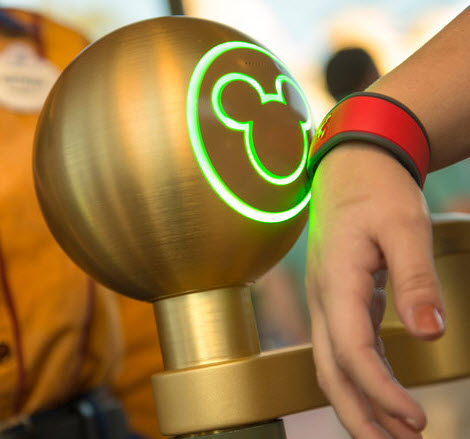
    disney bracelet

    There’s a story today on the cover of The New York Times Business Section on Disney World’s launch of wearable technology intended to improve vacationers’ experience in the park.  It is a wonderful commercial idea. Using a wrist band, not dissimilar from a FitBit or Lance Armstrong bracelet, this puppy will port to your credit card, have geolocation, personal information (“Cinderella says Hello Steve”), and, of course, the ability to track lost children. Limitless are the apps and advantages for this piece of wearable tech.

    ScholarChip smart cards were just sold into Baltimore County schools for security, attendance taking, visitor managment and a few other things. The ultimate promise of these cards is to improve student learning. Not many of those apps are available yet, but they’re coming – married to evolving “individualized learning” pedagogy.  Today smart cards have to pass by a reader. So 2010, but a good start. Wearable is so in that future.   

    At Dizzy World it looks like readers are also needed though anyone can see the future is about ambient wireless readers. Disney World is investing $1B in this technology and though it is probably going to go all Healthcare.org for a couple of months, is an amazing test case for the future.  (Think of the marketing implication people.)

    Right now bracelets seem to be the best user interface for wearable. Glasses are cool, working in the ocular realm, but inhibit dexterity.  Handhelds aren’t going away – ish. Watches are bracelets. Buttons, broaches and clip-ons make sense.  Ohh wee.

    Let the games begin.  Peace.

    CBS and Google.

    0

    A little over 4 years ago I predicted Google would break up into 3 different companies.  It would happen in about 48 months, the non-prescient post suggested. I was wrong. The post had over a 1,000 hits, partly because of a point I made about Google’s culture of technological obesity, a tidbit picked up by Steve Rubel and Life Hacker. Who knew?

    Today CBS, a proclaimed content company, has made public its plans to spin off and IPO its outdoor business. A $3.3B advertising and real estate venture, it is deemed non-core. CBS is rolling financially, owning an amazing share of prime time TV viewership as well as a successful film business, a cable channel and online properties. CBS is making the move during a period of earnings strength. It’s still about portfolio focus.  

    My Google trivestiture prediction was also about focus. But without any government pressure, Google has decided that a diverse portfolio, kept buoyant by mad ad revenue, is the best way forward.  Google can afford to pizzle away money on Motorola, and self-driving cars and, and, and.  Google is taking the GE approach, becoming a diversified technology company. And I’m liking it.

    CBS gets what it is good at — content. Its diversity comes from flavors of content: prime time, movies, cable and online. Google is good at putting the world’s information at our finger tips… yet it is looking beyond the dashboard toward what’s next.  And as long as Google can turn a profit, it’s a brilliant approach. (That’s why Facebook bought Oculus Rift.  It’s non-core, but it is about the future.)

    For businesses, focus gets you smarter and better. Diversity gets you smarter and better. No wrong, until the shareholders start to wince. Peace. 

    What is a brand brief?

    0

    WTI brabd brief masthead

    A brand brief is the place where lots of data and learning are boiled down into a simple unique selling idea. The brand brief I use was borrowed from McCann-Erickson while under the reign of Peter Kim in the 90s. As hard as I’ve tried to make it better, I’ve only been able to tweak it. It provides a wonderful logic that when filled in serially (in order) delivers a strong reason to buy. Or Selling Idea as Mr. Kim called it.

    I know when I’m not there yet or not fully prepared when tripping over the logic flow of the brief. Each element, an opportunity to create a mini-headline, contains an important insight. Done right, the insights link together like a beautiful song.  

    What makes this brief a brand brief rather than a creative brief is that beyond the main strategy idea (claim) lie three support planks. This is an addition to the McCann brief. These planks focus and array the proof, pounding home and cementing the claim in the minds of customers. Claim and proof. There are only three planks because that’s what consumers can remember.

    If working with a feisty creative person who doesn’t like long briefs, I can jump the logic and hit the idea. But the logic is telling, so I prefer the long form.

    The brand brief is my secret sauce and one only shared with clients…though I am happy to share some of its outputs, upon request. Peace.

    Steve at WhatsTheIdea


    Camper’s slow build in the U.S.

    0

    My son is at an age where he’s buying suits and ties and shoes for work. Never one with much fashion sense, my only fashion-forward advice to him is to buy things that are just a little bit out of his comfort range. I use the advertising and market analogy that if it makes you feel a little uncomfortable, it’s probably good. Noticeable. Unique. 

    camper shoes

    The shoe brand Camper is one I’ve admired for a number of years. Though the logo looks American the shoes def possess a European flavor. These shoes were hipster before hipsters. They are loud, colorful, not quite garish and that’s what I love about them. I’ve tossed a few strategic ideas over the transom to a sales friend at Camper, with little success. One such idea was to make feet sexy.  

    The last time we spoke Camper was not killing it in the U.S. That said, the brand and style portfolio are so strong it can’t help but (take that grammarians). Camper will be a huge in the U.S.  A nice budget would help but, alas, the U.S. is an expensive media market, and canvas and dye don’t grow on trees. So the brand will have to creep along by itself until an unexpected fashion forward group pulls it through the garden hose.  Keep an eye out!

    Peace.

    Plumbing and Mining the Consumer.

    0

    Over the years, obesity has been a subject I have studied quite closely. I’ve endeavored to understand and strategize obesity surgery, weight loss programs, post-surgery protein drinks — and I even wrote the brand and marketing plan for a physician-supervised weight-loss modality launch in the United States.

    Understanding the personalities and influencers involved has always been part of the deep dive. The obese, their family, physicians, other care providers – even payors (insurance approvers) are all part of the picture. It is an emotional, layered, personal condition with lots of psychological underpinnings. (Guess what the word “salad” means to an obese person?)  And sadly, the weight regain recidivism rate for the obese is higher than prison recidivism. Much.

    The ability to submerge oneself into a target, to know the targets’ sensitivities, cues, tells and thoughts is what brand planners do.  As a kid in the business, making ads and taking names, I hadn’t a clue about the target. Today, the target is everything.

    When explaining brand planning I say it is a process of understanding what customers care about and what a brand is great at. The hardest part of the process is the plumbing, mining and prioritizing of consumer careabouts.

    The payoff?  Better brands, better marketing and better, more humane brand planners. Puh-eace!