Home Blog Page 195

Sneaker brands lack diff.

Do you have a favorite sneaker brand?  What is it and why. 

I love Converse Chuck Taylor All-Stars, though I have to look to see how you spell Taylor. Black, high tops.  I like the style, the weight, the cost and for me they are a roots product.  As for my basketball sneakers, frankly Scarlett I don’t give a damn.  Probably more often than not I buy Nike, but that is more a function of what’s at the store.  I want to pay $50-100, I want them to last and not smell after a few months (good luck with that) but my allegiances are not strong.

I watch a lot of sports.  You’d think the advertising would have made an impression on me.  I recognize the Michal Jordan logo and like Michael Jordan. That said, I  have no interest in buying his shoes over any other.  That’s like 50 billion dollars of advertising later.  Why am I not a Nike or Jordan fan?  You tell me.  I suppose it is because they have not built anything meaningful in to the design, and patented it, that I care to invest in.  They have a great creative shop in Wieden+Kennedy. The ad craft is wonderful (I still love Mars Blackman) however there is nothing as a consumer I can tell you from a product standpoint that differentiates the sneaker beside the logo. (Not like nfinity with its “designed for women” cheerleading sneaker, for instance.)

Do you have a favorite sneaker?  If so, please tell me why. Peace!

Taglines as Word Grabs.

0

I don’t know why colleges don’t get branding. At its most basic a brand starts with a tagline  — a 2 to 5 lyrical “word grab” of company or product intent or mission.  Tagline’s are often campaign ideas written by ad agencies, that are so well received they find their way under the logo. For years. Mostly misunderstood, taglines lock up with logos and lie like faded wallpaper in poorly lit hallways.

Hofstra University has a new tagline: Pride and Purpose. It’s not 3/4s bad.  I’m pretty sure the word Pride refers to Hofstra’s mascot…a group of lions. Pride is a great motivating word in brand planning – one I chase all the time.  And Purpose is what all great university educations are supposed to engender in students.  The fact is though, when a good tagline does not support the advertising – and I mean every ad – someone is not doing their job.  You can’t tell the world you are all about Pride and Purpose then make a non-supportive, generic claim.  You just can’t do it.  And if you do, the tagline and strategy are either wrong or the leadership is.  Sorry to go all hard butt on Hofstra, but they just came off of 8 years of a campaign called “the edge” which was built around an art director design frame showing an arrow in all the print work.  It’s incredible to me that any academic institution would not know how to create a claim and prove it. And Hofstra is not alone.  The entire college and unversity body of work is abysmal. Peace!

AT&T Drafting Mobile.

0

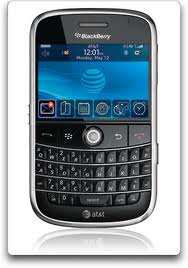
AT&T, a brand that taught me many things about advertising and marketing, is rudderless from a branding standpoint.  Yeah, they are making ads. Yeah, they have a branding idea “Rethink Possible.”  And now they have a campaign idea “It’s what you do with what we do” intended to make the brand idea work harder.  But frankly it’s a qualifying idea that waters down the already watered down. Ester Lee and David Lubars know better.  This is a billion dollars of nothingness in one man’s opinion.

Back in the 90s both of these ideas would have been corporate advertising efforts for AT&T — a company that didn’t like to do corporate advertising.  AT&T liked products and services.  Bell Labs, now AT&T Labs, was a hotbed of innovation. It was innovation. I’m sure there are hundreds of engineers who will argue this from a patent point of view, but the labs have lost their way.

AT&T has become a mobile phone company with a bad rep for network, thanks to the iPhone’s history of dropped calls. For 20 somethings that has defined the company.  So Rethink Possible is simply a tag-along mobile strategy drafting a category whose imagination is being captured by Apple.  BBDO can do better. AT&T can do better. The labs can go better. Peace! 

AOL Brand. Buh bye?

0

The Huffington Post is gaining momentum.  A lot has been written in the media world about Ms. Huffington and Mr. Armstrong, the politics of bringing these two companies together and the lack of harmony.  Most of the press has been bad.  Sadly, all the falderal has taken the public’s eye off the ball. It appears that AOL and the Huff Post have been moving forward regardless.  Ms. Huffington has recently been given more responsibility at the company for most everything but advertising. That too, may move to her at some point.

The Huff Post started as an online media company. Online created and defined it.  Now it is just a good, improving media company in a digital world.  By June it will offer steaming TV content on the web 12 hours a day.  It is also growing internationally with a number of global news bureaus. The company has also invested in new heavyweight marketing and comms talent. The two companies are integrating, sharing a vision and evolving.  Apparently, while all the backchannel stuff was going on and the funky press bouncing around, there was a plan.

The Huff Post is a great media property and will be quite a success story. AOL’s days as a brand may be numbered. Kudos to Tim Armstrong and Arianna Huffington.  Happy coo-king.  Peace! 

Charles de Gaulle Airport – the brand.

0

Just reading in The New York Times today that Charles de Gaulle Airport, Europe’s second most traveled, is number 34 out of 83 in flyer satisfaction. The culprit: “sprawling buildings with bewildering layouts, interminable waits, forgettable shops and restaurants, and often indifferent personnel.” 

Sounds like something that would take hundreds of millions of Euros to fix. But maybe not.  All big airports are sprawling — they have to be.  Think about it.  Planes can’t take off and land at a good pace without sprawl.  So what needs to change is the organization of that sprawl.  Bewildering is fixable.  Good communication, good signage, ergonomic re-laying out of buildings, better transportation design and a little compromise among the airlines are fixable. Some airlines may have to consolidate space or even switch buildings. The parties need to come together. The interminable waits may require some technology upgrades, even more compromise (unions/competitors/gov’t) and once again better communication.

And, as for forgettable shops and restaurants and indifferent personnel?  If the other fixes are made, these will fall into place.  Remember we are talking about one of the busiest locations in the world…with lots of wallets and lots of income in those wallets. And oh, it’s France. Paris, France.

Before I picked up a shovel or an architect’s rendering, I’d create a brand strategy for Charles de Gaulle: an idea and some organizing principles. Sell that to all parties, then start to think about how to spend the money. Not easy…hard.  But very doable. Peace!      

Launching a New Product.

0

Back in the day, okay back before the day, marketers learned how to market by selling one-at-a-time. You made something, let people try it — if they liked, you sold it.  What was learned from the first sales experience was parlayed into the next and so on until roll-out.  First limited, then as demand dictated.

Today, many small and mid-size company goods and services, especially of the tech variety, are incubated, venture-funded, business planned, social media-eyezed and launched without this up close and personal one-at-a-time process. Many nouveau markets go big using accelerated timeframes without allowing for an evolved sales immersion. Fall forward fast some call it.  If you are using other people’s money, it’s like going to college in reverse.

David Ogilvy once said, and I paraphrase, “Our business is infected with people who have never sold a thing in their lives.” He, of course, was referring to the ad business. 

My suggestion to start-ups today: It’s okay to incubate and code and pitch, but please, please, please don’t forget to sell.  Look into the eyes of your buyers. Feel them. Listen to them. Don’t be shined on by you uncle in the business. Don’t let the dream get in your way. Peace.

Symmetry.

0

We love symmetry in our lives. We love it on our design. In our music. Symmetry is balance. Order. Brand planners like order and symmetry yet they also know a strategy must not be replicable. It must be unique. Others can lay claim to the “refreshment” strategy, but when Coca-Cola says it, it has unique meaning. Why? Because nothing refreshes like a Coca-Cola. It’s doesn’t own the word, it owns the idea. That’s due to the coca bean and a special highly guarded recipe. 

Many brand ideas are replicable as are many products (there just aren’t that many Coke’s out there), so the notion of creating an organizing principles in the form of “one idea supported by 3 brand planks” allows for that differentiation. It also allows a brand flexibility and the ability to cover new ground. Sameness is not symmetry. Geico is beginning to realize that. 

Campaigns come and go, a powerful branding idea is indelible. And supported by symmetry and smart brand planks, a brand plan can last many lifetimes. Peace.

Porous Marketing

0

My brand plans contain a call to arms brand promise, atop three business winning proof planks. The planks must support the promise. Separately the planks are business building, together they are business winning – market share winning.  This is the organizing principle behind banding and good marketing.  It helps define and decide the way forward.

I often say “Marketing is simple. It’s all about claim and proof.”  Organized proof. But sometimes brand planks are aspirational — there isn’t a lot of proof yet.  In those cases it’s important to share the plank theory as well as the proof, limited though it may be. The theory sets up the plank goals and guides development of how one might productize, develop and pursue the proof. This is especially helpful in a services business.    

Claim without proof is why advertising and marketing is often so porous. Claim and proof is how to win. See? Simple.  Peace!

Marketers as actors.

0

Acting is an interesting thing.  Big name actors who don’t have the luxury of being able to hang with “regular people” often have to study them, so they can get into character.  When in character, these actors become the regular people they mimic.  The more regular, the greater likelihood of acting awards. 

Have you ever seen a friend, acquaintance or family member act in a movie or on TV?  They come across as stilted, odd and, well, like high school actors.  Clearly, they are just not being themselves.  To the rest of the world they may be doing a fine job, but because you know them – they’re acting.

Marketers and their agents, when creating advertising, are like actors.  They create meta worlds for selling. Even when they are doing case studies or live consumer capture testimonials.  Ad agencies are good at telling stories, making people smile and warming a heart or two, but consumers know it is still a form of acting.  That’s why year after year, “word of mouth” and “advice from a friend” win out in terms of product influence.

Brand planners attempt to take acting out of the equation. We try to get to the real. The truth.  The closer the story teller gets to real, and away from acting, they closer the consumer can get to brand promise.  Keep it real, me friendlies!  Peace.

Flipping the Video Teacher.

0

I’d like to advance a hypothesis. Working in the educational development space as I am, I often wonder about creating learning environments (K-12 in particular) that are more conducive to student engagement and lesson retention.  The latest theory – and there are many – is that “student-centered, teacher-facilitated” is the winning approach.   In the vein of the Khan Academy (a kind of a YouTube for lessons) what if for low performing urban kids, the videos were offered in the patois of the street – complete with appropriate urban music beds?  Perhaps a naughty word once in a while for emphasis.

The culture of learning has always been so counter to some kids.  Why not wean those with difficulty learning into more conventional environments by using the familiar?  Get these students attention, win them over through exploration and context, then begin to slowly exfiltrate them towards more mainstream teaching. If teaching is to be student-centered, needn’t we meet students of all kinds half way, yo? 

Silly perhaps. Probably been tried in real life, with a smidgen of success.  But I bet a Khan Academy-like video might do it.  Brand planners understand the importance of “feeling” the audience. Is it time for eduators to do the same?

 Peace!

PS.  The views here expressed are not the views of Teq, Inc.  They are simply the thoughts and crumbs of a marketing blogger with his head above the clouds.