Marketing

    Brown. Not the University.

    0

    At the Social Business Summit 2013 in NYC yesterday Brian Solis said many smart things. My favorite was, and I paraphrase, “It’s 2013 and we still haven’t figured out how to make a website look good.”  It tickled me because of all the marketing tools in the world, the website and the home page are two of the least effective, dumbed-down tools of all.  Were we to take a glass and pour in all our favorite colors – as we know from being kids – the color would turn brown.  Ninety percent of website home pages today are brown. Providing everything for everybody.

    Mr. Solis also reminded us that every Google search done (and there are about 2 million search engine queries per minute) points to a what?  A web page. That’s a lot of brown.

    And now most big time web designers and coders are worried about responsive design and how to get that brown to look good on all platforms: mobile, tablets, PCs, Macs, TVs and soon wrist watches.

    In my opinon website home pages should look less like pretty tables of contents and more like what the brand stands for. Homepages need to be alive and real time. And they need to further the journey…and prove the journey. They should market. Let’s get rid of the all the brown.  Peace.


    Simple leadership.

    0

    I wrote an email this morning to someone in the health insurance space referencing an axiom I love “leaders educate.”  I learned it while working at McCann-Erickson on the AT&T business.  AT&T had some seriously smart marketers back in the day. Post-monopoly.

    When consumers are confused and change is in the wind, they can make bad choices. Uninformed choices. The sturm und drang favors upstarts and competitors.  It is for this reason that leaders need to step up and organize the explanation. To remove the confusion. Simple is memorable. Simple stories, simple examples, simple “if—thens” are what consumers need.  With this out of the way, marketers can then provide the ability for a deeper information dive. (Think iPhone. Not iMultipleDevices.)

    Some businesses benefit from complexity. Law. Finance. Privacy. Accounting. And insurance.  Nothing is too hard to explain and make understandable.  Sometimes marketers are too close and can’t see the simple explanation. This is why technology companies have a hard time branding.

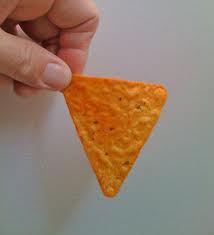
    doritos

    As for the use of education in advertising and marketing, we need to do more. A Dorito chip bouncing around a room on a Super Bowl ad is not educating anybody.  It’s much like sitting in the same class over and over again. Leaders educate. Let’s lead. Peace. 


    Micro Vs. Macro

    0

    The digital age and big data have created two divergent schools of marketing: the one-on-one message tailored to the data trails of consumers, and the big idea which attempts to insinuate itself into the culture through drum beat exposure.  Of course, the latter has to be an idea with resonance; most are not.

    We are still learning how to handle the micro approach and have a long way to go.  Our ability to map consumer twitches toward a transaction and put valued content in their way is a good first step.  That said, it’s complicated, layered and can be more expensive – which is what agencies like, more things to build. 

    As for the macro approach, marketers and agencies have gotten lazy, falling for over-production and flat non-confrontational ideas. Most of these so-called flat big ideas lack poetry. The famous Volkswagen Darth Vader spot was brilliant advertising, but I just can’t parse the strategy. So where do they go next?  Another Darth Vader episode?  

    This is not an either or thing. We need both micro and macro. They can and should work together. But plotted on an X-Y chart showing strategic values and competitors, these efforts must cluster tightly. Around a brand strategy.  For a presentation of some sample brand strategies, with micro and macro legs, email Steve at whatsthe idea.

    Peace. 

    Selling business.

    0

    Native advertising is defined by some as advertising done to look like the content of the media on which it appears.  The ads are tailored to the media. A couple of decades ago if you made your TV ad to look like a newscast and scheduled it to run on the evening news, standards and practices would not approve it.  It had gone too native. Lately, I’ve seen some cable stations using program actors to promote products in commercial pods during the show.  It’s worth a rewind…until you see it’s an ad.  Smart idea actually.

    In the web world, native advertising is doing similar things, allowing marketers to appear to offer site content but then pulling the rug out quickly to reveal a product endorsement. It is a way forward, and if does properly effective yet it will make us callous to the media channel.

    I’m all about value…and native advertising has the ability to add a little value to the selling message, but it does detract from the media channel’s integrity.

    But here’s the thing.  Today many regular ads aren’t native to their own selling message. So why be native to a media property.  Ads are typically native to humor, to visual extravagance, to performance and story but not the product. Let’s fix that first before we go mucking up other media channels.

    Great consumer insights married to emotional and logical selling schemes are the way forward. Let’s not forget we are in the selling business.  Peace.

    Twerking the ad agency model.

    0

    The Jimmy Kimmel’s You Tube video about the Twerk-and-ass-fire, or whatever it was, as of yesterday had 12 M hits. The video explaining it was a hoax had 9 million. Cool idea for the today’s media socialists.  The idea was just that, an idea…an attempt to get noticed.  Heightened by pop culture.

    I love reading Cathy Horyn, The NY Times fashion writer, during NY Fashion Week.  (Sponsored by Mercedes??) She reminds me how difficult and amazing the creative process is.  And how powerful opinion leader coverage can be.  These are things brand planners care about. Things ad agencies (didge included) also should care about. 

    Agencies could take a page from clothing design houses.  They should occasionally open up the creative process to random creative development — a la what some tech companies do, allowing employees to dedicate 10% of their time to personal free-flow creative projects.  Agencies should just have a place where people of all disciplines can meet and play and invent.  I’m not saying creative for creative’s sake and slap a logo on in; I’m saying play with the new tools, audiences and insights then see how they might apply to specific client business problems. Where unlikeminds can exercise.

    Ad agencies today use a serial approach and it stifles creativity.  Just as clothes designers who play around the cutting table with color, drape, pattern and motion, ad shops need a place to play a little more. Feel me?

    Peace.

    Good ad craft.

    0

    Not sure who is doing KitchenAid’s advertising but the print is really good.  A refrigerator ad I read today is headlined “Bring the WHOLE FISH home.”  A fairly exotic women stand mid-ground in a kitchen with left hand held high with flat leaf parsley. The centerpiece of the picture, in high focus, is a silver KitchenAid refrigerator behind our home cook. The hero of this visual story, however, is a lovely whole red snapper.  

    Also on the counter is a large bunch of fennel, lemons stage right in a bowl with limes, and a nice KitchenAid mixer sits in the background.

    The copy tells us the snapper will be roasted Mediterranean-style and the meal will be amazingly fresh thanks to the fridge’s Preserva technology with advanced air filters, humidity settings and ideal temperatures.

    This is storytelling without storytelling.  Great ads make your feel something then do something.  This ad challenges you to be a little daring with your recipes. It makes you hungry and want to cook.  And do so with fresher ingredients.

    The ad is not targeted to everyone — but foodies are likely to be captivated.  I’ve written how good Bosch’s appliance ads are, these are better. Better ad craft. Peace.

    Cornflakes and PTSD.

    0

    I’m reading a book entitled Achilles in Vietnam – thank you Myra – written by a psychiatrist specializing in PTSD. I’m only 4 pages in but realize immediately how it will help in my brand planning consultancy. Vietnam veterans, especially those traumatized, want to be listened to. The whole listening thing is what good planners do well.  And as good as my ear is, I recognize I do a lot of questioning and probing.  That’s not how it works with PTSD.  It’s all about the listen.

    Now I am not for a minute suggesting listening to a mom talk about cornflakes or a self-centered millennial chat on about imported beer is anything akin to a veteran talking about mid-night terrors, but if does give one pause.  A really cool insight I had for home care geriatric patients a couple of years ago turned into a target I called Captains of the Castle. This pay-for service looked at higher income men and women relegated to taking orders from their home nurses. They went from captains of industry to powerless patients.  Rich territory, that.  The point being, an attentive ear, when the talk is serious is seriously important. The more serious the topic the better the ear needs to be.

    So how deeply should we dive in a cornflakes scenario? Should we still listen or should we jump at the shallow insights?  You tell me. (But you know the answer. ) Peace.


    The color of smart phones.

    0

    Tomorrow Apple is announcing a lower cost iPhone along with its latest version of the new iPhone – what will that be the 6?  (Were he around, Steve Jobs would have killed the number thing.)  Anyway, as mentioned last week and long before, I think the Nokia/Microsoft strategy will be to cover the planet with Windows-based smarties and the way to do that will be, though a nice phone at a low, low price. Sold at cost (or a hair below), these Windows phone 8 Nokia hardware devices will be cheaper than two rounds of drinks with your signif. at a NYC hotel bar. Before tip.  I’m thinking US$49.  That’s my price point and I’m sticking to it.

    Messrs. Ballmer and friends will create a Costco-priced, beautiful smart phone and price it in a way that the ROW (rest of world) will be hard pressed to ignore. It will offer the cool tiles interface, a good camera and enough design panache to bump iPhone and Androids growth aside for a while.

    Rather than pay taxes or sit on the billions in the bank, MSFT is going to be bold and give people without smarties an affordably priced piece of hardware (and software) — effectively buying market share.  It will lose then make them billions. It’s a nuh-uh brainer.  (Go Geno and the Jets.)

    And, of course, peace!

    Brands and Consistency.

    0

    Jeff Bezos visited The Washington Post yesterday and was tweeted as saying “I’ve always felt that the most powerful minds in the world can hold powerful inconsistencies.” Well, if the most powerful minds in the world (Einstein, Franklin, Churchill) offer inconsistencies what can we expect of brands?  Brands need a plan, all the more.

    We know when a brand pushes innovation, perception of that brand’s cost goes up. When a brand promotes tasty, it conveys less-than-a-healthy food choice. These values are inconsistent related to a positive consumer value proposition and managing.

    A good brand plan offers consistency.  A brand plan and the brand managers who create, support, and follow it are charged with removing as much inconsistency in the brand experience as is humanly possible. Protect the plan and you improve marketing cost-effective.  Those who do, become zealots….my favorite kind of people.

    The people at The Washington Post have a brand plan but they know about inconsistency. It fuels their business. Mr. Bezos gets their world (for now) and ours. Peace! 

    Market Share Junkies

    0

    Back when Microsoft and Nokia did their first deal a couple of years ago, I thought it a bold move intended to speed Microsoft’s growth in the mobile operating service business. I predicted together the companies would offer a really low cost Windows smart phone and cover the planet with them – buying share at the expense of some near term profit. Nokia handset sales were sliding and Windows phones owned only 3% of operating system market share.  It didn’t happen.  Stephen Elop and Steve Ballmer didn’t pull that low-end-of-the-smart-phone-market trigger.

    With the report today that Microsoft will full-out buy Nokia, I think we may finally have contact. Mobile is the innovation lab of the 21st century and MSFT are share junkies.  Softies love being techies, they love innovation, but market share and market power are their DNA.  Forget share price, forget war chest, forget Xbox Connect. Domination is what gets the softies up in the morning.

    This purchase will unleash beast. The way forward — the big first step – will be global. Nokia should be a big help here. IMHO, Elop will not be the leader. And I think we have not heard the last of Bill. Peace.