Marketing

    Data-Driven Marketing.

    0

    When writing a marketing plan I need to know the size of the category. Globally and in the country I’m working. As the world becomes more data-fied, these figures should he easier to come by. Well, one can hope.

    Television ad spending in the U.S., for instance, is projected by Magna Global to be down 3.5% this year. Good marketing planners will ask “Where that 3.5% will go?” To another medium? Or will it just be the ebb and flow of money in the market? Category data is important so you can see where your brand nets out. Are you growing faster than the category? More slowly? Or are you sliding along with the others?

    Sources of data don’t always agree so picking one is important. And not all data is reported the same way. It’s maddening. Marketers know data is big business and quite expensive. The big guys are willing to pay, the little ones not so much. Category and brand sales data can cost from $5,000 to $10,000. Hefty indeed, for a spread sheet. It’s necessary and worth every penny.

    Though the world may run on Dunkin, marketing runs on data.

    Peace.


    Brand Planning Tip.

    0

    All brand planners have their tools. We use them to corral insights and generate ideas we can sell as organizing principles for the work other will do. My go-to tools are the 24 Questions, my Executive and Sales Team Questionnaire, and a Brand Brief. From time to time I’ve used a presentation format sharing “Insights, Implications and Recommendations” as well.

    Here’s a new ditty I came up with for an art start-up a few years ago. I call it the 10 conundrums. I use it as an interim step before crafting the brand brief. After doing all my exploratory work, quant research and interviews, I cobble together a number of market, consumer and company contradiction. Perplexing contradictions or true conundrums. These I share with the client work team to see how they feel about them. How they deal with them. The dialogue about these points if often quite important. Here’s an example from my art start-up project:

    Art appreciation is personal and subjective. Yet having a trusted art-savvy acquaintance to call upon can influence that subjectivity – adding dimension and a level of comfort.

    Toolkits are nice to have. Reinventing them, adding to them and evolving them are how we get better at what we do.

    Peace.


    The Future of Sales.

    0

    Does anyone want to bet the cars we drive today will be the same as those that will transport us in 30 years? I don’t. Apple is not taking that bet. Seeing the future is hard. Did medallion taxi drivers know UBER was going to upset their market and livelihoods? Did the railroad see airplane travel as a down-the-road disruptor?

    Railroad_Trestle_(Old)Closer to home, do marketers and ad agents see what is coming in the world of selling? Do they recognize software, devices, location and databases will make it easier for sellers to find, meet and incentivize buyers than ever in history? Presumably with less mark-up.

    I may be wrong, but as our future selling tools and conveyances change (advertising, distribution channel, and overhead) one thing that will remain will be brand strategy. That means name, design, position, and the organizing principle that binds it all together. Of course, that’s what the railroad tycoons said, so I/we must be on alert. On high alert.

    Peace.


    Learn from a salesman.

    0

    One of the things that makes watching the Olympics on TV so compelling is the human interest piece they do on athletes before each event. Usually it revolves around a home town and a hardship conveyed by friends, family or teachers. These back-stories not only set context, but allow viewer a little emotional skin in the game.

    In advertising, this is not really possible. It used to be in the early days of long copy print ads, not anymore; not in this fast twitch media world with smart phone ads the size of a pinky finger.

    The ability to set the stage for selling using exposition is something great sales people do. They story tell with examples tied to the course of the conversation. And they story tell, not off the boiler plate talking points of the company, but using heart and soul of experiences (or proofs) that carry emotional “reasons to prefer” a brand. As I mentioned in my last post, that’s usually not material-based but experience-based.

    This is the heart of storytelling today. And it was learned from belly-to-belly salespeople, as are most great selling schemes and techniques.

    Web sites could borrow a page. Peace.


    B2B Futures.

    0

    An Ad Age article headline today reads “B-to-B E-Commerce Sales to Reach $1.1 Trillion in 2020.” That’s a pretty big number. In 2015 B2B e-comm is expected to amount to about $780B so that is a pretty big jump. Who, pray tell, do we think will be a big beneficiaries of that revenue?

    I’ve written before that Amazon Wholesale will win a great deal of that business. I’ve warned a comfortable local company industrial distribution company, MSC Direct, that Amazon is coming, but they don’t seem to feel the urgency. Probably because they are growing at market rate. Another local B2B distribution company is sending Google checks for $30M every year to help improve their position in search so as to sell their $1B in annual goods.  Again, not a plan.

    To all those who look to the future of opportunities I ask “Who will win this B2B ecommerce business?” Delivery and shipping companies will earn a great deal. Internet device and hardware companies will win. The consuming B2B companies should win, with prices coming down.  Will ad agencies earn? Doesn’t sound like it.

    If you were to build a start-up to take a cut of this vast amount of resource, what would it be. Can you UBER-ize B2B commerce? Segment it? Localize it? Let me know.

    Peace.               


    7 Year Brand Itch.

    0

    LinkedIn says it’s my 7th anniversary at What’s The Idea? – so I guess it is. As someone who counsels others on brand building, it might be a good time to look back on how What’s The Idea?, as a brand, is doing.

    The brand came to life as a blog while I directed marketing for Zude.com. Zude competed with Facebook in the social media/social networking space when Facebook had 18 million users. Blogging was at its infancy and blogs about branding were not at all common. That said Ad Age had a counter on the top 50 blogs, which I never broke. Some big time talent headed the list. A guy can always aspire.

    I had a 1,000 hit day once, thanks to a tweet by Steve Rubel, which made it to Lifehacker, giving What’s The Idea? global relevance (for a few days). When I left Zude WTI became the name of my consultancy. It already had some equity, the name along with the words “brand consultancy” provided a good Is-Does, and it posed the question most marketers ask when strategizing about selling: “What is my focus?”

    Over the 7years I’ve had the opportunity to work with a number of name-drop brands and some small lesser known brands. I love them all. My job it to help organize the brand and bring it to life. When a brand is alive, it can be liked or disliked. If the latter it can be fixed. If it just lies their like a lox, as most do, it has nowhere to go in the mind of the consumer.

    So here’s too “life,” to another 7 years, and to lots more brand building for What’s The Idea? and its clients. Many thanks.

    Peace.


    Chicken of the Sea.

    0

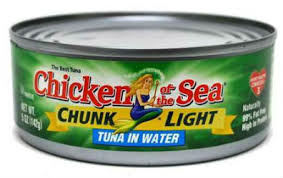
    chicken of the sea

    Wikipedia explains the brand name Chicken Of The Sea thusly.

    In the “old days,” fishermen referred to the white albacore tuna as “chicken of the sea.” It was called this because the white color and very mild flavor reminded them of chicken. The founder of the company thought this would be a unique name for a brand of tuna, and the Chicken of the Sea brand is now widely known in the Americas.

    Chicken of the Sea is a venerable brand just about every American knows. There’s that. To jettison a well-known name at this juncture might be considered silly, but not to me. It’s time to find something with a little more positive brand value. Something that isn’t a joke punch line.

    Even with Chicken of the Sea being a master brand name for salmon, clam, shrimp and mackerel, I’d lose it. Chicken of the Sea is synonymous with tunafish – which is not tuna anymore, it’s tunafish – a canned variation packed in water or oil.  The brand name has gotten old, silly and can be so much better.

    It’s time for a change Thai Union Group (owner). I’m betting with a little smart brand planning, brand design and naming, you will be able to steal some share from Bumble Bee before next summer. Peace.


    Stretch Strategies in Brand Planning.

    0

    lucy skeletonWhen brand planning I like to see the product and brand strategy in historical perspective. It’s what I strive for. Big thinking requires looking at problems not of the moment, but from a higher, longer-term perspective. Marketers are paid to ring the cash register. Paid to transact business. Brand planners are paid to position products and services long term. Seeing what Al Reis calls the “position” requires viewing a product not up close but from afar.  So far, you may have to squint to see it. What is visible from afar is most visible.

    This thinking is often what creates tension in a presentation of brand strategy to a CEO. S/he thinks of brand strategy as a tactic done once every few years prior to a new ad campaign exploratory. The tension comes from being asked to look at a brand long term, yet with a tightened focus. CEOs are great with stretch goals, but not with stretch strategies. They find them confining. Stretch strategies are only evident when looking long term.

    If you were to ask Tim Cook to see his brand through a historical lens, he could do it easily. Ask the CEO of HTC and you’d get the dog’s “ball behind the back look.”

    I can think of only one brand strategy I’ve worked on that has not lasted the test of time. The rest were built to last. See history me droogies.

    Peace!

    PS. An example: Regardless of where you stand on president Obama now, his presidency viewed from a historical perspective – policy wise – will be viewed as momentous.


    Too early for breakfast.

    0

    There have been a number of times in my career when I’ve recommended big marketing ideas that were not approved – only to appear a few years later, often by a competitor.  

    Some may grouse “better late than never,” others may rationalize the “timing wasn’t right,” but whatever your view of these opportunities missed, it’s important to learn from them. And never, never stop looking ahead for the next big one. “Too early for breakfast” and other after-the-fact bromides kill innovation. And marketing is nothing if not innovation.

    I’m thinking it might be a good strategic exercise – perhaps a line in a brief – to ask yourself “What product innovation would be great for product or category growth, but maybe a little too early for its time? And why?”

    I’ll try this out on my next assignment and report back as to its value.

    Peace.