Marketing

    The price/convenience trade-off.

    0

    I’m a man. Here’s how I shop: I go to a store, walk around, talk to a salesperson, maybe another shopper and I buy.  If the store doesn’t have what I want, I either go home or visit another store.  More often than not, it’s a one store and buy experience.  Price is important, but usually only when comparing choices in the store.  Convenience.

    As technology wends its way more and more into the shopping process and the best price on a skew (product number) is only a click away, (#bestpricesamsungTV) many of the shopping choices we make will be made for us. And price variation will be minimized.

    There will be Amazon for eshoppers and for those who want instant gratification there will be SuperRetailStoreCo or something.  Variability will be minimized in marketing. All that will be left, variability-wise, will be the brands. But marketers who spend too much on branding, will have reduced margins and will likely fall off.  Will it be a brand new marketing world in 2050?  Oh yeah. Should be exciting. Peace!

    How Chrysler Rolls.

    0

    When I first heard of Chrysler’s purchase by Fiat my mind was filled with all sorts of meep meep images of sporty small cars darting around American highways – fun to drive and helping the planet.  I loved it and it was just what the country needed.   A year and change later, the Fiat 500 was introduced.  Zoooop.  (The sound of disappointment.) Como se ugly?  Como se out-of-touch? Add to that, J-Lo doing a 2006 shimmy on a street in NY and I felt even more let down.

    Then I saw an Owen Mack video of Ralph Gilles, president and CEO of Dodge, next to the amazing new Challenger and I was back on board. This muscle car, not what I had in mind for the combined company, reminded me that car design is still key.

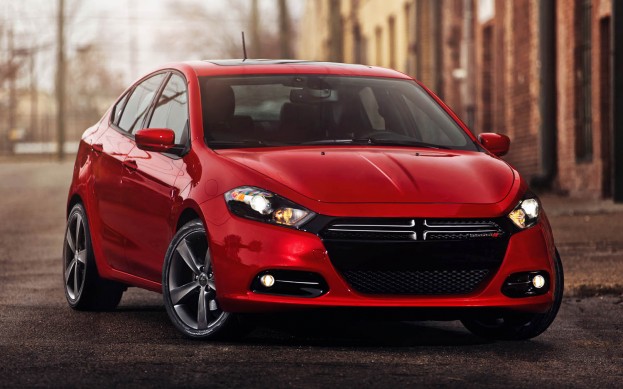
    Yesterday I got my first look at the new Dodge Dart. Reported to be around 40 MPG, this baby is fine. It’s a mid-size car with style, selling for around $16,000.  My daughter bought a used Honda Civic a year ago for the same price.

    The jury is still out on quality, but the jury is back on design and mileage.  It’s the American way to fail a little bit before you hit big — and the Fiat 500 misstep will teach Chrysler/Fiat how we roll. And now Chrysler/Fiat is about to America how it rolls.  I smell am Harvard Business Review business case. Peace!

    So What Does Axe Smell Like?

    0

    As a brand and marketing commentator it’s hard not paying attention to the Unilever brand Axe.  I’ve written about it with some frequency as have many business pundits. The brand and its wonderful ad agency BBH have innovated and made mad market share headway over the years. Axe created the first body wash for men/boys as far as I know – they are a category pioneer.   

    What I find ironic about Axe Body Wash and Axe anything, is that I cannot remember ever having smelled the stuff.  My son Nits has left the house many times smelling like French “you know” but I have no clue what he was dipped in.  Body wash, cologne-ey stuff, Axe, Old Spice, Stop & Shop. Who knew?  He has used Axe (I woke him this morning to confirm). 

    So what does that say about Axe marketing, which most people would agree is superior?  It says to me that it is missing an experiential component. If the stuff smells good, and I have to assume it does, why can’t I recall its scent? Where is the muscle memory I have for, say, Burger King? Where’s taste test… I mean scent test?  I’m not the target, but I’m a potential buyer and gifter.  Come on Axe, don’t go all Bloomingberg’s (Thanks cousin Thom Fleming. Hee hee.) on me and spritz me as I walk by —  but get me a sniff or two. Trial is the stuff of which market share growth is made. Peace!

    Relentless and Boring.

    0

    There’s an old marketing adage — okay, I just made it up – “The more times you say something the more consumers believe it.”  Hell, the more marketers themselves believes it.  Advertising agents take this notion and create campaigns around it.  Some campaigns last a long time (I can still sing the Good and Plenty song from my childhood), but most don’t.  Rote repetition in advertising is bad – it burns out.  That’s why, to coin a phrase, campaigns come and go.

    There is a change management theory, espoused by the godfather of GE Jack Welch, suggesting change is best affected by making communications “relentless and boring.”  You can’t argue with Mr. Welch’s success so let’s say that one’s sacrosanct. It seems that many marketers and their agents also fall into this trap.  I understand relentless but when selling it has a negative connotation. Geico is relentless. There is clearly such a thing as too much selling. Advertisers need to be relentlessly on message, about that I would agree, but not baseball bat relentless with the pound, pound, pound of same ad frequency.  It’s boring. And off-putting. 

    As for boring, there is never a place for it in marketing and certainly not in advertising.  Relentless creates boring…and boring creates boring. Two strikes.  

    So here’s a guiding principle for marketers and agents. Find a brand strategy (a claim and supports), live it, message it, listen to it with your own ears, and enliven it — daily. Touch consumers with meted frequency, especially when they’re most willing, refresh those touches continuously, and do so without being boring. Easily typed, harder deployed.  That’s why they call it work. Peace!  

    Segment Differently.

    0

    For strategic planners of a certain stripe (read brand planners) segmentation is not just about physical characteristics, e.g., purchase frequency, amount purchased, price sensitivity.  It’s about psychological characteristics. If one tries to pattern people into motivational, psycho-social and cultural groupings, things begin to look different.  It is these patterns that provide insights that help create more impactful marketing ideas.

    Let’s look at education a little differently. Here are three different student segments.  First Impoverished in Body.  Those who live in Karachi or Rio or Dharavi….or in crazy poverty in the U.S.  Students who worship the ability to learn and better themselves. Kids starved for education, inspiration and opportunity. They sit at the front of the class and shush the other kids. At the other end of the spectrum live the Silver Spoon Kids of Privilege. Bred to succeed, sired for $40,000 a year private high schools, loved and nurtured to be better earners. And in the middle, the third segment, the Public School Majority. What’s the opposite of a Tiger Mom? These kids float through school not to prepare for the future, but because the bus picks them up. No idea about major, a modicum of pride in grades, education for them is not a tool but a pass time. Sports and booty rule the day.  (There are a lot of grays I missed, yo understando, but these are okay brackets.)

    These segments are palpable. Alive. Rich. Worthy of deep thought for marketing minds. If you are Staples or St. John’s University, Apple or JanSport how do you think about your consumers? And their parents. Segment different. Peace.

    Creative that sells.

    0

    Not sure where I first heard the phrase “creative that sells” but it stuck with me.  Obviously, the first definition relates to selling marketer’s goods and services. It’s what marketers do: create words, pictures, sounds and motion that inspire feelings and actions to move product. But another definition of “creative that sells” exists — and it relates to agencies making a profit. An agency that puts 100 hours into developing a piece of TV, print or digital creative that doesn’t sell to the client is an agency that has to do it again. That inability to sell creative the first time out costs agencies money…and rep.  Unfortunately, creative that does sell the first time out is often safe creative. Repackaged creative. Repurposed, even borrowed creative. It feels familiar because it is familiar.

    Creative that sells (first definition) differs from creative that sells (second definition) in that the former is “wild yet fitting.”  It moves product because it is untamed and unique but appropriate when offering up claim and proof. Conversely, off the shelf creative and/or wild creative that is not fitting sells to clients but not to consumers. Great creative people know this. Great creative people know when to throw a fish back into the ocean.  It may be a great fish, just not for today. Sadly, there are a lot of seine net operators out there and it’s hurting both marketing and agencies. When an idea is right, for the right reasons, and sustains all parties, it will sell. By both definitions.

    The best worst job in America.

    0

    One of the most exciting yet scariest jobs in the world is probably CMO of the Magazine Publishers of America.  The MPA is an association funded by competing print and online properties that fight one another harder than the GOP and Dems at holiday time.  To say the magazine business is changing would be an understatement.  But to a great extent, it is also staying the same.  All that’s changing is what’s delivered and how.  Brilliant photo journalism is still required but now must include video.  Great writing, analysis and thought leadership still win that day – but there is a lot more competition (bloggers) and algorithmic noise.

    Readers twitch more today than ever before, requiring magazine publishers to anchor them to their sites.  And advertises, the lifeblood of the magazine business, are becoming enamored of publishing and content creation. And don’t forget magazines are made from trees, not a particularly forward thinking resource. (Though probably more renewable than circuit boards.)

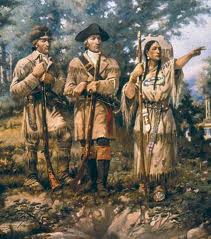
    Herding the powerful magazine cats out of the marble hallway is a challenge. It requires someone who has more power than the cats themselves. Someone who commands respect. Probably not an ink-stained patriarch, but someone with mad vision. Someone who can see beyond the dashboard. Who the Lewis and Clark is?   If you thought being CEO of Yahoo was tough, keep your eyes on this search. Peace.

    Music in Advertsing.

    0

    It is that time of year when people start talking about the “bests.” In advertising, most agree the two best spots are Deutsch’s Darth Vader spot for Volkswagen and Wieden and Kennedy’s Chrysler ad with Eminen “Imported From Detroit.”  Both are car ads but in my opinion what sets these spectacular efforts apart is the use of music.

    Music was once a much bigger part of advertising than it is today. Often, it’s a throw-away now.  Big ad agencies used to have large music departments with recording studios, op boards and lots of seats for musicians to sit in while awaiting auditions.  Today music departments are on someone’s computer. When the spot is 65% complete someone might ask “What kind of music bed do we need?”

    Muscle memory is something I always have my clients aspire to in branding and advertising.  Associate your work with clear ideas, images, turns-of-a-phrase or something to hum.  When I hear Eminem these days I’m ready to buy Detroit. To buy Chrysler. I’m thinking Kid Rock and “In it to win it like Yserman.” Imported From Detroit was is a brilliant brand strategy – but the spot was even better.  Poetry and music are still the best ways to deliver a sale. Peace.  And RIP Police Officer Peter Figoski.

    Job Interview Question.

    0

    One of my favorite interview questions when hiring is “Tell me about me.”  It often creates quizzical looks. Perplexed looks. I usually reserve it for half way through the interview and sometimes step out of the interview for a couple of beats so the candidate can look around my office.  If I am shined on, that’s telling.  If the response is “I just met you.” Another ding. 

    In the advertising and marketing business, people with good observation and interpretation skills are very valuable.  The ability to process information quickly and tell truths, even more so.

    One time I almost got into trouble asking the question.  For some reason a young lady thought the question bordered on harassment. She lost her cool for a second. I didn’t recommend hiring her, but since as they used to say at McCann she was a “special” (friend of a client), hired she was. She turned out to be quirky indeed. 

    Try the question out sometime, it’s pretty cool and provides a nice cull of the candidates. Peace.

    Brand Diaspora

    0

    Pronounced “dayh –AS –por-ah,” the word refers to any group migration or flight from a country or region. I first started using “diaspora” in conjunction with the word “brand” when working as a planner for an agency on Microsoft. 

    As a planner and seller of technology goods in a market dominated by Microsoft for many years, you couldn’t help but bump up against them. Envy them. Be angered by them. And use them contextually. The Microsoft ethos made it into many a brief and marcom plan.  Grouchos, for instance, was a target I created to refer to Microsoft haters who loved open source and were repelled by all things Microsoft. A planning rigor I developed called “brand spanking” was the result of this people’s willingness to discuss and spank market leaders.

    One of Microsoft’s biggest failings over the last 15 years and one which has impacted brand value is something I call brand diaspora.  Microsoft’s brand and sub-brands have been allowed to meander, disperse and diffuse from the homeland. And in many cases they’ve gotten lost.

    As I look at all the product and service names, naming extensions, release numbers, calendar years and portfolio reorganizations my head spins.  From a company that invented the first software suite, Microsoft Office, a brilliant naming convention, we’ve seen quite a perplexing mishmash: Windows Live, SkyDrive, Office 2007, Office 2010, Office Live, Office Web Apps, Live@Edu, Office Live Small Business, Live Meeting, OneNote, Office 360, Windows Azure, Windows 7, Windows 7 for Mobile, Outlook, Exchange, Access, Publisher, Office Professional Plus, Sharepoint, Communications Servers, Windows Server Hyper-V, Windows Live Mesh, Hotmail, Outlook Express. And that doesn’t scratch the surface.

    I actually love the good things Microsoft has done for the world. And it’s natural to pick on the overdog, but technologists, with all their 1 and 0s, have never been great at branding and brand planning. Brand Diaspora is one sad result. Peace.