Marketing

    A Brand Planner’s Prayer

    0

    Things we remember.

    We remember beauty.

    We remember new.

    We remember rich.

    We remember melody.

    We remember funny.

    We remember nature.

    We remember poetry.

    We remember pain.

    We remember educators.

    We remember warmth.

    We remember charity.

    We remember happy.

    We remember love.

    We remember triumph.

    These are the things we remember.

    These are the things consumers remember.

    (I post this brand planner’s prayer once a year as a reminder.)

    The future of TV?

    0

    There’s a big article today in The New York Times about how non-traditional TV broadcast companies are moving into programming.  Netflix, for instance, is spending $100 on a Kevin Spacey, Robin Wright production called House of Cars. Amazon, Microsoft and others are following suit, producing their own original entertainment.   I visited my son in college and his roommate has Google TV.  To say searching for TV shows and movies using a Google interface is easy would be an understatement. Check it out.  

    It will be a dog fight between the TV and cable companies and these new breed, onesy-twosy production companies but one way for the latter to change the game is to rethink the commercial pod. Paid commercials will live on. Good TV production is too expensive to be paid for solely by subscription, so the question is how do we reinvent the commercial break in a way that is more palatable?  Less of them would be a good move. Not so many breaks, another. Contextual spots are an idea. I’m thinking 2 commercial breaks for every 30 minute program. At the 10 and 20 minute marks. For a 60 minute show, three breaks at 12, 30, 48 minute marks.  The price the spots accordingly, abased on supply and demand.  Also don’t allow fast forwarding.

    Speaking of fast forward, if we were to zap ahead 30 years, what do you think TV will look like. Will ABC, NBC, CBS and Fox still be around? Thoughts? What say you Reed Hasting?

    Art in marketing.

    0

    The minute I saw my first piece of Banksy’s graffiti art I knew it was art. Art is very personal.  I have used many Banksy pieces as Twitter backgrounds. (Much obliged, sir. Sir?)

    Many talk about the art of marketing, brand planning and advertising. But today l prefer to talk about the in.  Art has a very meaningful place in marketing.  Like the beautiful, style-happy person you pass on the street and can’t keep your eyes off, an artful photo, turn of phrase, or video edit captures the viewer’s imagination. And once the imagination is captured and the senses are a tingle – the door to the heat and mind are open.

    What the marketer does with that open door is the critical next step.  Sell too hard and the consumer loses the warmies. Sell without context and the viewer is confused. Opt not to sell at all and you become the disaffected artist in the SOHO gallery who cares not.

    citibank climber

    What the marketer does with that open door depends on the art itself and  the brand plan. It’s complicated.  When Citibank, in its lovely “cliff climber” TV spot, shares that amazing climbing sequence and the poetic card purchases that enabled the climb — “And what girl wouldn’t want new shoes?,” there is mad connection.  The art is visual. It’s athletic. Unseen. That’s art in marketing. Not of marketing. Peace!

    (The Citibank spot is by Publicis, I believe.)

    Kids, planet, teachers.

    0

    There has been quite a furor in education lately about grading teachers at their job – I believe the vernacular is teacher assessment. Why ever would we grade teachers as to their ability to get students to learn?  There are so many other factors that contribute to learning, says the teacher union.

    In other news, the obesity rate among children in Mississippi public schools is down 13% from 2005-2011, though it is still high.  How would we know this if not for data – or a grade.  School fryers were replaced with school steamers and the state made a bunch of other healthier food and preparation choices.  So we can grade food service, relative to its “goaled” effectiveness, but we can’t do it for teachers?

    This is goofy and apocryphal.  By this logic teachers shouldn’t be able to give students grades because there are so many contributing factors as to why they don’t test well.

    There are no black and whites, agreed.  But that is no reason to keep the lights partial on.  It’s big data time. Let’s measure what hurting us. Then do something about it.  Can you say greenhouse gases?

    Kids, planet, teachers. Peace.   

    Food Addictions.

    0

    Food is big business.  And not just the selling of it, we know how big that is.  Just look at all the restaurant and grocery stores in your town. But food has now become an important content area too.  Magazine publishing is way off. Way off. Without food related properties, there would be Car And Driver, Sports Illustrated, Better Homes and Garden, The New Yorker and that’s it.  Bucking the trend, Walmart and Hearst launched a magazine called Delish late last year. It’s all about food and doing well. People are into food.

    The number of TV shows about food preparation is growing. Many chefs are more famous than news reporters. One third of U.S. adults are obese.  Food.

    What our nation needs, however, is an obsession with healthy food.  What is healthy food? In what part of the store does it reside (the outside walls, typically)?  We also need to change our palettes. Our expectation of what is tasty.  Today the masses crave sugar and salt.  The country would alter the course of healthcare were it to remove these cravings from the national palette. Rather than clothe ourselves in 650 million yards of fabric each year, we could shrink that to 450 million yard – with slimmer figures. The billions in Medicare spent on diabetes would shrink — as would our dependence on blood pressure med. Dominoes all tied to the collective palette of Americans. Our taste in clothes and hair change, why can’t we change our addiction to sugar and salt? Oh, and there’s a market for it. Peace.

    Broadcast vs. Face-to-face.

    0

    Not sure why, but I have a fascination with Fashion Week and the Milan and Paris fashion shows. Okay I know why, but let’s not go there. From an academic point of view, fashion is a “beyond the dashboard” pursuit.  That is, the best in new fashion designs must feel fresh. Unseen. And stimulate the senses and taste glands.  During fashion week a designer’s brand name may carry lots of water but the designs themselves are what everyone, especially the buyers, are there to see. The attention and vibe of the audience is the center of gravity.

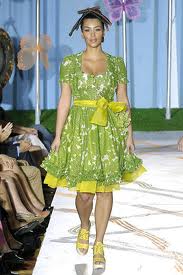
    kim karashian at heatherette

    I remember being at a Richie Rich and Traver Rains show in NY when a crazy buzz and hum developed.  The din turned into “That’s Kim Kardashian walking.”  Everyone knew who she was at the time but me. That’s live buzz. Perhaps for the wrong reason but that’s what designers are looking for. For an artist to perform in front of a live audience is perhaps his/her most important form of expression.  Looking into the eyes of your target while performing provides the most visceral of feedbacks.

    Much advertising and market are done via broadcast. One to many. You can’t look into the eyes of your customers when broadcasting an online display ad. Click or no click. The best marketers and brand planners get this. They seek out and soak up live impressions. Live is better. Find ways to do your selling live. Peace.

    Contextual Brand Planning.

    0

    David Brooks had a nice Op-Ed piece today in The New York Times on the topic of big data. In one of his metaphors he states that as the data haystack gets bigger the needle becomes more deeply buried. So context is critical to analysis of data he argues. Poor contextual views of data cause failed analysis.

    Another opinion leader I follow is Robert Scoble – a tech blogger. Robert is the most “on” person I know. When he sleeps he’s evaluating.  Robert’s big thing this year is context. He reviews and evaluates all sorts of tech tools that create context out of actions, locations, email and Siri voice commands (I threw that last one in there, but I’m sure he’d agree.)

    Brand planners use context every minute. As they watch and listen for powerful, motivating behaviors, they seek patterns. Hay of a certain length, as it were. Planners’ brains gravitate away from the formulaic and toward the unique. And interestingly, some of the insights they glean aren’t about selling stuff. They are about people that buy the stuff – or don’t buy the stuff. The insights may provide context around child safety or home health or happy meals (lower case) unrelated to the product at hand. And so long as the insights are not too far afield of the product being sold, they are fair context and stimuli for the creative team and the creative output. In the end, it’s all about sale though.

    Did the Deutsch’s Darth Vader spot sell more Volkswagen’s? Do kids ride in cars? Do families have and/or want kids? If you have the answer let me know.  Peace!

    TV Channel Explosion.

    0

    My son turned me on to a TV show called “The Dog Whisperer.”  Cesar Millan, the host, helps people who have dogs who behave poorly.  Many of the dogs have anger management issues. Mostly, Cesar trains owners — that’s what makes the show so endearing. I just read that the show will be produced now for China, a country that has a “couple two, tree” dogs.

    I’m not sure what the ratings are in the U.S. but this show feels first to market and like a one-of-a-kind production. It’s a no-brainer. We already have enough cop shows don’t you think? Look up and down your block and count the houses with dogs. Lots of houses. It wouldn’t surprise me that in 5 years there’s a dog channel on TV.

    Whoever came up with this program idea is someone who operates beyond the dashboard. A person who sees what is next. People who own dogs,  love dogs.  People who love dogs will watch TV about dogs – especially How To shows.  Think “This Old House.”

    As TV takes up more and more hours in our lives thanks to streaming and smaller, portable devices, marketing planners will continue to refine our choices. The woodworking channel is coming. Archeology. Type 2 Diabetes channel. And to the market planners will go many spoils. Peace!   

    A healthy day…sometime in the future.

    0

    As a student of markets, I love to know the size of categories. Total annual sales. Some call it the universe. It’s always one of my first questions when planning. Warren Buffet probably likes to know this data when he invests in companies.  The catsup market, for instance, was probably on his mind this last quarter as he planned to buy half of Heinz.

    creamed spinach

    The amount of money Americans spend on food is beyond computation. That’s all food, including beverages. Of that total amount how much do you think is attributable to “healthy” products? Not too much. Spinach is healthy, but not when smothered in cheese, refined flour, butter, salt and, let’s say if we’re down south, a teaspoon of bacon grease.  One third of Americans are obese. When obese people talk about their proclivities towards fries and pies, they understand their eating habits aren’t healthy. But our culture does not emphasize healthy eating.

    It should.

    And it will. 

    But there is not a lot of money in it. And the money thing is what makes entrepreneurs take notice. Once devices and streaming media saturates the U.S. and the populace is 40% obese, smart school kids will focus on the healthy food market. And healthy preparation. It will be a transformative period indeed. Can’t wait. In the meantime, pass the catsup. Peace.

    The Channel and the Ear.

    0

    A bar that sells Hoegaarden (pronounced Hoo- Garden) is a bar I can appreciate.  As a kid in college when I met someone new I went straight to their record collection to gauge their taste in music.  Any Airplane? Rashaan Roland Kirk? Doc Watson?

    When Brooklyn Brewery introduces a beer outside the states it carefully selects the bars it introduces in.  The bars have to fit the Brooklyn mold. The barkeeps must be conversant in beer, the owner has to understand the Brooklyn taste profile. Brooklyn, when introduced to a new customer, requires a narrative. And the bar itself, must bespeak of the Brooklyn Brewery vibe. These select bars, in effect, become spokespeople of the brand.  The channel helps define the new product experience.  Outside the US, Brooklyn is a premium beer.  Beyond the hipster-ish name, the brand does not convey a lot. So a selling hand is required.

    This is how Brooklyn gets a foot hold in a new market.

    This is how good marketers need to look at their launches. While I’m doing brand research for clients, I look beyond the corporate boilerplate. Beyond the quarterly financial reports. I dig past the trade journalists and category consultants – I look to the channel. And I sniff around for passionate users who I feel understand the language of the product. The language of the consumer. (Depending on the category, these special consumers are often Posters – content creators who spend time on the web.)  Annie Prouxl, before she wrote The Shipping News spent a good deal of time in Newfoundland breakfast joints listening to the locals.  That book didn’t come out of a travel guide or Wikipedia, it came from listening. Peace.