Marketing

    Data dashboard engineers.

    0

    engineers hat

    Date-driven is the other new thing.  Find a business category and put the words “data-driven” in front and you have an new and fertile business. Data-driven Social Marketing Solutions for the Dachis Group.  Data-driven instruction for Teq, Inc. and educational development company. Data-driven decision making. Data-drive fill in the blank.

    When has any field of endeavor not been data driven?   Data has successfully driven businesses for time immemorial. Como se Sears catalog?

    Today, however the web has enabled us to be awash in data. And it is a good thing. Enter the Haggis.  I mean, enter the dashboard. The dashboard has a way of keeping us sane. Then there is the dashboard engineer: the person responsible for looking at all the dials and doing something smart with it. The dashboard engineer will be the new social media manager. A data nerd who reports data, reports patterns and trends, but may not see the bigger marketing picture.

    Mark my words, on the job boards of the future we will see data engineer and dashboard engineer titles aplenty. Then the fill in the blank will come before the title.  Peace. 

    Broadcast Vs. Personal

    0

    Big data in marketing now is not only a thing, it’s a big thing.  Smart companies are parlaying all the information we leave around the web, in stores and on our credit cards to learn about our proclivities. Our likes. Tastes. And timings. This “parlay” is then given to corporate data nerds, supervised by a marketing officer who oversees budgets, big deals and the national TV campaign — but who may not spend a lot of time looking into the eyes of customers and prospects. The result of this big data?  Newish forms of broadcast. Email newsletters to existing customers. A national promotion for a chance to spend a day with an ex- Disney girl. Online ad exchanges.

    Brand planners are good at what they do because they look consumers in the eye. They deal in feelings; feelings that are best shared or observed one on one. The problem with marketing today is that technology has given us tools to do one on one things via broadcast. Dear “loyal customer” Vs. Dear “Steve.”  Sales calls are automated. Robo calling with personal names and account numbers.  Mail run off on a printing press. It’s not personal when it’s mass produced and modular.

    Readers know I talk about the roots movement in our culture. Well roots will come back to marketing soon.  Even forward thinker Faris Yakob is reading The Benevolent Dictators, a book about the titans of the ad industry.

    The best ideas in marketing come from personal, individual insights and discussions. Then we turn them into big data and broadcast them. Let’s slow down the broadcast. Peace.

    The brand plan test.

    0

    Hey marketers and marketing agents, take this test.  Answer these questions in the form of fill in the blank quiz:

    My brand strategy statement is: __________________________________.  (This is not a ponderous mission statement cover all business possibilities, it’s a single statement with no conjunctions or commas. If you do not have this statement, but do have a tagline, use it.)

    The three elements of my business formula than make me different and better are:

    __________________

    __________________

    __________________

    These elements, which I call brand planks, must support the strategy statement. So the statement needs to relate to the planks. Similar to colors in a room, the planks and strategy must be familiar and provide tight linkage.      

    Please take this test and send me the results. The reality is, when you see what you’ve written (or not written) you will be well on your way to fixing your business and brand woes. If you can’t articulate this stuff, how will your customers be able to? Peace.

    The money snow globe.

    0

    Brand planners are architects and builders.

    I once hired an architect to build a garage onto my house — with a room above. He was masterful. The front elevation looked amazing. But the builder looked at the drawings and said “It can’t be done.” Not based upon what was behind the elevation. All façade no structural depth.

    Brand planners make the façade – something that looks beautiful, feels right and sells, but they also create a structure that creates the depth. The there that needs to be there. Brand design, as my friends at Starfish Brand Design like to say, is not only the strategy but the execution of the strategy.

    It’s nice to determine you are “a customer service company,” but then you have to out-deliver the competition and leap and exceed consumer expectation. Claim and proof in branding is the grail. (Organized claim and proof. ) The architect is about the claim, the builder the proof. Together they build a brand. Apart they shake the money snow globe. Peace.

    Drugs, Mad Men and Margin.

    0

    Generic brands are killing the marketing business.  Advertisers and marketers are letting it, thanks to poor communications and poorer strategy.  I read today that 86% of all prescription drugs are generic. Como se wake up call???  If the drugs we use to help keep us healthy and alive are allowed to be generic, why aren’t we buying generic coffee, generic spaghetti sauce, generic tires?  Oh, that’s right, we are.

    Price premiums are what keeps the non-generics and the cheap white label brands at bay. What differentiates the real brands?  Special formulations, special taste, great product experience and special marketing.

    Back in the day, a dude by the name of Jacoby took a billion dollar payout from Ted Bates (ad agency) and advertisers took notice. (Wait for the episode on Mad Men.)  It eviscerated agency compensation and the only way to keep the business fairly strong was to hire less expensive people.  There are still rock stars in the business, but way fewer.  And the advertising business is being led around by high paid clients who get brand building but don’t get the powerful muscle memory that is comms. That’s left to agency people who are all mirror, no smoke. And it is genericizing the agency business.  

    Just like premium brands, there are premium agencies.  Those are the ones being paid higher prices. Commanding higher prices. That last mile of margin is what marketers should be looking for; one’s with a  higher margin, not a lower margin. Peace!

    Our own event.

    0

    The advertising and marketing business needs an annual event; a place for creative people, artists, musicians, designers and strategy people to convene and experience the love and inspiration that is our business. The NYT today referred to the just competed Annual 4As Conference as populated by “a bunch of old white guys.” As an old white guy myself, I wouldn’t want to go to a place so described.

    SXSW Interactive is a pretty cool place for advertisers and marketers but they should really be at the Music part of South By – that’s where the energy and inspiration is.  Cannes is a pretty cool festival, but it’s out of most people’s price range. Elitism anyone?

    Once a year there should be a show for all marketers and all of their agents. Perhaps sponsored by headhunters and  talent companies. A place for all to let their hair down. Over an I’m-not-smarter-than-you, noncompetitive couple of days where we celebrate, share, think, evolve and have some fun. Where we recharge the batteries and make new friends.   

    For a group of people who invented this even marketing stuff, we are pretty dismal at celebrating it ourselves. Peace!                                                                                                          

    Strategy and Stuff.

    0

    The two tools I use in brand planning are the brand strategy and the marketing communications plan. An old colleague used to refer to the education business as made up of “things and stuff.”  His logic was that things are the tangibles – something that goes thump when you drop it. The “stuff” refer to the stuff you teach. Nice idea, but poor word selection me thinks. Most people think of stuff as tangible and touchable. My brand planning tools are about the “strategy” and the “tools” (stuff).  The tools are the ads, the web, PR, promotions, etc.

    Brand strategy in my hose comprises 1 claim and 3 proof planks. You can write a mission statement, messaging ephemera, tone personality and lot of other shizzle, but they tend to murky up the brand waters more often than not.  One claims and 3 supports is all you and anyone need to operationalize and organize your brand’s world.  Interbrand, Landor and all the other branding shops will agree (behind closed doors.) Once that heavy lifting is done all the stuff you make is either on or off strategy. 

    So ask yourself, does you brand have a claim? And have you organized that claim’s supports into three discrete, powerful, endemic, customer care-abouts?  Few have.  It can be your edge.  Peace!

    Go out and enjoy a parade this weekend!

    Ego.

    0

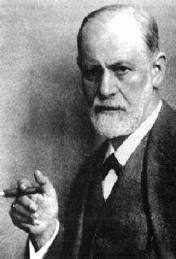
    freud

    Ego is the root of all brand planning evil. Okay, will maybe not evil but it can still screw up a good insight. (For returning readers, it can also screw up a good incite.)

    When you read your briefs and decks and find this nuggets that sounds and feel motivating you must ask “Is this me talking?”   Is this my point of view?  Or is it a fair and unbiased observation – supported by fact.  NY ad agencies have often been ridiculed for making ads that don’t sell between the wickets, the wickets being the east and west coasts. Are we including everyone when we observer trends, when we ideate?  That’s why testing and researching outside of the big metropolitans areas is important.  

    Good planners are paid to think beyond the ego. To think beyond the subject before them. Planners catalog a lifetime of experiences and observations and use them when sorting through their day jobs and assignments at hand. They drop the ego. They drop the leash (Pearl Jam reference).

    Remove the ego, the self-projection and you can begin to truly see. (It’s hard.) Peace!


    Disappointment.

    0

    For the last week or so I’ve been interviewing dieticians. They are a fascinating lot.  One of the questions I just decided to add is “Are there any disappointments in your practice area you can share?”  If I hear silence, um or no, I’ll prod “How about, have you a wish list for your business or your patients?”  

    These conceptual questions draw out emotional responses, personal responses.

    So, I decided to ask myself the same question and the answer might be instructive to tyro planners. My disappointments relate to not selling my brand strategies hard enough. Or well enough.  There are been a number of brand strategies (one claim, three support planks) I’ve sold I know to be powerful, business-winning organizing principles. Powerful enough to redistribute market wealth significantly — but I’ve either let marketing clients, agency creative or C-levels get in the way.  When someone is trying to get a website created or a campaign out the door, they don’t want to spend too much time on its underpinnings. That’s the mistake. That’s my mistake. If you have a solution that will change the brand for the better, don’t let go. Don’t be deterred.

    Henning Mankell’s character Kurt Wallander has a father who paints.  He only paints one picture – a landscape. He does it in two flavors: with and without a grouse. That’s focus. That’s a plan. Is he crazy?  Does he see a different painting every time he puts oil to canvas?

    A brand plan is not a limiting document, it’s a rich strategy consumers can remember… and consumers can foretell. Peace!

    Are you brand planner material?

    0


    Ovarian cancer kills 15,000 women in the U.S. every year. 22,000 women are newly diagnosed every year. These are statistics. Grim statistics. Typical Americans see these type of statistics daily in the news and have become somewhat inured – until it hits home, that is. Murder statistics, KIA war statistics and obesity statistics all fall into this category. Marketers, on the other hand, live on statistics: annual sales, unit sales, target pop size, share of market. Account or brand planners care not a whit about the numbers. They care about blood pressure and galvanic skin response. When we talk about saving for college with young moms are they sweating? What does that say about their choice of husband? Their self worth? Can a planner actually smell fear? It does have an aroma you know. Emotions and feelings are what planners care about…and we mine them one person at a time.

    If you love statistics it’s okay to get into marketing. If you love people, get into planning. The dude from the TV show Elementary who plays Sherlock Holmes may be a great observer with a bag full of analytical tricks, but he is not good at getting people to share. So Sherlocks need not apply either.

    Like people? Want to give people moments of happiness, satiety and comfort? Become a brand planner.