Advertising

    How to build a brand.
    0

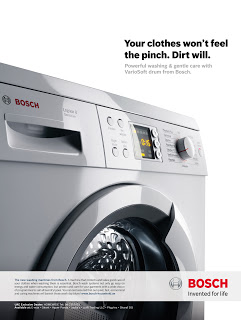
    bosch ad

    Bosch is a brand I’m familiar with on a couple of levels. First I know the name, so that means I’ve seen it on product, in retail and probably advertising.  Second, I have brand associations, but across a couple of types of products: brakes come to mind, automotive products, some speakers.  So it seems Bosch is some sort of conglomerate… like GE. Also they feel European.

    But about 2 or 3 years ago, Bosch started advertising in my the newspaper, The New York Times. I don’t recall seeing Bosch on TV, in radio or online, just the Times.  And they have kept up the media pressure. With drumbeats. The ads are all focused on kitchen appliances. I wasn’t aware they were in that business. And the appliances are beautiful.  No skimping on the photography costs here. I cannot recite a headline or copy points, though these ads are burned into my memory. Product as hero, at its best. Here’s what I know and feel thanks to the advertising: the product design is spectacular, the engineering way above average (that’s what good industrial design will earn you) and the appliances quiet and efficient. Most important, they are now in my consideration set where once they weren’t.

    I am not a fan of awards ads and today Bosch ran one about customer satisfaction with their dishwashers.  It was a prudent choice to wait so long to do an awards ad.

    The seer in me says, Bosch is gaining in market share and the blocking and tackling they are doing – beyond excellent product design – is the cause. Old school. Peace in the New Year.
     

    The Idea. The Performance.

    0

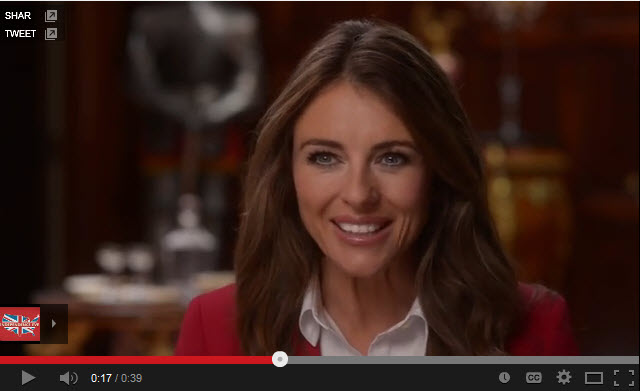
    Anything Elizabeth Hurley does I like. No really, anything. In this Droga5 ditty for Newcastle Ale, there was an idea, great copywriting and a compelling performance. It made me thirsty.

    elizabeth hurley

    Great work contains 3 things: an idea, proof of idea and performance. Ideas without proof may take hold but don’t really impact sales. Ironically, ideas without proof are called selling. Claim, claim, claim. When someone is claiming or selling we shut down. Ideas supported by proof have the most sales impact.

    In the Droga5 spot, there is an idea: America would be quite different if Britain won the Revolutionary War (#ifwewon). There is proof: the funny examples of what would be different in America today — which makes us smile, nod and even empathize. But the performance of Elizabeth Hurley takes the work to a higher level.  The performance of the idea is what brings it to life.

    Smart ad agency people understand this — they are paid to excel at it. Performance is a little lacking in the digital agency space, but there, it has more upside. More breadth. And I’m not talking acting here, I’m talking performance of the idea. Performance of the proof.

    Think about the performance, don’t stop at strategy, creative and production. Peace.

    Frank’s Red Hot Sauce

    0


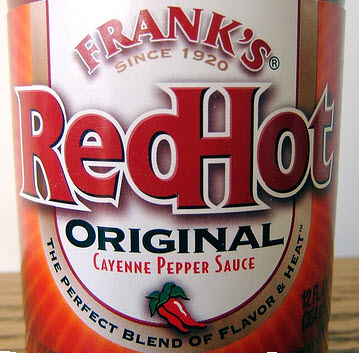
    There is a radio campaign I’ve been hearing lately for Frank’s Hot Sauce – it’s actually red hot sauce, but my ears don’t hear it that way – and I absolutely love it.  There are snippets of video on the website which suggest the campaign may be on TV but I haven’t seen it.

    You can’t miss the radio.  It’s typical actor product banter but punctuated by line “I put that bleep on everything.”  Whatever word you think is bleeped out is up to you, but you just know it starts the “shhh” and rhymes with “hit”.  The line is delivered by a granny-sounding actress and you can’t help but giggle (out loud). Even moms of the Southern Christian Right have to twinkle a wee bit.

    The strategy is straight forward – use Frank’s on more dishes in more dayparts – but the humor is wonderfully disruptive.  It’s the best radio out there. For me, though, the jury’s still out on the TV. If the website videos are representative I think the TV will fall short.  The acting performance isn’t the same.  The surprise isn’t there.  And it almost demeans the radio. As a branding idea, I don’t see it translating in print either.  But enough darts, the radio is killer.

    If you know the agency and the creative minds behind the work, please share.   I smell a Mercury Award. Peace!  

    Celebrate, rinse, repeat.

    0

    I often use the word “celebrate” when talking about branding. It’s a great word. Once you have your brand idea and planks together, spending money and calories celebrating your product, service and/or customer is the best way forward. A great many ads and sales schemes focus on tearing down competitors.  Consumers don’t appreciation that. They appreciate and gravitate toward the positive.  “If you don’t have something nice to say…” 

    When it comes to advertising, too often we build ads that people like.  By celebrating the above, we are building up products people like. There’s a difference.  One can imply a negative, so long as it’s done by superimposing a positive.  One of my favorite ad sayings is “make them feel something, then do something.” Feeling good is good. Peace!

    Advertising and the commodity slurry.

    0

    Advertising agencies have allowed themselves to become commoditized.  In product marketing there are luxury goods, mid-priced challengers and bargain goods, but in the agency business everyone is more or less priced the same. 

    Sure, if you hire BBDO or Ogilvy your top line creative people will be more expensive than someone from the no-name middle tier but you get what you pay for and after a year or so the profitability equation seeps in and both type of shops meet in the middle. The commoditized middle.

    This is because ad agencies sell labor and stuff (pictures, video, writing, music and coding).  The valuable part – strategy – more often than not is given away.  Strategy and creative win new business but brand strategy often disappears after the contract is signed leaving creative to carry the day.  At that point middle-managers-on-the-rise start to take control.  And tactics take over. That’s when air starts seeping out of the balloon.  Tactics are commodities in the ad business. Apple wouldn’t put up with this. 

    What’s the way out?

    Ad agencies need to strengthen their commitment to strategy over tactics. They need to build incentives into their contracts tied to the strategic product.  If a client approves work that is off strategy, the client should have to fund a kicker to the fee. A – because it will cause more work.  And B – because the work will be off-piste.  Campaigns come and go…and that’s okay.  But brand strategy should not. Agencies known for their strategic work will emerge from the commodity slurry. Peace!   

    Creative by the pound.

    0

    Paul Ottellini is stepping down as Intel’s CEO in May. Implicit in the announcement was the notion that his leadership did not evolve or lead Intel into the mobile device age. It seems Intel is no longer inside the hand candy owned by nearly every man, woman and child in America and the ROW (rest of world). This announcement and an article on the transformation of education thanks to MOOCS (massive open online courses) got me thinking about the fate of ad agencies and whether they are evolving with the times.  

    Let’s face it, it’s sad but true, outside of the third world humanity’s purpose on planet earth is “buy stuff.”   That’s why we go to school, work and pay taxes.  Advertising used to be about pushing product and product preference on would-be consumers, but today consumers are wound up and ready to buy, so marketers aren’t as much interested in creating demand as they are in predisposing consumers toward their products.  The web is the big pre-disposer. Broadcast and print are still great tools, yet these days they’re mere sign posts. The real selling takes place after the ad. Agencies that sell creative by the pound are not seeing this — the total picture. It’s great to have top reputation for creativity, though it is better to have a full understanding of modern marketing: brand planning, lifecycle, loyalty, aftercare, twitch points, insouciance, and timing. Honestly, not many shops have this view. 

    Great creative is a price of entry for ad agencies but the web has changed marketing. Moving the desks around, being media-agnostic and practicing all sorts of other marko-babble are not going to fix the profitability and value of the ad agency business. It needs a new box.

    Mr. Ottellini didn’t change the box. IPG’s Michael Roth isn’t going to do it. Tom Bedacarre would like to. Carl Johnson-ish. We need a savant. Peace!  

    Data Chunking.

    0

    Omnicom and Publicis agreed over the weekend to merge.  Como se unexpected? The story even made front page of The New York Times. The spin was all about big data. More people, more devices, more messages. And the best way to reach all these things is through smart use of earned, owned and rented data.

    Data companies are finding new and exciting ways to track people. And it’s only just beginning. Home thermostat apps can indicate when a person is at home, road side cameras can log when a license place passes a dinner, voice activation apps can capture when a body needs a sushi fix.

    When I pitch Twitch Point Planning to marketers and their agents I explain the offer in three words: understand, map and manipulate.  Big data feeds the understand and map components. Capture and organize data.  But as David Droga rightly says in the article on the merger (last para.), someone has to do something smart with the data. (When everyone has the understand and map tools, data will just become a commodity.) And that’s the subtext not covered in the Times article. Ad agencies are best at creating the manipulative message. Not bad manipulation, but good. Important. Heartfelt and personal. Dare I say poetic.

    I agree that marketers will do understand and map in-house. But the manipulation part, they can’t do well. For this, even for a one-on-one mobile phone ad, they need professionals. If you want to follow the money, this merger is about good old fashion creative, not chunking data. It bodes well for agencies of all size and stripe. Peace! 

    Salesmanship vs. Packaging.

    0

    Albert Lasker, a seminal advertising figure and CEO of Lord and Thomas (a predecessor agency to FCB) and a copywriter by the name of John E. Kennedy had a discussion in 1905 about a Kennedy theory suggesting advertising is no more than “salesmanship in print.”  Smart dudes Kennedy and Lasker.

    If the goal of salesmanship is sales and the goal of advertising is sales, then shouldn’t this notion still be applicable? Sure. But more often than not, advertising today is a loose federation of benefits and features packed together in designer wrapping paper, with a promotional bow.

    The sign of a good salesperson is you believe them, trust them and are convinced by their expertise. You may remember the salesperson but you are more apt to remember the product. Similarly, the litmus of a good ad is its ability to be remembered for the product selling idea, not the ad execution.  And to be remembered the day after it was seen.

    Messrs. Lasker and Kennedy were right back in the day and they are even more right today. They knew the best ads are not about “me, me, me,” but about the consumer. Sales people know this, ad craftsmen often forget. When done correctly, advertising in print, broadcast or digital is salesmanship not packaging. Peace!

    Brand in Name Only

    0

    Brands are more than names.  But don’t tell that to Bethpage Federal Credit Union.  Federal credit unions have an advantage over banks.  They are not-for-profit. As not-for-profits, people who bank there are members  — the rewards of membership being better service and better rates.  Were more people to know this, they would sign up in droves, but not-for-profits don’t do a great deal of advertising – to keep costs down for members.

    Bethpage has done some good things over the years but creating a brand strategy is not one of them. I look at the body of work and the only things that stick out are spokespeople Beth and Page. They smile a lot, are helpful and sort of goofy, but play absolutely no part in the brand strategy other than their names.  Is the TV work showing Beth and Page a campaign? You tell me.

    Here’s the point. Just as I suggest to people with social media programs they need a motivation for their social persona, spokespeople need a strategic reason for being. They need to be motivated toward a brand goal. Beth and Page are very nice people I’m sure – but right now if consumers were asked to talk about them all they would say are their names. This is the oldest mistake in the book. And frankly it’s childish. It’s like advertising done by an app. Sorry for my snark, but come on…Peace.