Marketing Hack.

0

What happens when TVs talk to devices? Good things.

I love the Burger King’s ingenuity and moxie in playing in its new :15 spot where the voice over says “Okay Google, what is the Whopper Burger?”  As a result Google Home devices across America (the globe?) wake up and started reading ingredients from Wikipedia. This smart marketing hack added a new contemporary dimension to TV and radio adverting. At least for a few minutes.

You gotta love Burger King. Still the tightest burger brand, rocking the “flame broiled” claim, Burger King is constantly pushing the digital envelope. I like to say “agencies come and go…a powerful brand idea is indelible.” And when it comes to Burger King, agencies have come and gone. As has corporate ownership. But the brand stays strong, and it continues to innovate with its media and media delivery.

Sizzle on Burger King.

Peace.  


Brand Briefs. Going Commando.

0

I’m going out on a limb here to say the majority of marketing buildables, e.g., ads, websites, PR plans, research studies, and content marketing are created sans a brand brief.

The tendency for agencies to work off a brand brief is much greater than for one-off contractors, but even they tend to use a campaign briefs or tactical briefs.  Whose fault is this? Clients. It’s the client who provides the input…and the approvals. It’s the client who needs to have an organizing principle for product, experience and messaging (aka brand strategy). It is the client who needs to codify it and make it sharable.  

Smart ad agents/contractors ask clients “Do you have a brand brief?,” but know the answer is “no.”  Every company has a website. How many of those writers and coders worked from a brand brief? Every company has an ad. Same question. Every marketer will tell you they have a brand. 95% of those people can’t articulate that brand in a clear, concise way. They don’t have a brief.

Peace.


Stories Are The Air of Brand Planning.

0

When I interview people at a company to learn more about it during my discovery process I have a set piece of questions. If working in a category with which I’m unfamiliar I often create a new questions to level set me. Learning the language of the category is an important first step. Before I start questioning I tell the interviewee to please tell stories to make your point. It helps me better and more quickly understand. Stories provide texture, importance and ballast from the teller’s point of view.  Data and information are just tracks to be trod over. Data and information are the CV of the business. Important and crucial stuff yes, but they don’t reveal “soul” the way stories do.

I never closed a deal during a brand strategy without stories. Never. If you have stories, when presenting to decision-makers, you are a brother/sister. People don’t have a hard time disagreeing with you if you have a story. They’ve more open and real in their objection…often sharing a contrary story.

I loves me some data in brand planning. But stories feed the brief. They give heart to the claim and proof planks.

Peace.


A Content Marketing Trick Worth Its Weight in Key Words.

0

I have a number of branding and marketing memes floating around the web. I’ve built a business upon them.  One of my new favorites is “Redistributing marketing wealth through branding.” (Google it. It will set the hook even deeper.) 

If you think about what makes a good meme, it’s clearly memorability. And memorability is enhanced by a couple of things. Is it easy to say? Is it easy to remember? Does is borrow from another well-entrenched saying? But if it’s too close to another phrase, a Google search may be diverted to the original, so be careful.

Key words are so 8 years ago.  But we still voraciously invest in them. I still do.  All the blog platforms require it.  My most powerful meme is the company name itself: What’s The Idea? (That’s another good trick.) I publish it every day in my keywords as “Whats The Idea,” sans apostrophe and question mark, and as “Whatstheidea” – my URL.  Kinda own it now.

This Meme Trick is something you are not likely to learn in a content marketing book.  It’s best learned by actually doing it. By creating.  By posting. Not pasting. Google “posters versus pasters.”

Peace.


https://whatstheidea.com/wp-admin/edit-tags.php?taxonomy=category

Brand Strategy Experts and Wannabes.

0

Brand strategy is a bit like plumbing.  The theory is nice but it’s the real pipes and engineering that carry the water.  I say this because when I read or see many people interviewed about branding they often answer with authority, but generically.  Sure brands need an organizing principle for product, experience and messaging. Sure they need visual and style directives. Of course, they need to promote values that help sell and satisfy. But the real business of branding can only be discussed in depth, with alacrity, when the strategy itself is known. 

To ask a so-called brand expert questions about branding or tactics, sans actual strategy, is like asking president Trump about policy. All you get is “wonderfuls” or “disasters.” You don’t get meaningful, actionable insight. To going back to the original plumbing metaphor, you get discussion about pipes, elbows, resin and leaks.  Brand experts, me included, need to dole out advice citing actual strategic examples. Not generics.

Peace.


Branding Memes…and Me.

0

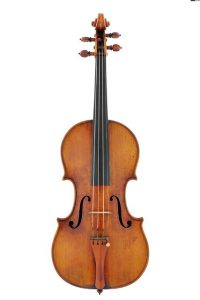
I play Google like a Stradivarius. But it helps top blog a lot. Actually blogging is foundational to how I play my violin.  I was reading Thomas Friedman today and in his Op-Ed column he suggested readers Google “power drills to the head and Shiite militias in Iraq.”  Please don’t, I‘m just making point.  Mr. Friedman knows how one can direct people about the web by simply offering key words or key phrases. I’ve been doing the key phrase thing for years. And key wording them in my daily blog for years.  In many cases, in the branding world, they have become memes.

It’s heaving lifting and takes commitment. It’s also cleaner than white or black hat SEO manipulation. When I direct people to my definition of branding as “An organizing principle for product experience and messaging” they find me.  When I tell prospects to Google “social media guardrails” they find me. “One claim three proof planks” is indexed by Google straight to me.

Are you hearing that violin? Back pat, back pat.

Peace.


Quality Vs. Price

0

If you visit big box stores like BJs, Costco and WalMart, no matter where you walk outside the food aisle you are going to find some really low cost products. Izod shirts for $16. Patio furniture for $399. Plastic hose winders for $14. Most of this stuff shares one thing in common.  It has a shelf life of about 3 months. Then it will be put out with the trash. You just know the colors will fade, the nylon  unravel, the legs will be uneven and the handles fall off.

When all this stuff — imported from other countries, stuff that low earning families buy to fill the American dream — breaks, they go out and buy more.  Because it’s so cheap. When the new administration puts a border tax on this “stuff,” adding, who knows, 40% more to the price, what will people do?  No longer will they be able to send their kids out in the snow in a $22 ski jacket.

It will change consumerism. It will force to people to spend more wisely. On better quality. I will force makers of dreck to become makers of goods. (There’s a reason they were once called goods.)

This isn’t a political statement. It’s a quality statement. We need more quality. We need less crap in the land fill. Less is more.

Peace.


The Future of Marketing.

0

In marketing AIDA is the acronym explaining steps to a sale. Awareness, Interest, Desire and Action.  It’s a serial process.  Back in the day, only a salesperson could get a consumer through all 4 steps at one time. More often than not, the AIDA process started with advertising, walked forward with a brochure or some form of research, before being closed at retail. When the web came around, all four steps could be experienced online – in a matter of minutes.  It’s why e-commerce is so hot.

Enter VR and the pictured controller device.  These little experiential, hand-operated electronics will do more for collapsing the steps to a sale, than perhaps any technology ever invented. VR headsets are the surround-sound movie theater, but it will be the controllers through which commerce is conducted. If the phone network is the headset, the controller is the iPhone.

Right now the headsets are the gold and the controllers the cheap peripheral. I believe that will change. And that change will alter the way we climb the steps to a sale.

One man’s bet. Peace.   

Two Brand Claims.

0

I’ve been thinking about two brand strategies lately. One for the Madison Square Garden the other for James Brown. Madison Square Garden’s is “The World’s Most Famous Arena.” James Brown was “The Hardest Working Man in Show Business.”  These two sentences are brand claims.

A claim is only good when it’s believable. If you’ve ever seen James Brown, you know his claim to be true. As for MSG, the same, but you may have to take their word for it to a degree.  There have been 4 Madison Square Garden’s and none in Madison Square since 1925. There have, indeed, been some amazing events in the 4 gardens, but it’s no Roman Coliseum. What The Garden is is a well-tended brand. At every major sports event the announcer welcomes one and all with “Welcome to Madison Square Garden, the world’s most famous arena.” The halls are bedazzled with black and whites of Ali-Frazier, George Harrison, and Mark Messier.   Hanging from the rafters are aging championship banners from the NY Rangers.

MSG works hard to prove its claim. James Brown used to sweat his claim.

Claims are the basis of brand strategy. With claim in hand, all that is left are the deeds and the proof. Peace.


What the Is is.

0

One of the most Famous TedX talks on business strategy was giving by Simon Sinek in 2010.  It discusses his Golden Circle of strategy. In the circle are What, How and Why.  A nice example of the rule of three.  One of my favorite memes, used in branding, goes a step shorter – it use the rule of two. My meme is the Is-Does. What a product or service is and what it does. (Implicit in the does is the why.)

Is-Does comes out of brand work in the tech startup space. I thought about today’s post while reading a piece by a branding nerd from Google Ventures. GV helps startups with branding deliverables, E.g., name, logo, stuff.  At What’s The Idea? we help with paper strategy; the words and ideas that create the organizing principle that drives stuff.

Often at start-ups it’s not clear what the Is is. You visit their website, read for 10 minutes and still may not be able to figure it out. Is it hardware? Software? A web app? Social Net? Done poorly, these startup jump right into the does. What the product does. And likely it’s not even a does but a do – meaning a list of things. We do this, and this, and this…  Be you a startup, service company, beverage…get the Is-Does right and you have the beginnings of a brand.

Peace.