Home Blog Page 62

Outside Baseball.

Get a bunch of brand planners in a room, say at one of Faris Yakob’s beer drinking meetups, and they’ll likemind the shit out of each other.  Similarly, create an event among Mark Pollard’s Sweathead listeners and everyone will speak the brand planner patois. Brand planners will share tools, stories, cases and tricks at the drop of a hat, yet to most business people it’s all inside baseball.

The primary problem for freelancers and consultant brand planners is no one outside our sphere really gets what we do. (We are partly to blame, due to lack of intelligible frameworks.) More to the point, there is not a lot of pend-up demand for what we do. In small and mid-size businesses nobody is talking brand strategy. Brand maybe, but not strategy. And at Fortune 2000s only a shot-glass full of people understand brand strategy – and the CEO typically isn’t one of them.

So we are selling something that is not easily understood and not in demand – not prerequisites for VC funding if you ask me. So how do we respond?  We continue to talk to each other.

No more. This blog has been about talking inside baseball to believers. I am now going to start targeting and contenting (word?) non-believers. Once I explain to small and mid-size companies how brand strategy (claim and proof array) will improve company efficiency, reduce wasted time, make marketing more productive and accountable, I’m likely to gain their ear.

My new goal. Outside baseball.

Peace.


Love What You Do.

0

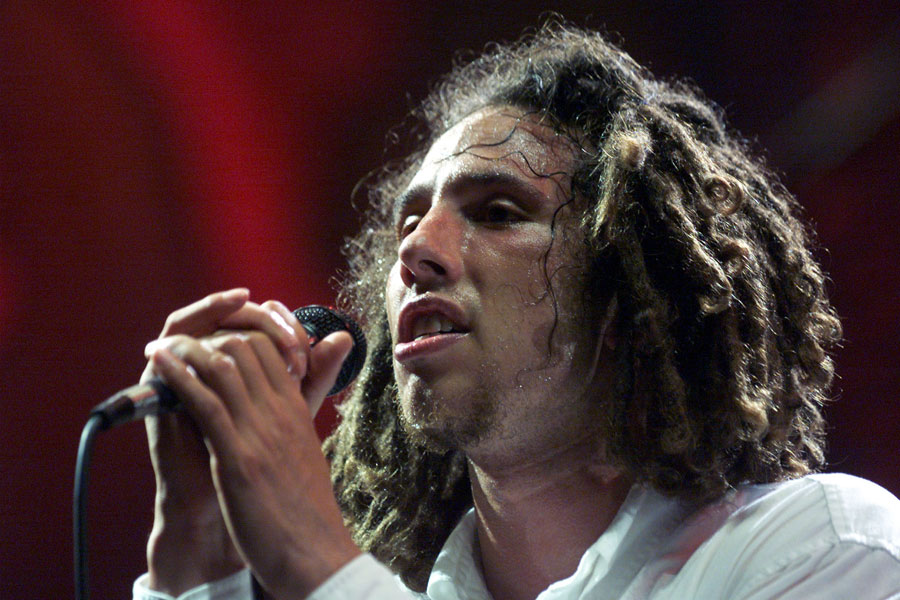
I went to see Tom Morello last night at the Orange Peel in Asheville – his third visit. By the evening’s end I was 8 feet from the stage.  I’d seen Tom at Jones Beach, the Garden, Randall’s Island and the City Winery – the latter from maybe 30 yards away.

The man can play guitar. At one point he pulled the amplifier jack out, held it over his head and banged it against his hand. Didn’t know you could make music that way. Every song was amazing but The Ghost of Tom Joad may have delivered the night in terms of tone.

Tom has always been an angry advocate for the working class. He hates racism. Jeers the 1%. And cheers equality at every level. Tom sees these things as his mission. And music is his vehicle. Up close you can see Tom, at this age, loves what he does. You can see it on his face.  I’m on record as believing “A musician is never more in touch with his/her art then when standing in front of an audience.” This goes both ways with Tom Morello.  Audiences are never more in touch with their humanity then when in front of The Nightwatchman.

If you do what you love for a living, you are giving back. I love brand planning and I’m using it to give back. Changing minds for the positive, one lyric at a time. Do what you love, if you can.

Peace.


Words. Stuff. And Deeds.

0

Tesla’s solar business, which needs a name change by the way, is revising pricing in order to regain momentum.  They’re going to make less SKUs (packaged goods term referring to product sizes/flavors) while asking customers to do more to minimize the number of site visits Tesla has to make, e.g., photograph meters and circuit breaker boxes, etc. These actions will drive cost out of the business enabling the price reduction. These latter costs are called soft costs. The panels being the hard costs.

What’s The Idea? is a brand consultancy that makes paper, ideas and strategy. All soft costs.  At the end of a business engagement my clients have in hand a brand brief, a claim and proof array (one pager) and if they go the full monty, a marketing plan. Soft goods.

Problem is, marketers really like stuff: Hats with logos, ads, signs, website and package designs. Stuff. My stuff happens to be words. 

As Mark Pollard, a really smart brand strategist says and will publish in his upcoming book Strategy is your Words, words make brands more effective. Words are strategy. Strategy leads to stuff. Strategy leads to deeds. Strategy leads to valuable, organized thinking.

Can’t wait for the book to come out. It’s stuff about words.

Peace.


What’s Above the Fold?

0

Here’s the thing about the internet. Here’s the thing about marketing. People need to know what your product or service is before they buy it. In a real world retail setting if your jar of white stuff is next to the mayo, you are probably selling mayo. If your light bulb is on a shelf in an auto parts store, it’s probably a for the car.

For new or establishing brands on the web there is no such context. Your name is context. Your picture is context, as long as you meet accessibility requirements. I learned all this at a startup that was too many things to too many people…and it sunk us.

Take a look at this screen grab from Strasmore and tell me what they do. ‘Xactly. What do you think the bounce rate is for someone who doesn’t know the company?  Dig a little and you may get they offer cloud services and back up and consulting but, hell, that could be anyone.

I have a little trick I call the Is-Does. What a brand Is and what a brand Does. If you don’t nail the Is-Does above the fold on your homepage, you are awash in the ether.

Imagine if you were someone who changed their name every week. Kinda like that.

Peace.


Health System Brand Strategy.

0

The surfeit of bad advertising in America today can be directly tied to the lack of brand strategy.

Here’s an example of what I mean. Mission Health, a huge and important health system in Western North Carolina, saves lives. They’re good people with masterful intentions. They also recently launched a new ad campaign.

Mission: You.

Without a brand strategy in place to drive communications, the work defaulted to a copywriter’s pen. Using age old tricks like putting the company name in the tagline, Mission was left with a claim, so undifferentiated, it’s become the penicillin of healthcare marketing. Patients first.

The problem with a piece of marketing poetry as a defacto brand strategy is that the idea isn’t cognitive. In this cardiology ad,

there is no claim. No proof.  (You might say “one of the nations’ top 50 cardiovascular hospitals, 12 times” is proof. But of what? Certainly not Mission: You.) When Memorial Sloan Kettering Cancer Center, whose brand claim is “More Science” runs an ad “Cancer reaches beyond the five boroughs, we do too,” that’s not more science.

Health systems are notoriously bad advertisers and worse branders. This is beginning to change but not fast enough. Before a health system starts spending tens or hundreds of thousands of dollars on ads, they need to get the paper strategy right. Don’t leave that to the ad agency – not unless they have a good brand planning team.

Peace.


Free Briefs

0


I’ve run a few promotions over the years and the most popular has been the “Free Day of Planning.” 

Promotions are typically used on new products to promote trial.  I have been in Asheville, NC for a year and a half and have yet to pick up any paying clients, so it’s time to break out the big promotional guns.

Last night while attending the Asheville Design Salon it came to me that in this market (and most markets) most people don’t wake up saying “Damn, I need a brand strategy.” They need customers, a website, and certainly logos and design work – but an organizing principle for product, experience and messaging, not so much.

Existentially, what is a brand strategy?  It’s a brief – a piece of paper with a positioning idea, based on customer care-abouts and brand good-ats.  So today I am offering all businesses in Ashville and the surrounding towns a free brief. (I’d insert nomenclature here about limited time offer and first-come-first served, but don’t think it necessary.)

Caveat: I will not be able to go crazy deep on your brand, but way more than deep enough to open eyes. Deep enough to help prioritize values. And focus. And to an extent, to wrap it all up in a little poetry.

So have at it Asheville. Write Steve@whatstheidea.com and order up your free brief.  


Aeroflow Breastpumps.

Aeroflow Breastpumps, located in Asheville, NC includes the following mission statement on its website:

“To increase the instance of breastfeeding nationally by providing the best equipment and supplies for ALL moms, creating a community that provides support and education, and settling for nothing less than exceptional customer service.”

Seem like a mouthful but when you parse the statement it uses a savvy, brand-forward framework.   

“Increase the incidence of breast feeding nationally” is a perfect objective.  In the brand land of claim and proof, it’s a wonderful claim.  “Providing the best equipment and supplies” can be viewed as proof of claim. “Providing a community that supports and educates women,” is no-brainer proof.  And while “Exceptional customer service” tangentially supports the claim, it certainly could be improved upon.  Good customer support is the price of business entry.

The interesting thing about Aeroflow Breastpumps is it’s a reseller of other people’s equipment. It’s not a manufacturer. What makes this company different is they help mothers with insurance — cutting through the kudzu that can keep moms from breast feeding. Putting pumps and other supplies in boxes, is the operational icing on the cake.

While other brands talk about purpose-based branding, this company was born of it.  I love this company’s chances of continued success. They’re in a great space, doing important work, and talking to a very motivated target. Plus, they have a great head start on brand strategy.

Well done. Peace.


The Branding Institute, Poppe Advisory Center.

0

I’m thinking about rebranding as The Branding Institute, Poppe Advisory Center.  It has branding in the name, sounds like a bigger company and, as an extra benefit, should increase search results. Not exactly a name that rolls off the tongue but, hey, it’s a Monday. 

Now if you are into semantics or are part of the super-majority of business people you may take this to mean I’m simply changing my business name. Most people default to name change when you say rebrand. A lesser percentage of people may assume I’m changing my logo, package or website.  But real nerds know that branding is way more foundational. Way more than a combination of physical outputs; it’s the means by which you engineer preference. Indelible preference. Bring starts with strategy.

Just as a psychiatrist will counsel a depressive person that moving to a new city won’t solve their problems, changing the brand name or product packaging won’t cure marketing ills. One must start with brand strategy – an organizing principle for product, experience and messaging.  And since I am not going to change my framework for brand strategy, my tool kits or outputs, it really wouldn’t be a rebrand, now would it. It would be a simple name change.   

Ah never mind.  What’s The Idea? will live to see another day.

Peace.


Health Care Branding Writ Large.

0

Here’s a little naming and branding exercise.  There are three names for pretty much the same topical healthcare idea — all concerning extending healthcare for all Americans. 

The Affordable Care Act
Obamacare
Medicare for All

Leave a comment as to which is the best sobriquet or brand.

The Affordable Care Act, was clearly a corporate-type construct.  It is an “act” which means it’s government-approved. It’s “affordable,” in name, so it’s consumer-approved, albeit marketed. And contextually it’s about care.  

Then there’s Obamacare.  It’s fun, but reverential and politicized.  On one side to the aisle today, it’s demonized…a magnet for associations shared by nattering nabobs of negativity. Lovers of the law mostly like the name. Certainly they like their namesake president.

Lastly, we have Medicare for all. Nice. Who doesn’t like Medicare?  It’s sing-songy (All for one, one for all). It’s inclusive. And most importantly it’s easy to understand. People know what Medicare is and they know who “all” are.

People who actually understand what the Affordable Care Act is – an incentivized illness prevention program – see it’s upside and pitfalls, with an emphasis on the former.  But consumers primarily see a name. 

The power of the Medicare for All brand is so great that the opposition had to come up with a counter name.  And they have done a pretty good job, “Socialized Medicine.” 

Brand builders are getting smarter in healthcare.  It’s a thing.

Peace.


Tangibility.

0

Here’s a question you might hear from a financial company in a nightly news TV ad: “What are you saving for?”  More likely than not the copy will answer the question with something about hopes and dreams. 

Hopes and dreams. Hopes and dreams.

Advertising is filled with copy about intangibles. The most common words used in advertising today are words about intangibles. Touchy feelie brand planners care about emotions. They hunt them down. Happiness. Satisfaction. Healing.  And therein lies the problem with many brand briefs. Briefs a card-carrying existentialist would pooh-pooh.

The best brand plans are built upon tangibles. Proofs.

When I tell a client they are getting brand strategy comprising “One claim and three proof planks,” they know what they’re buying. When some brand planners promise clients, a “voice,” “a personality” or “brand truth,” clients often scratch their heads.

Be tangible.

Peace