
Marketing Silos vs. Community.

0

Where do key marketing insights come from? Where does creative inspiration come from? Where do sales come from? Nice questions, no?

Key market insights come from people (consumers or business buyers) and market data. Market data, however, is just an aggregation of consumer activity and the patterns they throw off. 

Creative inspiration, in this machine that is the marketing and agency business, comes from the creative brief. Where on the brief?  Many would like think it jumps from the boiled down “selling idea,” “key thought,” or “engagement trigger” — whatever it’s called these days. But realistically it comes from anywhere on the brief.  Inspiring creative people can’t be mapped, it just happens. People are complicated.

And sales? Sales come from stores, catalogs and websites but really from the hands and minds of people.  

So duh, the common denominator in this serial journey to a sale is people.  The most effective marketing teams are those who make all three legs of this stool work together.

This is your silo issue, not revenue by agency type or department.  It’s not about break though work. It’s not about sales spikes. Or the most powerful media tactic or database.  It’s about getting people to see patterns, inspire others, and learn what sells in a specific category – then forming a community around the brand that fosters those activities. Agencies come and go. Campaigns come and go. Communities (unless you’re the Aztecs) not so much. Peace!
Toughest Question in Marketing.

0

Jeff Finkle, the CFO of a company I once worked for, understands the power of a brand strategy.  Jeff is an interesting character. His background is in venture capital, direct-to-consumer marketing start-ups, and C-level business and financial management.  Plus, with a last name like Finkle…

Anyway, I quote him all the time in meetings when talking about the power of a brand strategy and the need for it to be acculturated throughout the company.  In Jeff’s mind, company employees when leaving the building each night should ask themselves “What did I do today to make my company/product more ________ (insert brand strategy.)”

Zappos

A lot has been written about Zappos and its tight brand strategy.  Pop Quiz: Which of the following four questions do you think Zappos employees ask themselves while heading to their cars?

1. Did I sell more shoes today?

2.  Did I help the company sell more shoes today?

3.  Did I increase customer satisfaction among Zappos customers today?

4.  Did I help customers feel better about their feet, footwear and sense of style?

I need to get closer to the Zappos brand, but I’m betting they’d say number 3.  And they’ve built a successful business with that approach. Personally, I would stretch it to number 4 because “customer sat” is generic. But at least they are asking the question.

Anyone can tap a company slogan as they are heading out of the locker room, but more likely than not that’s just for good luck.   It’s up to management and the CMO to make sure employees stop tapping and start asking the tough question. Peace!

Proof In Advertising.

0

Advertising isn’t ineffective because it’s a dying medium, it’s ineffective because it’s ineffective. Good branding is about “Claim and Proof.” Advertising, an important, controllable means of branding, needs to follow the same “Claim and Proof” dictum.

Toyota, a company playing defense peppered with catch-up promotions, ran an ad in The New York Times paper paper today – a perfect example of badvertising.  All claim, no proof. Here’s the copy:

No matter who you are or what you drive, everyone deserves to be safe. Which is why the Star Safety SystemTM is standard on all our new vehicles – no matter what model or trim level.  It’s a combination of five advanced safety features that help keep you in control and out of harm’s way.  Toyota is the first full-line manufacturer to make the features of the Star Safety SystemTM standard on all vehicles.  Because at Toyota, we realizes nothing is more important to you than your safety.

I forgot the headline and I only read it 10 seconds ago. The call to action, where one might actually find the proof, is prominently displayed below the copy — Toyota.com/safety. This ad is one expensive call to action and a lot less.  Fail!

Who is at Fault?

I’m not sure who is responsible for this $20,000 piece of “we’re here” advertising but everyone is to blame. The creative person who said “People don’t read long copy.” The strategist who approved it, the client who agreed and paid for it. Frankly, The New York Times should be ashamed. Isn’t someone over there watching this stuff?

This business is easy: Find a great claim and support it with compelling proof. Compelling proof. Compelling proof. Compelling proof. Peace!

Marshalls and Recent Grads.

0

My daughter, freshly graduated from college and about a month into her first full-time job, loves Marshalls.  Marshalls is a department store chain with a very nice selection and great prices.  Apparently, she and her friend would shop there every day if they could.   They have a little jing in their pocketbooks and for the first time have the flexibility to shop on demand. That’s not to say they buy something every time they’re there but they look around (enjoy the air conditioning) and feel the power of consumerism.

A club?

Stores like Marshalls have been advertising and mailing to my daughter for years. Perhaps it has worked, perhaps not, but why not take advantage of recent graduates new found status by create a tailored marketing plan and in-store experience for them; one that might just make lifelong customers of them.  How about taking some of that hundred thousand square feet of retail space and turning it into a college graduate corner. Display clothes, apartment furnishings, some appropriate books, maybe some free coffee and a financial advisor. Put up some PC stations with access to Facebook. Create a Foursquare check in incentive. Cookies? (The kind with raisins.)  Celebrate these young ladies as they enter a scary part of their lives.  Help them cope. Let them commune. Test it out Marshalls!  Peace.

NFL and Marketing Futures.

0

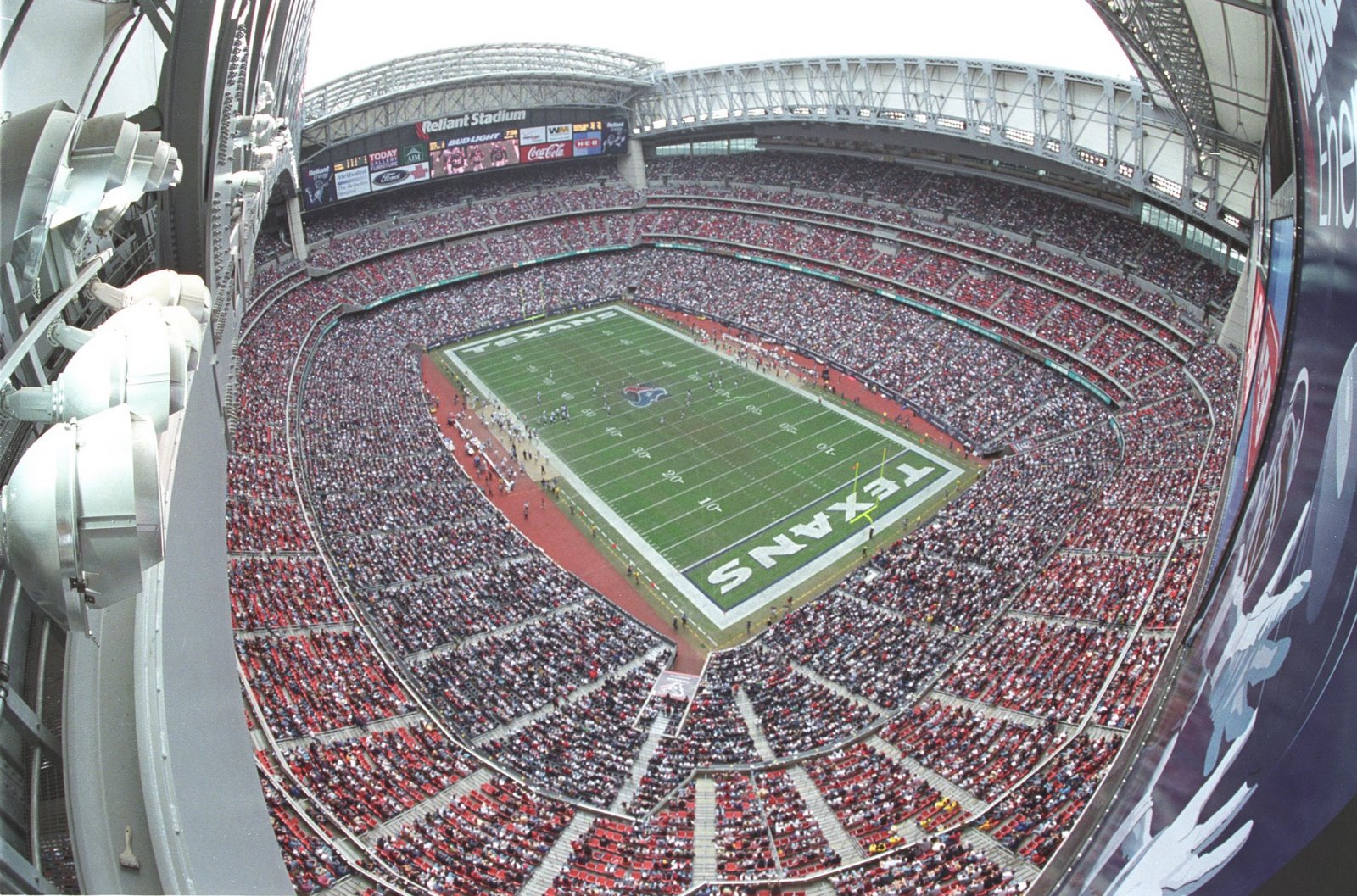
The NFL is improving the in-stadium game experience by creating WIFI enabled smartphone applications that provide game watchers with information, audio and video heretofore only available to the TV watching audience. Got smartphone?  The second wave of these apps will provide an even greater level of entertainment and analysis than is available through the TV — but let’s not get ahead of ourselves.  The business problem some teams are facing is that seat sales are down 3% since 2007 and TV viewership is up. With replays, color analysis and hi-def, the on-coach experience is excellent and free. The in-stadium experience needs to get better…and it is, thanks to smartphones. 

Consumer Goods Marketers

As consumer marketers put on their thinking caps and realize they need to improve the in-store shopping experience to better compete with online shopping, new worlds of smartphone applications will  turn up. Think aisle check-ins at the local Stop & Shop a la FourSquare, or pre-loaded Consumer Reports write-ups at your local car dealership. How about GPS-enabled restaurant reviews by cuisine or an olive oil rating app at the local specialty food store?  Help, I can’t stop! 

Thanks NFL for being so forward in your thinking. Peace!

Reach and Free-quency

0

I’d be interested to know of some ad campaigns that use TV for reach and the Web for frequency. Not paid advertising on the web, more like free YouTube video.  GoDaddy has used this approach with its Super Bowl ads.  The good thing about this media tactic, beyond the saved media dollars, is that the frequency is desired frequency, not forced.  Viewers make the choice to watch.  And one doesn’t have to worry about wear-out, since viewers only consume the spot as many times as they care to.  The creative has to be amazing and compelling though, or it will be a complete bust.  That’s the rub.

Anyone have other successful examples? Peace!

Social Media For Good.

0

When the Flip video camera, now owned by Cisco, first came out I posted it will change the world.  If you thought the video taping of the Rodney King beating changed the world, image how putting video cameras in every pair of pants and pocketbook might alter history.  Hello Iran? 

Social networking, still in its infancy, is going to change the world in even more powerful ways. Flatten away I say.  Social networking and social media started out as friend finding, simple messaging, and posting of photos and captions — uses which are still going strong. More recently, smart businesses have seen the upside of using it commercially to improve bottom line and topline revenue through a handful of applications: Customer care, promotions and research. We’ve along scratched the surface with Social Media in business…stay tuned. 

What’s Next?

The next wave will be the more thoughtful use of social media. More cause related. Ask Nestle about its palm oil/rain forest problems — the result of social media pressure. Ask Nike about its policy of outsourcing production to Honduran companies who demonstrate unfair labor practices…really torking off college students. If you think a Mel Gibson diatribe can go viral quickly, wait until you see what citizen journalists can do with watchful eyes and some motivation. This new wave of social media activism is going to have mad impact.  Cover-ups won’t cover as easily and corporations and governments will need to watch their steps. It’s next. And it’s welcome. Peace it up!

Life Imitating the Internet.

0

Good marketers and brand planners like to view the world beyond the marketing dashboard. That is, out past the windshield, beyond the dials and digital displays.  They’re good at predicting the future – seeing what’s ahead.  In order to do this, marketers and planners have always used research, concept testing and test marketing.  

What’s so cool about the Internet is that it has given marketers and planners an entire world of real time research from which to mine new product ideas.  People who play virtual games online, especially fast growing games, are a great source of new product intelligence.  If we listen and watch carefully we can figure out the messages they’re sending us.  First message: They like the activity. Second message: They prefer to participate in the activity on their terms (on-demand, low cost or free, low personal impact, if one loses.) 

Farmville’s Message.

For instance, what does the amazing success of Zynga’s Farmville game tell marketers about real world product development?  Well we all know watching real vegetables grow is a lot more fun and rewarding than watching a virtual crop, so the marketer who creates a low-cost system to grow real vegetables (lettuce, tomatoes, cucumbers?) indoors (or out) with little time investment, will have success.  A lot of people love the idea of farming, they just don’t have the 21st century tools. What other online behaviors do you see that predict offline marketing success? Peace!

Poor Sprint.

0

I feel for Sprint, I really do.  They were the first and only top-tier national fiber optic voice and data network yet they never made it past #3. They started when analog telephone calls and digital data packets were coin of the realm.  Today, when speed is needed more than ever, when iPhone users are complaining about dropped calls while sitting in front of computers with sluggish load times, poor Sprint and its lightning fast fiber still aren’t getting any respect. Fiber is an idea consumers understand. Sadly, the story has never been correctly told.  

FIOS, a Verizon product built on Fiber, is gaining mindshare in NY as a faster means of digital transport. (Fiber into the house makes machines scream.)  Sprint, on the other hand, is airing a TV spot promoting the HTC EVO mobile phone running over its 4G network — the world’s first 4G network – using a strategy about “firsts.”  The TV spots borrows a visual idea from Honda and Google (so much for firsts) showing other technology innovations tipping over in dominoes fashion. A Model T, knocks over a bi-plane which knocks over a steam locomotive, etc. It’s so far removed from fiber, a medium that connotes speed and clarity, you might as well be watching a Fruit Loops commercial.  

Verizon, via Droid, is implying “futures” in its TV work. Sprint focuses its images on the past. Quick, close your eyes. Visualize which company gets credit for speed? No contest.