Product Marketing States.

0

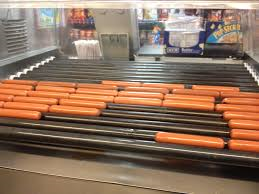
7 11 hot dogs

There are three main product marketing states one confronts when selling. There is pent-up demand, demand, and no demand.  In the first state, the market wants what you sell and there isn’t enough supply.  Or the market wants the functionality, but the product hasn’t been invented yet.  This is every marketer’s dream.  The demand state is the normal market environment. Old supply and demand. People want or need the product and buy it when they run out. Customers may be brand loyal, pocketbook loyal or convenience loyal. Ever eat a 7-11 hot dog? That’s convenience loyal.  Lastly, there is no demand. In this state, consumers may like or want your product – they just don’t know what it does or how they will benefit. This is the most expensive marketing undertaking because money has to be spent educating the market as to the product’s benefits and role. You sometimes have to define for consumers a problem they didn’t know they had — then sell them the solution. A two stepper.

The marketing and advertising response to each of these market states should be very different. The branding (and naming) approach may be different too. So ask yourself marketing dudes and dudettes, in what state is your product?

Peace.                 


The Future of an Idea.

0

My friend Terrence and I once drove to John Hopkins University from NY to see a wonderful panel of physical anthropologists speak. Big, full auditorium.  I was never one of those “ooh, ooh, ooh kids” who asked a lot of questions in class, but during Q&A time, from way in the back of the expansive auditorium, I asked paleontologist Tim White of UC Berkley, how he thought man was currently evolving.  The question got a giggle or two from the room. (Doh!)  He went on to say brains cases would get bigger and women’s birth canals also…

I love to think about what’s next. It suits me well as a brand planner. The future takes up a good deal of my time at What’s The Idea?.

The future of marketing, product and delivery are not always top of mind for clients. It’s a shame. Had Intel thought this way it may not have had to lay off 12,000 worked yesterday.  Healthcare providers need to think about the future, but they don’t; it’s all about the next diagnosis.  Google needs to think forward and it does. But they need to think forward not about cars and energy, but also about their current search focused product line. And monopolies.

The brand strategies I develop always have the future in their peripheral vision. The strategy developed for Northwell Partners nee North Shore LIJ Health System, is as relevant today as it was 15 years ago.  

If your mantra is “Campaigns come and go…a powerful brand idea is indelible,” the work must be future proof.

Peace.


What goes around…

0

If you wrote a prescient article in the 90s about the rise and fall of Yahoo! and predicted a future in which the company would go on to be a top 10 trafficked website, a billion dollar advertising juggernaut, hirer of one of Google’s most high-flying executives, and a brand with wonderful ballast – only to be bought by the Yellow Pages, I think you’d have been diagnosed with bipolar disorder. But that’s what looks to be happening.

A company that started out in search is going to end up in search in a weird turn of events. An organization that was an Original 6 (hockey reference…Go Rangers) tech company, will end up being a publishing company that is a shell of itself.

That said. I wish them well. I hope all alums remember what the early years were like. I sure do.

What goes around comes around. Sometimes.

Peace.    


How Facebook Can Clean Up Mobile Advertising.

0

I’ve been giving some thought to the sad state of advertising on mobile devices. To quote the Direct TV television campaign, mobile advertising really is being led by “settlers.”   On my mobile for instance, there are banner ads at the bottom of the screen that measure maybe ¼ inch in height. In those ads are pictures, lots of words and, pray tell, a sales message. Other mobile ads include 15 and 30 second TV spots that too frequently infiltrate my media twitches between YouTube views. Why must I watch a :15 just to view a 45 second video? It’s crazy. And text and link ads are ugly and boring — born of the analytics crowd.

There was an interesting article in the NYT today on how media companies and websites are losing traffic and ad dollars to platforms like Facebook. Many news publishers, pressed by economics, are downsizing and thinking about better utilizing other platforms for their content delivery. The Times reports that $.85 of every dollar in internet advertising goes to Facebook and Google.

So here’s my prediction.  At some point Facebook will change its mobile advertising effort over to more of a TV approach. They will sell video spots, not banners or other unsightly clickables, and those spots will be distributed in pods. That is, if you spend 15 straight minutes on Facebook, you will have to sit through two :30 second spots. Spots that are nicely produced. Pretty to look at and entertaining. No clicks needed. You are, after all, using a mobile search without peer. 

Video spots are actually more suited for mobile devices than they are for TV.  

Evolving web advertising to this model will be very disruptive. It will also hasten moving content to Facebook. And it will be messy. Beyond what we can foresee. But it is one way to improve the ad experience. Google cannot play at this time, they need the Fast Twitch nature of the web. YouTube can play as can Netflix. Going to be a wild ride.

Peace.


Truffle Insights

0

Brand planning insights are a dime a dozen.  Upper echelon planners know which insights are the truly special ones. They know which to chase and which to leave alone. Insights that change markets are like truffles. Truffle Insights make you sweat. They set off the galvanic skin response.  Truffle insights spark what Maslow referred to as a peak experiences.

I once did a deck while freelancing at JWT on the Microsoft Office business, containing 7 or 8 truffle insights. There were so many the deck got filed.  It impressed but was hard to deal with. Too many truffle insights creates the “fruit cocktail effect,” it tastes good but leaves no visceral differentiation. So savor your truffle insights. Don’t re-bury them.

I’m reading David Brooks’ NYT Op-Ed piece today in which he discusses the 10,000 hour rule researched by Anders Ericsson and written about by Malcolm Gladwell. It suggests 10,000 hours of practice can trump innate intelligence.  Do 10,000 hours make you a truffle insight digger? Not necessarily. But it certainly helps.

If you put in the work and burnish your instincts, you may just becomes an effective truffle insight hunter.

Peace.


Kindle Oasis. Ish.

0

I feel like a geezer when telling people I still read books on my Kindle.  As if it’s an old technology. Why not read on your tablet or phone people may ask? Well, I like the form factor. When my original Kindle seized up I wondered if I’d like the swipe feature over my click buttons.  The jury is still out but I’m getting used to it. The Kindle Paperwhite is back lit and that’s very cool – so agrees the wifus as I read in bed.  

kindle oasisKindle has just released the Oasis. As a defense against people who like to read on more multipurpose devices, Amazon logics the sell by saying the devise is only for reading – no distractions. No email, no texting. Just unfettered Henning Mankel. I love it. (Please don’t go all Airplane mode on me.)

Two trends I often post about are media “Twitch Points” and “Technology Backlash.” A twitch point is a media moment when one switches devices or media in search of more information or clarification. Twitching is easier on one device, but it’s not really multitasking, it’s serial. As for technology backlash, where people just want to disconnect and go au naturel, that is still a thing…even if we tweet about it. The Kindle Oasis, which is wonderfully named by the way, supports the latter trend and allows for the former, but in a more disconnected way.

Anyway, I love that Amazon gets us and our weird contradictions. Good job women and men of the jungle. Good job.

Peace.     


Change Dot Org.

0

The governor of North Carolina, Pat McCrory, stepped back from his anti LGTB position yesterday after taking a ton of flak from the NC populace and feeling the economic heat of large organizations who pulled out of the state to show solidarity. Though he has not completely reversed – it’s a step toward making most parties happy. (Pet peeve: Do journalists try to make it hard to understand their prose? Example, “But he stopped short of opposing limits on which bathrooms transgender people could use….”     Stopped short (negative), of opposing (negative), limits (negative) – that’s net negative, right?)

Only in politics can you get away making a big change, listen to the people, change your mind and reverse course, and end up being better off than where you started. But that’s not really true.  When Coke launched New Coke, changing the formula, Coke drinkers were in an uproar. In one of the greatest marketing parries ever, Coke dashed New Coke and came back stronger than before. Most brand and marketing journalists will tell you the move galvanized Coke drinkers and re-launched the brand in a stronger position.

I’m not sure if governor McCrory is in a position that is stronger than ever, but I wouldn’t be surprised. When the people speak and you actually listen, it shows they have the power. Consumers and voters like that. It’s okay to listen and it’s okay to change.  

Try it. Peace.


The Negative Continuum.

0

The What’s The Idea? brand strategy framework is simple, 1 claim and 3 proof planks. To get there, the discovery process searches out consumer “care-abouts” and brand “good-ats.”  While exploring these things I’m always looking for positive ways to build strategic values.  For instance, a client launching a healthier-for-you cookie made with all natural ingredients, faced a category perception that products of this nature are often dry with harsh mouth feel. A negative. The brand plan made “moisture” a plank. A positive.

Leveraging negatives is a common marketing practice. But in branding, it’s all about the positives.

On the negative side of the ledger there is actually a continuum.  From most to least strenuous it includes: hatred, anger, annoyance, nuisance, irritation, and dissatisfaction.

When going positive, it’s important to have a sense of where on the continuum consumers lie when evaluating competitor or category negatives. Are dry natural cookies an annoyance or a nuisance? Then when promoting the moist nature of your cookie, you mete your response proportionately.

Today’s newspaper says the negative ads against Donald Trump are in record breaking territory, with $70M spent by fellow republicans alone. I wonder if they are using the negative continuum?

Peace?


Rhode Island. No commas or conjunctions.

0

Rhode Island’s new tagline “Cooler and warmer” is catching a lot of flak from the state’s citizenry. The lovely ocean state recently launched a new logo and tagline, costing the taxpayers a couple million dollars, and the homies are not happy. The logo is okay, but the tag has no ballast. Poetic? Perhaps. Goofy? No doubt.

rhode island logoSo how did Rhode Island get into this mess?  I’m guessing there was no brand brief. And if there was, it certainly lacked a tight idea. I used to mentor brief writers by telling them your claim should have “no commas or conjunctions.” A claim should be about one thing. “Tastes great, less filling” is the rule breaker. And let’s just say the Rhode Island brand brief was tight, then the tagline writer and approver rode roughshod over the process. For my money, there was no brief. Or it was a poorly crafted piece of strategy.

If anyone has a copy (on the off-chance there was a brief) and would like to share, I’d be happy to do some forensics.  Peace!


The Scariest Business Question Ever.

0

freud

I’ve been around large corporate environments. I’ve worked for some powerful people. I’ve seen what it take to reach the top. I’ve seen what it takes to stay on top. And I’ve also seen what a precipitous fall from the top looks like.

I say this as I read about the ouster of Disney’s Thomas Stagg, the heir apparent to Robert Iger. Did he see it coming? Did he know he wasn’t meeting expectation? When you are that high up in a company, do you know upon what you are being judged? It’s rarified air up there.

Remembering friends who ascended the mountaintop and were removed while reading about the sturm and drang at Disney has me thinking about adding a question to my business planning discovery questionnaire.

Here it is:

“If you were to be removed from your current position by the CEO or board of directors, to what would you attribute the firing?”

Freud doesn’t allow powerful men and women a wonderful night’s sleep without a few “naked-in-school-without-your-homework” dreams, so C-level executive think about this stuff. Don’t let them off the hook if they answer with high drama scenarios. Make them talk metrics.  That said, don’t allow them one-word answers like “growth” or “stockholder value.” Probe it. Ask them to storify it.

I’m thinking this is rich and richer territory. I can’t wait for my next assignment to try it out.

Peace.