Marketing

    Social Promotion at its Worst

    0

    This morning I received a silly promotion that did more harm than good to three participating brands: Banff Ski resort, Visa and Klout. Here’s what I received in my email inbox: Banff Promo   If I found a $5.00 bill on the ground, I’d pick it up…I’m no stupe. If I found a five up at Banff on the floor of the bar or mid-mountain lodge, it would definitely buy two-thirds of a craft beer or bottle of premium tap water.  But to ask me to watch a promo video, print out a coupon, pack it in my bootbag before it even starts snowing (the boot bag under lots of stuff in the hall closet) so I can buy some free Chapstick the next time I go skiing at Banff, a place I’ve never been, that’s a bit of a stretch.  A trip to Banff from Long Island probably costs about a thousand dollars per person after travel, lodging, lift tickets, etc. This is not only a goofy promotion it’s a slap in the face. The whole Klout Perks thing – Klout scores rate one’s online influence — has really diminished in my eye. If I was a ski bum living in Banff I might use the coupon, but frankly this promotion is not worth the HP ink it will cost to print.  Silly.  Sorry to rant. I expected better from Visa and Klout. Peace in Hong Kong.

    A Cadillac Grows in SOHO.

    0


    cadillac

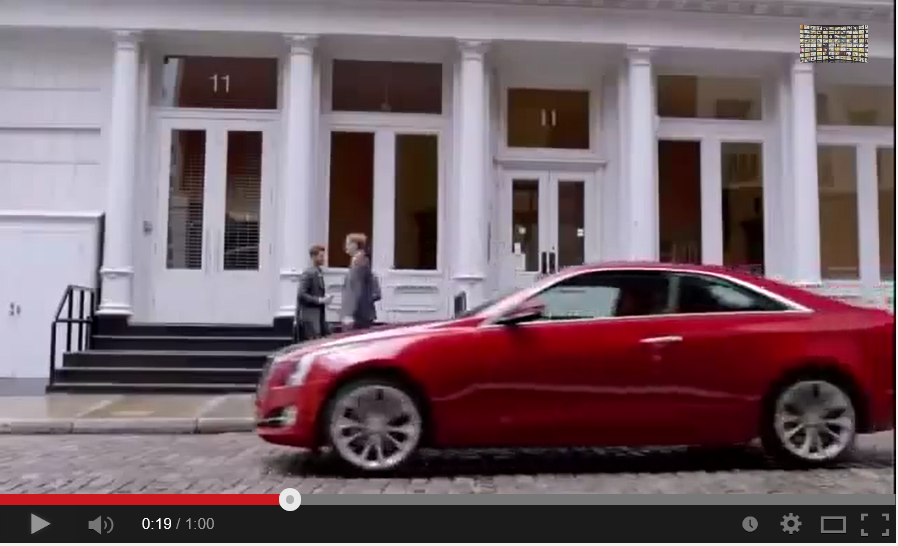
    I saw a new Cadillac ad on TV last night.  In light the announcement to move Cadillac corporate headquarters to SOHO, NYC, I was immediately taken by the backdrop of the red luxury car as it rolled through its paces. The streetscapes were def NYC…Greene Street, in particular. As much as the environs were urban and chic, the one thing most in need of style was the car itself. This nondescript Cadillac model was, yawn, nothing to write home about. Save for a few close-ups of the grill emblem, visually there was very little compelling about the ad with the exception of the atypical location.

    Cadillac is moving to SOHO in search of style. And cachet. The first thing it needs to do is design some cars that don’t look like white collar dress shoes. I hate to use the words European styling because it suggests we Americans are not style-forward, but a little help from the continent wouldn’t hurt. Or, how about getting some of the Apple designers to lend a hand? The Cadillacs of 2-3 years ago were really, really bad. Now they are just bad.

    I applaud the move to SOHO, but nothing is going to change until Cadillac exterior and body designs are smoking hot. The product is everything. Image secondary. Peace.


    The Future of Marketing Analytics.

    0

    I wrote a piece a few years back foretelling the government’s breakup of Google. I predicted a Google trivestiture giving birth to a pure analytics company – to which marketers and ad agencies would pay lots of money. Well, the breakup hasn’t happened yet but Facebook may have just stepped into the analytics breach. Facebook is launching a new advertising platform, using all the data it collects about us, to sell ad space. And not all the ad space will be on Facebook. Many ads will appear on mobile sites, apps and other things digital.

    This is going to be big. I repeat, from a revenue standpoint this is going to be big.

    I’m afraid Facebook will have first mover market position on Google here and because it is a social network not a search company the government will allow it.  Google, I suspect, is going to want to tap into this new analytics revenue stream and siphon off a big chuck — and that may be where trivestiture kicks in. That said, by allowing Facebook first mover status it may prolong the period before trivestiture. Smart move.

    Who else wants a piece of this analytics pie? Amazon. And Apple with its bold new ApplePay program.

    Fasten your seatbelts errybodies, this is going to be fodder for some serious red state/blue state discussion over the next 10 year. Peace.

    Yahoo! Treading Water.

    0

    Yahoo! is sitting on a bundle of cash and according to news reports stockholders are clamoring for a payout. The cash is from holdings in Alibaba which just IPO’d. Marissa Mayer, Yahoo CEO, is being pressured to not spend money on purchases of other tech companies a la the huge Tumblr purchase — stock owners want dividend checks. Can’t really blame them.

    Yahoo is a media company and a technology company. And frankly, they are not excelling at either. David Pogue is not happening. Katie Couric, not so much. The new digital food magazine is not burning down the house. And mobile first – I don’t really know what that means other than make stuff work on smaller screens and invent fun phone apps – is not delivering differentiated value at this point.

    Ms. Mayer needs to tell investors “snookie, shut up and get in your bed.” She needs to put the check book away and stop looking to buy side view mirror tech companies (companies fast approaching from behind). Yahoo’s new strategy is “be part of people’s daily habits.” A nice start. But weather, food, tech news and the Middle East have been done. Yahoo needs to invent in areas that are not saturated. And big data is a good place to mine for behaviors and habits. Focus on daily habits, innovate around them and deliver under the Yahoo brand. First understand the habits, then understand the pent up demand, then turn the engineers loose. I get the feeling the engineers are defining the need, which is backwards.

    Too much company time is spent reinventing not inventing. Peace. 

    Affordable Marketing Act.

    0

    The Affordable Care Act is working. Reports suggest hospitals are seeing more patients pay for their care. The new focus on tests and meds and outcomes is making it so that projections of overall healthcare spending will slow way down over the next 15 years. The current 18-19% of our GDP going towards healthcare will be a relic of this new healthcare era. Why is this? Good use of big data.

    If we can herd all the crazy cats that are the healthcare industry, why can’t we do the same in marketing? I once oversaw an ad photo shoot of a mint on a pillow that cost $30,000 plus. How can one TV spot cost a million, another $40,000? One agency charges a $345,000 monthly retainer, another $60,000 (for the same staffing and creative output). Clearly there is elasticity in pricing in the marketing business. But is anyone tying outputs to effectiveness? Certainly marketers say they are. But are they really? Are marketers using big data tools to track ROI?

    Where is the Affordable Marketing Act? Who is watching out for costs and effectiveness? AAAAs? AMA? I McDoubt it. Google is one great big data tool and may at some point have a horse in this race, but it’s not happening now.

    Someone needs to turn up big data in a big way to help address the madness that is unmeasured spending. The madness that supports John Wannamaker’s famous line “I know half my advertising is working, I just don’t know which half.” Peace.


    Slopping claims.

    0

    I was listing to Jim Nance read an Insperity radio spot yesterday, something I’ve probably done 30 times this summer, and for the life of me I still don’t know what Insperity does. I really made an effort to listen yesterday and think they may provide business services, whatever that means. HR services. Maybe payroll, financial, but not really sure.

    Recently, I sent an RFP out to a company with the word “benefits” in its name. Their positioning and brand problem was that they weren’t just a benefits company, they were also financial planners. Another company having a difficult time explaining what they did for a living. (Explaining their Is-Does.)  

    Insperity’s tagline (I just twitched over to their website) is “Inspiring Business Performance.” That didn’t help. But more importantly, in the radio spot Insperity used the 4 worst words in all of advertising.  The most over-used words in copywriting. Four words that almost always identify a bad ad: “…and much, much more.”

    The problem with these words is they are typically used after a long recitation of claims. And when you are slopping claims around, your listeners or readers get lost. So find a claim and prove it. And prove it. Don’t encumber it with other claims. It gets messy. It’s bad for branding. It’s bad for advertising. Do it much, much less. Peace.

    Great Stony Brook Children’s Hospital Spot.

    0

    Stony Brook Children’s Hospital is running an adorably effective TV spot in a category filled with generally poor work. While most hospital ads boast and claim or spout specialty capabilities, aka leading edge treatments and technology, this spot is about empathy. A smart aleck, young physician is talking to her patient on a gurney rolling toward surgery. The doc speaks to the child not in warm and fuzzy, sage-like tones, but as one kid might speak to another. The casting is terrific. The physician is young, female, pretty and a genuine wise-guy. The patient is a fast talking, trying-hide-her-nerves smarty pants, who is quizzing the physician for credentials. What’s neat about the patient is she’s clearly an A student, comfortable with adults, a digital age young ‘un – and not a needy, sorrowful victim. There are no pictures of the OR, no scanners, family member, or big building shots. Just a physician and her patient on the way to an appendectomy. Yet the spot is rich in context.

    In day after recall testing, this spot will convey Stony Brook physicians are accomplished, confident, warm and empathic. And Stony Brook patients and parents are smart decision makers. Bravo Lewis Communications. Bravo Stony Brook Children’s Hospital.

    Peace. 


    Wanna be my friend?

    0

    best friends

    David Brooks wrote a great Op-Ed piece in the NYT today on friendship. He discussed its importance and necessity. He shared whys and wherefores of what makes a true friend. As great writing does, he makes you think about your best friend. Do you have one? And what makes them so? “Nothing inspires friendship like selflessness and cooperation in moments of difficulty,” he writes.

    I had a boss once who I liked very much. He was interesting, full of life and inspiring. A potential friend. He told me he could never be a friend of an employee. He’d been burned once. Como se sad?

    Remember when you were a child and a kid you’d never met before asked “Want to be my friend?” What was your response? For me, the question was off-putting. Instinctively, I couldn’t process it.  A lot has been written recently about a consumer backlash concerning friending brands on Facebook. Brands are getting too needy and aggressive and it is hurting them. It’s a very non-friendly behavior.

    As much as I would like to suggest brand planners think about the components of friendship when making brand strategy decisions, I will pull back. But only a little. I’ve written before about the need for brands to provide help. And educate. Brands can never be friends, but it wouldn’t hurt them to act like one every now and again. Peace it up.

    The thing about an idea.

    0

    In branding, the strategic idea (or claim) is the bank. The ads, promotions, events and deeds of marketing are the deposits. The bolder the claim the better the branding. The weaker the claim the limper. When Orson Munn and Peter Rabot created the tagline “Amazing Things Are Happening Here,” for NewYork-Presbyterian, they went bold. Really bold. If the litmus for every ad was “amazing things” then they had their work cut out for them. When they learned Deathstalker Scorpion venom aided in treating brain cancer, they made an ad. When a child with rampant abdominal cancer had all of her organ’s removed so she could be treated and live to tell about it on a TV commercial, she amazed the country…on the Super Bowl.

    It’s hard to be amazing every day, yet Messrs. Munn and Rabot built a brand doing so, making way more deposits than withdrawals. Munn Rabot no longer works with with NewYork-Presbyterian and it shows. NewYork-Presbyterian knows they own a great idea and kept the tagline but to the new regime, amazing means buying a new hospital (Lawrence Hospital) and investing in new equipment.NYPres ad (Click on ad from today’s NYT.) I’m sure there are lots of amazing things happening at Lawrence Hospital that could have been brought to light with a little digging. That’s branding trade craft. Unfortunately, that was lacking.

    Ideas need heroes. Ideas need management. Alas.

    Peace.


    Brand Conservation

    0

    I was reading this morning about Australia’s 35 year plan to preserve the Great Barrier Reef. Global warming, coastal development, poor water quality, excessive coal commerce and general nastiness are contributing to the reef’s demise. As with many natural wonders of the world, I often ask what it will take for denizens of the planet to stop withdrawing from the natural ecology of the planet and start giving back. In the United States there is a lot of talk about removing electrical dams, for instance, to put rivers back in sync with the natural order, but the talk an action are out of step.

    Brands are also at risk these days. Poor brand management, high rates of employee turnover, new media channels, mergers and acquisitions and technological innovations are draining the meaning and perceived value of many brands. Marilyn Laurie, an AT&T brand executive from the 80-90s, used to preach about making deposits in the brand bank, not making withdrawals. When advertising and marketing make deposits the brand gets stronger. Withdrawals make a brand weaker. In this metaphor the brand currency is brand strategy (one claim, three support planks). Without a strategy it’s hard to know the difference between a deposit and withdrawal.

    As is the case with planet, large mature brands need to practice conservation to stem loss. Sadly, brands aren’t focusing enough on what they have and what they are diluting — they are simply planting new ideas then checking the dashboard for signs of life.

    I was watching a webinar yesterday put on by The Knowledge Engineers, Brand Republic and ABV/BBDO. One slide in particular was telling. It suggested strategy in innovation planning is too focused on the solutions — paying little attention to understanding the problem. We need to fix that. A conservationist approach.  Peace.