Marketing

    Blog Better.

    0

    I’ve written over 1,800 blog posts here at What’s The Idea? I would love to tell you it has made me rich, or famous, or a better writer. Perhaps I’m a marginally better writer. The reality is, I do this for all the above reasons yet the main reason I blog is because I like to. I like brand building. I like communications. Marketing. And I believe in the thesis that an “organizing principle for product, communications and experience” is a sound way to drive improved sales and profitability. I’m not going to go all “passion play” on you. The word is overused today.

    Many blogs today are chores. They are shared by numerous writers. They are simply writing and posting. Searchable tags under the guise of an idea. Some social media tools are a lazy man’s blog. Poop out simple short snippets and drive traffic. A blog is best when an ongoing narrative with connective tissue.

    To companies who feel the need to blog I say find a writer who loves the company, topic or category. Someone close enough to actually have a sense of humor about it, a sense of indignation, love and feelings. As much as I talk about good marketing being educatory, don’t use teachers to blog.

    Blogs become good if they are interesting. Interesting, contextually relevant, alive and immediate. I miss Steve Rubel. Robert Scoble. Joseph Jaffe. Come back to blogging sirs. Kandee Johnson never left and her work moves the world for her readers.

    Peace.


    The Gray Hairbnb?

    0

    When I was a stupid twenty something (as opposed to a stupid 50 something) I had to wipe my friend Andy’s ass. He had been stricken by some debilitating muscle disease – his family wasn’t in the city hospital at the time – and I was visiting. This was pre kids so I’d never wiped a foreign ass before. Andy, who had always been nice to me, though a marginal buddy, in his high-pitched, muscle depleted voice asked for my help and I complied. No problem. As if he was asking me to pass milk. What’s an ass wiping among friends?

    My latest idea for life in my 80s and 90s is to create a group home of friends, all of whom are willing to wipe one another’s asses. Giggle not! If you are willing to wipe, you are definitely willing to help a pal into the shower, soap a nether region, and do all the other things it takes to live independent. Nurses do, what’s the big deal?

    The notion of putting a number of seniors friends together to share a home, resources, living tasks and chores makes sense to me. I’m not sure it’s something that has been done before. One person may still be able to drive, another a great cook, one the “super mother,” another a fixer/tradesman. Of course there will be personalities that clash. Crankiness that old age begets. And refrigerator bandits. So there will have to be rules, lots of TVs and a mediator. But if the idea works, it may be a wonderful way for lifelong friends to be self-sufficient and perhaps even thrive for another 10 years. The next Gray Hair BNB?

    Peace.


    Buying Versus Selling.

    0

    I’ve written before about the marketer’s easiest sale being one where there’s pent up demand for a product, service or function. When people want what you offer, selling is easy. At the polar opposite is selling something people don’t want. Then selling is hard. I don’t want to get sick, so selling remedies beforehand, for instance. I don’t want to buy a condo in the Berkshires, is another example.  Then there is the third approach: selling something a customer doesn’t know about. They may want it, if educated about the product, but the need is not on their radar. This is an expensive marketing challenge because first the seller has to explain the product, then explain the problem/function, and lastly close the deal. It’s a 3 stepper, if you will.

    With pent up demand selling you can almost take a “we’re here” approach. There is demand — you are the supply. Like Pearl Jam tickets. With a product that had little demand you are best segmenting your target and focusing on those who do want it or profile closest to wanting it. For the latter group the best way forward is to take an educational approach. Don’t preach-teach. Engage, find common contextual ground, then bait several hooks and learn what works.

    If all people were the same, selling would be easy. They are not. Remember, it is buying you should be focused on not selling. Peace.


    Brand Culture Vs. Operating System.

    0

    I think it was UnderCurrent or Nobl (Bud Cadell’s new consulting effort) who came up with the notion of an operating system for a company. It may be someone else…I need to dump the brain cache. Anyway the metaphor of an operating system for a company or brand is similar to language I use in brand planning “an organizing principle.”

    One of the most overused words in business and brand consulting is “culture.” Just as companies that talk the most about ROI are the one’s who don’t have it, companies that speak of culture most often don’t have it. Back in the 90s John Dooner spoke of culture at McCann-Erickson. When I finally got through the blather about “entrepreneurship,” someone finally described it to me as “Do what you want until someone says stop.” Culture needs a motivation. It needs articulation. And it needs behavioral tenets. Culture is like the mama on your shoulder who tells you how to behave and what to do at any given moment.

    Brand Culture may be a good way of repackaging what I do as a brand consultant. Brand strategy at What’s The Idea? is defined as 1 idea, 3 proof planks. (I find a motivation or claim — one that customers want most and that the brand does best – and arrange that atop 3 behaviors that are business winning.) Not a particularly sexy or in-demand sale, it works.  Yet it doesn’t often get past the c-suite.  I’m thinking of packaging it as a brand culture exploratory; it may clear up the misunderstandings around the words brand and culture. Operating system ain’t bad, but it’s a little bit like organizing principle.

    Stay very tuned. Peace.


    A crafty sneaker company.

    0

    I had an amazing girlfriend in college who used to hand-paint socks. They were cooler than cool. Almost still have a pair…it was a long time ago. B Street Shoes is a concern whose founder Blake Barash had made a business out of hand painting kicks or sneakers. His site on Etsy gets more than 140,000 visits a month and his shoes sell for about 2 hundie. Blake, has found the craft economy. I love to read this kind of story.

    My college psych profession tried to steer me into “leisure time counseling,” thinking as technology evolved people would have more time on their hands. The craft economy is an answer to that free time. Rather than ingest digits, saturated fats, TV shows and movies, people are finding it exciting to make stuff. And, in the craft economy the stuff we make is meant to last, not hit the landfill. Woodworking for men of a certain age is all the rage. Cooking and gardening are coming back into fashion. In the craft economy, we have a newfound appreciated of goods and services. Keep it coming.


    Simple. Loveable. And Inspiring.

    0

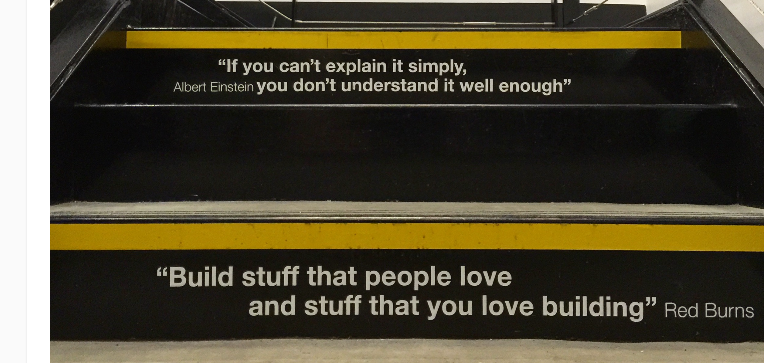
    I scraped this screen grab from Jen van der Meer’s website.

    van der meer slide


    I’ve never met Jen but after reading these two quotes feel we’re sibs from another mother.

    In my approach to branding at What’s The Idea? I take these two truths to be self-evident. And many would agree…yet these guiderails are rarely practiced. Was I to add another ingredient it would be “inspiration.” Inspiration creates feelings and action. Ms. Van der Meer is a data analyst.  It seems to me complexity is the domain of the data analyst. And in my mind’s eye they are all a little ADD.  But when Ms. van der Meer speaks of simplicity and “love of craft” it makes me believe she’d be a great marketer to work with. And a great data analyst.

    I often tell clients “I’m a simple man.” It’s a way to self-deprecate and also set the stage that this brand strategy stuff, when complete, is organic, understandable and easy to follow. It’s an organizing principle for product, messaging and experience. Done well it is simple, loveable and inspiring.

    Peace.


    A Brand Planning Bobble.

    0

    One of my latest brand planning memes is “what customers want most and what you do best.” (Shit, I need to start tagging that phrase.) It almost always drives the work of good marketers…certainly good brand planners. Problem is, most heavy up on one side of the equation. Case in point: A pal came to me recently in a business development situation asking for thoughts on a company he is pitching. He gave me a quick overview and said his agency is already working on some creative ideas. The company being pitched is in the home improvement space.

    I asked if he wanted some thoughts on strategic underpinning to help with creative (or selling the creative). He said sure.  I heavied up on the “what you do best” side of the equation by reviewing the website – the only tangible representation of the company I was given beyond the initial 10 minute telephone overview. I neglected to look closely at the “what customers want most” side the house, typically a brand planner’s wheelhouse. (A dive into customer attitudes, motivations and experience.)

    This whole exercise was a cursory, non-paid “quickie.” No real rigor. That being said, I dropped the ball by focusing on what was already built — what was already there. My wheelhouse, any brand planners wheelhouse, is the consumer viewpoint. Given the short timeframe, omitting that side of the equation was an error. Lesson learned.

    Peace.


    The hacksaw and the bolt cutter.

    0

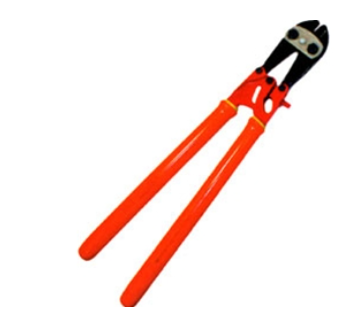
    boltcutter

    Here’s a little parable about using the right tool. Our cellar door is held secure by a Master Lock. The Master Lock keys are kept in the key cabinet and have been for decades. Last weekend they were not. So I looked for my hacksaw to do what any able bodied homeowner would do (argh argh argh) and began ripping. And ripping. After a few minutes I hadn’t even come close to marring the hardened steel. WTF.

    So I used the web. Logging on to Nextdoor.com I asked around the neighborhood if anyone had a bolt cutter. No hits after two days. I went to Ace Hardware, where they had two sizes of bolt cutter, the larger of the two priced at a reasonable $39 dollars. I chose to not invest. At home I emailed a friend in construction who came over with is pair. I snipped that lock like butter. Guns of Navarone!

    The point of the parable? The right tool can be a crazy time saver. Most small, mid-size and B2B companies do not have brand strategies. They have logos. Ad campaigns. Website “About” sections. They may even have brands. But they don’t have an organizing principle that governs product, messaging and experience. A brand strategy is a fundamental tool. It help marketing cut though challenges like butter.

    For examples of successful brand strategies, please write me (Steve Poppe) at steve@whatstheidea.com.

    Peace.

    Gap in market intelligence.

    0

    gap commercial

    The Gap is closing 175 stores and laying off 250 in its corporate offices. The company has a handle on what’s gone wrong but worked perfunctorily to fix it. It’s the product. Women want a tight silhouette in their pants. Gaps, traditionally, doesn’t do silhouette. When you think of Gap you think boxy and baggy.

    Here’s the environmental rub –and what should have been a wake-up call for the Gap design team: BMI. It stands for body mass index. The BMI for Gap buyers when the brand was young isn’t what is it today, especially with the target market. There are cities of wide-waisted, big-assed people out there today and they need to be clothed.  The explosive yoga pants phenomenon is a direct result of this. They stretch, they give a person their slimmest possible profile and they’re inexpensive.

    I worked on an obesity project a couple of years ago at which time 78M American’s were classified as obese. It probably has gotten worse.

    Gap knows what it has to do. The product needs to change with the times. They need to come up with a cool and witty alternative to yoga pants. Rocking around the clock in their ads with khaki pants aflutter won’t do it today. Gap needs to get back in touch with today’s teens and millennials. Apparently product design is in the hands of 30 and 40 year olds. It’s R&D time.

    Peace.


    A Note to Twitter’s New CEO.

    0

    I love Twitter. It is what it is. As with human lovers the attraction is different for everyone. Chris Sacca, an early investor and dude who is away smarter than me. Okay, way way smarter, suggests the way forward for Twitter and soon to be new CEO is to focus on live events. Farhad Manjoo a NYT tech correspondent agrees. If that happens, I’m afraid the app will revolve around a behaviors that are no doubt powerful and bursty but that will remove the serendipity of Twitter. 300M people are using Twitter just fine thank you. Learn to live with it. Allow it to mature and follow user instincts. Don’t gorge on what I once called the Google’s “culture of technological obesity.”

    For me what is so special about Twitter – and this is just me – is that the app truly reflects an individual’s complete personality. It’s not about friends. It’s not all business. It’s not a public picture book. It’s life from every corner.

    As a brand planner, when I do homework on a consumer, I’d study his/her Twitter feed. I may look at original posts first rather than retweets and curated OPC (other people’s content). For users with more than 1000 tweets this is a wonderful visage – a view into their soul. It’s a look at the total person. You get to see happy tweets, sad tweets, angry tweets. Indignant tweets.

    If we follow Mr. Sacca and Mr. Manjoo’s advice, that visage will be stunted. Please don’t try to fix Twitter. Let it fix itself. It’s alive.

    Learn to be happy with who you are. Live within your means. You are changing the world. Peace!