Marketing

    Taglines and Brand Strategy.

    0

    I was presenting my strategy framework earlier this week and as part of my preso used examples of actual brand strategies (claim and proof planks). One of the claims presented ended up being a tagline for the company. When I shared this brand claim/tagline with the group a couple of people reacted by saying “That doesn’t sound so differentiated. That feels like other marketing claims.” And they were right.

    The reality of brand claims and taglines is they just lie there unless you prove them. Every day. With the brand claim in question, the purchasing CEO and work team loved it because it reflected their key value like nothing they’d ever heard before. Plus it was aligned with a key customer care-about. The 3 proof planks supporting the claim were so business-winning, so strategic, that the claim/tagline struck them like a lightning bolt. They were willing to go to war based on this organizing principle. Were the three words below the logo people have never seen before? Nope. Were they poetic to the masses? Nope. But they struck a chord among the senior team. And motivated that team to new levels of marketing awareness.

    We have become inured to marketing lyrics and taglines for tagline’s sake. When taglines are the craft of the ad agency they often fall short. When they come from a deep-dish brand strategy, they can last and last. Peace.


    Coke. Good Ad Craft, Poor Idea Craft.

    0

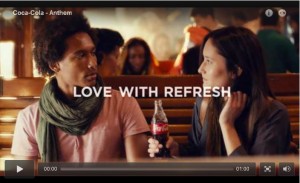
    coke taste the feeling

    Coke, at the behest of new CMO Marcos de Quinto, has jettisoned “Open Happiness.” It’s a move I applaud. What’s The Idea? readers familiar with my battle cry “Campaigns come and go…a powerful brand idea is indelible” have heard me say ad nauseam that “happiness” is not an endemic, ownable brand idea.

    Mr. de Quinto’s new marketing strategy is quite good. Much of his justification for the new campaign is smart. Read the Ad Age story here. The “One Coke” strategy is brilliant in fact. “Sell Cokes not Coke.” Lots of good rationale. Where he goes off track is when it comes to advertising — as is often the case. He bought great advertising. His anthem spot gives one goosebumps; it’s what great anthem ads do. Problem is, it’s “Open Happiness” all over again. This time the line is “Taste The Feeling.” Sure we get a little product feature in there, but taste, even as a verb, is a generic descriptor. And Coke isn’t the best tasting soft drink anyway.

    The Coke brand strategy is and ever shall be “refreshment.” I could write great refreshment copy and place it over the anthem spot and sell more Cokes. The marketing framework for the new campaign is strong. The campaign is good ad craft, but it’s built upon the wrong idea.

    Coke will have killer numbers this year, thanks to big ad spending and the Rio Summer Olympics – a huge showcase for the campaign. But Mr. de Quinto and his peeps will feel the stasis that comes from good ad craft and poor idea-craft in about a year and a half.

    Speak to you then. Peace.

    PS. Using 6 ad agencies is also a good accounting ploy, but bad for the idea.


    Brand Psychotherapy.

    0

    I was a psychology minor in college. Almost became a clinical psychologist. But it wasn’t until I spent some time under the care of a Freudian psychotherapist that I really learned a little something-something about the brain, psychophysiological responses, and the role of therapy in healing oneself. Anyway, I was recently interviewing a client for a brand consultancy job and at one point began to feel like therapist. Just a hint. What I realized was I was nearing some important truths about the business. Some uncomfortable truths. It was cathartic moment from the storyteller and brand’s point of view. I was in a good place with the interview.

    It also helped me realize how unique a place it was and how infrequent was the feeling. Most interviews with business execs feel smart, real, but somewhat canned. Like I’m being treated like a reporter or a board member. I’m always evolving my question set but the last couple of years I’ve gone a little deep dish on successes and failures. I’m not trying to make an executive feel uncomfortable, but it’s important to recognize when I’m in that “truth” zone and use it.

    Interviewees will either go down that hole with you or they’ll turtle shell up. The key is to encourage the former. “It must be hard to…”. “Give me an example of how you dealt with…”. “What did you learn from…?”

    This learning may be too personal to alter the brand idea but it is likely to help get it approved. That said, if done ham-handedly, it could quietly get you the boot. Hee hee.

    Peace.


    Chipotle Tables the Spin.

    0

    Chipotle is on the verge of turning its PR fiasco around. I’ve written before how Chipotle mishandled things related to food poisoning at its restaurant, but now they seem to be on the right track. They’re explaining and turning a negative outcome into a learning moment. For themselves and the public. Farm-to-table is not as easy to monitor as is the use of pasteurized products from huge mega-providers. Food prepared in stores is not as easily monitored as is food send forth pre-prepped and pre-cooked at regional hubs.

    Educating the populace about this business model – and its challenges – is good business. A CEO letter to the public filled with platitudes about “never more vigilant” and the like is Business 101…and very un-Chipotle-like.  But learning and teaching moments are how smart companies do PR.

    Stop the spin. Learn and teach. That’s easier. Bravo Chipotle.

    Peace.


    Naming, Religion and Terrorism.

    0

    This is a political commentary and a branding commentary. I was reading an article in The New York Times on ISIS-Syria-Iraq and noticed how the words Islamic State were being used to refer to ISIS, ISIL and the lands occupied thereby. I believe it’s time to stop. If a terrorist organization of Christians were lazily called the Christian State, it would be deemed off-putting and unfair.

    Words are important — and if we lazily say Islamic State rather than ISIS or ISIL aren’t we fostering disregard for the 1.6 billion peace loving members of Islam?

    I understand using short hand in branding and naming. I plan for it and strategize about it. But you have to look at the downside. From the POV of fair non-Islamic peoples worldwide, we cannot afford to be careless and misleading in how refer to this small group of outliers.

    Let’s stop today. Are you listening New York Times?

    Peace.


    Cars and Legs.

    0

    I always admired Fiat as a car company that made,what I call meep-meep cars. Little four wheelers that zoom around Europe, emitting cartoonish horn bleats. I love how Fiat bought Chrysler bringing a small car mentality to the Jeep and Chrysler brands. But as gas prices have come down, America’s addiction to SUVs and trucks has ticked up.

    There is a direct correlation between American’s health and their use of cars. The number of obese Americans and the number of cars per family are aligned. We don’t walk anymore – not until we’ve had a heart attack. Or some other sort of health scare.

    God forbid a mom or dad should walk to the store with a wheelie basket and shop for groceries. If s/he does s/he’s either destitute or a hippie. We need a making walking cool again. It is cool. You get to interact with people. You get fresh air which is good for lung health. You’re doing aerobic exercise.

    Two things that will help individual and planetary health are smaller cars and walking. No brainers. I think we’re shopping for smaller car this weekend. Perhaps we’ll walk.

    Peace.     


    Brand Lift-Off.

    0

    One of the goals of What’s The Idea? is to create for clients explicit guidance for “product, experience and messaging.” It’s not easy but it’s doable. The real hard part is turning that explicit brand strategy into implicit company actions. Brand actions, behaviors and deeds enculturated through the company or brand group are the Holy Grail. When this happens consumers learn and follow. As brand strategy permeates a company and the using masses, brands begin to thrive. You can feel it.

    Brand strategy training is a key component of brand management. When the receptionist knows the brand claim and proof array (3 proof planks) and is able to espouse and act on it as well as the CEO and CMO, we have lift off.

    When explicit turns implicit, we have brand lift off.

    Peace.


    When Brand Building Isn’t Brand Building.

    0

    I ran across a company today whose boilerplate description reads thus (the name has been changed):

    ABC Communications is a creative marketing partner to our clients. We are experts in building brands and promoting product across all media channels. Our ability to seamlessly integrate online and offline communications in a compelling, unique and effective manner has given us recognition in the quickly growing online community. Providing inspired ideas and compelling creative that empowers and optimizes market presence is our passion!

    It’s an agency. Their specialty seems to be integrating off- and online work. So 2009, don’t you think. But let’s not be catty.

    My problem here is with the use of the words “brand building.”  Copy the first para. of every agency website extant and paste it into a file then search for “brand building” and you’ll get an 80%+ hit rate. Why? Because every tactic can be seen as brand building, so say the unwashed agency masses.

    Real brand strategists know otherwise. Brand building starts with a real brand strategy. A claim or promise and unique proof array. All the marko-babble about “mission” and “values” and “personas” and an assortment of similar agency taxon used to create a halo of understanding between agency and brand marketer really just comes down to “Is there an organizing principle in place that allows for brand building, in a measurable way, that ties to sales.”  With measures that are discrete and finite. In a way that allows brand managers to say “no.” If so, you have a brand strategy. And you can build brands. Otherwise your tactics are nothing more. A loose federation of acts to increase awareness, interest and sales. Simple templates for action.

    Peace.


    Discovery, Fermentation, Boil Down.

    0

    The What’s The Idea? brand strategy development process can best be explained in three stages. They are quite serial in nature but can overlap. Discovery is discovery. Conduct category research, ask a lot of questions of stakeholders, customers and prospects and be in thorough learn mode. Learn language, customer care-abouts and brand good-ats. Part fact-finding exercise, part search for feelings and attitudes (pal Megan Kent counsels “Feelings trump reason”). discovery fills the brain and content receptacle with lots of stuff.

    Fermentation is just as it sounds. It’s the part of the process where there is active, unbridled growth. Action and reaction. Some bubbles. Lots of churn. It’s the most creative part of the process. Sometimes fermentation occurs during REM sleep, other times it takes place in the shower, or while mowing the lawn. It’s where ideas beget ideas. The fermentation process is nature and random. Serendipitous and planned.

    stock-pot

    Lastly we have the boil down. This is where everything from Discovery and Fermentation goes into a large metaphoric stock pot. Heat is applied and evaporation starts. Water and non-essential information, data, proof, care-abouts and good-ats are boiled away. This is where the tough decision are made and priorities established. What comes out of the boil down, with the help of a brand brief, is One Claim and 3 Proof Planks, AKA the brand strategy.

    And there, ladies and gentlefellows is how we make the sausage. Peace.


    Stale is Bad for Business.

    0

    Can brands get stale? B-school professors will tell you companies go through maturation stages: growth, mature, harvest. Investment spending is heaviest during the growth period while milking profits and low investment occurs in the harvest period. Mature is the middle period where all the hard decisions are made. Mature is where real money happens and success is fickle. This is the period where brands can get stale.

    (First off, let me acknowledge that brands aren’t companies and companies aren’t brands. Though sometimes they are. IBM is a company and also a brand. P&G is a company but not a brand. It’s complicated.) For this discussion let’s just say B2B companies are brands.

    I’m a big proponent of a brand strategy: Once claim and three proof planks. This framework provides an organizing principle for product, experience and messaging. It works for tooth whitener, wholesale fish purveyors and billion dollar healthcare systems. Unlike a tagline, graphics style manual and ad campaign (the drivers of most brands), a brand strategy allows for freshness and flexibility. And it works in all the life stages of a brand. A brand strategy provides business winning strategy directives. It fights staleness when in the hands of smart brand managers.

    Brands can get stale. Business executives become most sensitive to it when sales are down. When the campaign becomes too familiar. If business fundies are without flaw, e.g., headcount, distribution, pricing, then I always suggest getting the brand strategy right. It’s how businesses and brands flourish. Peace.