Marketing

    Brand Strategy is Not Chaos Theory.

    0

    Wikipedia defines deterministic system this way:

    “In mathematics and physics, a deterministic system is a system in which no randomness is involved in the development of future states of the system. A deterministic model will thus always produce the same output from a given starting condition or initial state.”

    I am here to argue that brand strategy is s deterministic system. Most would argue it’s chaos theory.  Frankly, most people would be right. Brand strategy is chaotic. It is random,

    Ninety percent of marketing organizations are set up to deal with brand strategy as a communications consequence. “We need order in our messaging, ergo we need a brand strategy.” Tasked with spending money mainly on ads and events, these orgs spend hundreds of millions each year on naming, logo development, style manuals and ad templates. Landor says, “Thank you very much.”

    A smaller number of marketing orgs take it to the next level plotting out consumer experience; mainly in retail or online settings. What does t a Dunkin’ Donuts store look like? Where do we put the seasonal stuff at Costco? How do we offer online professional development at Teq?

    And lastly, in the smallest percentage of marketing organizations, are those who actually think about the product. What do we do to the product to improve it to meet customer needs? Or with what do we replace our product to better deliver our value promise?

    A tight brand strategy leaves nothing to chance. It speaks to all three marketing organizational models.  One claim and three proof planks drive all measures of business success. It starts at the brand level and IS accountable. I used to call it Return On Strategy (ROS), I now call it Return On Brand Strategy (ROBS.) Stay tuned.

    Peace.           


    Small Batch Brand Strategy

    0

    I am loath to admit it, but What’s The Idea? is a small batch brand strategy consultancy.  The market has been conditioned to think a large corporate brand strategy has to cost $100,000; add another $150k for naming and logo design. Most of my clients don’t have that kind of money. My clients tend to be small and mid-size or start-ups.

    My framework for brand strategy – one claim, three proof planks – is tight and enduring.  But for some larger businesses, helmed by multivariate-obsessed MBAs, it may seem overly simplistic.  And inexpensive. Simplicity is the beauty of the framework, frankly. It mirrors what consumers remember.

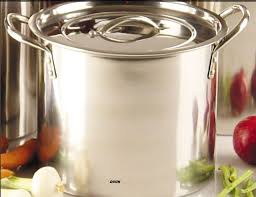
    In small batches, with only 40 or 80 hours invested in research and planning, the process has to be relatively simple.  The information gathering metaphor I use is the stock pot. My cognitive approach, the “boil down.”  When you work in small batches, you self-limit your ingredients. You know what not to heap into the pot.

    I’ve done small batch brand strategy for crazy-complicated business lines. A global top 5 consulting company with a health and security practice and a preeminent hacker group who helps the government keep us safe. Small batches both.

    Try the small batch approach. As Ben Benson used to say, “I think you are going to love it.”

    Peace.  


    Experience vs. App

    0

    I’ve been thinking about the difference between apps and experiences.  It seems experiences are the topic of the day when listening to the purveyors of new social media applications. Facebook is buying experience companies, copying others and introducing then to the platform at record speed. And it’s working.

    Some rue that Facebook isn’t innovating any more, too slow to develop its own experiences, but that’s not the point. The point is, “What do people care about and use?”  And experience based software is key.  The hot bed now is mobile phones. Pokemon Go was an augmented reality experience and it spread like a good plague. Sure it was an app, but it wasn’t just a database tapping info sources and serving it up as newer data, e.g., weather, ratings, geography, (well it was kinda), but it was much more experiential in nature. Not a static, paused moment, but an ongoing, live moment.  Think of it as a real life versus a screen grab.   

    In brand strategy, many planners overlook the experiential side of things. They focus on the static. Is this “thing” on strategy?  Is this “communication” on strategy. This “visual?”  Brand planning and brand strategy are best when they also deal in the experience. The Megan Kent Branding Group. And Starfish Brand Experience get this.

    So just as billions are now being made by focusing on experience software, so must billions be made doing the same in brand planning.

    Peace.


    Branding Isn’t Magic. Or is it?

    0

    I’ve been talking to a magician about doing some branding work for him. We chatted about the Is-Does – what a brand is and brand a brand does – something that is not as necessary for a magician as it is for, say, a startup. But there are many flavors of magician. So finding your magic sweet spot, is important in so far as positioning. Cards? Illusion? Big stage? Escape?

    As we talked, I realized that a performance-based brand (an act really) may require slightly more scope than a company. If a brand strategy is “an organizing principle for product, experience and messaging,” then the proofs of the brand claim may include, things like introductory music. It could also include costume, staging, lighting, and lots of other things I’ve never thought about as elements of a brand plan.  It’s rather exciting, actually. The unknowns are aplenty. Kind of like magic.

    Should be fun.  Peace.


    Marketing Hack.

    0

    What happens when TVs talk to devices? Good things.

    I love the Burger King’s ingenuity and moxie in playing in its new :15 spot where the voice over says “Okay Google, what is the Whopper Burger?”  As a result Google Home devices across America (the globe?) wake up and started reading ingredients from Wikipedia. This smart marketing hack added a new contemporary dimension to TV and radio adverting. At least for a few minutes.

    You gotta love Burger King. Still the tightest burger brand, rocking the “flame broiled” claim, Burger King is constantly pushing the digital envelope. I like to say “agencies come and go…a powerful brand idea is indelible.” And when it comes to Burger King, agencies have come and gone. As has corporate ownership. But the brand stays strong, and it continues to innovate with its media and media delivery.

    Sizzle on Burger King.

    Peace.  


    Brand Briefs. Going Commando.

    0

    I’m going out on a limb here to say the majority of marketing buildables, e.g., ads, websites, PR plans, research studies, and content marketing are created sans a brand brief.

    The tendency for agencies to work off a brand brief is much greater than for one-off contractors, but even they tend to use a campaign briefs or tactical briefs.  Whose fault is this? Clients. It’s the client who provides the input…and the approvals. It’s the client who needs to have an organizing principle for product, experience and messaging (aka brand strategy). It is the client who needs to codify it and make it sharable.  

    Smart ad agents/contractors ask clients “Do you have a brand brief?,” but know the answer is “no.”  Every company has a website. How many of those writers and coders worked from a brand brief? Every company has an ad. Same question. Every marketer will tell you they have a brand. 95% of those people can’t articulate that brand in a clear, concise way. They don’t have a brief.

    Peace.


    Stories Are The Air of Brand Planning.

    0

    When I interview people at a company to learn more about it during my discovery process I have a set piece of questions. If working in a category with which I’m unfamiliar I often create a new questions to level set me. Learning the language of the category is an important first step. Before I start questioning I tell the interviewee to please tell stories to make your point. It helps me better and more quickly understand. Stories provide texture, importance and ballast from the teller’s point of view.  Data and information are just tracks to be trod over. Data and information are the CV of the business. Important and crucial stuff yes, but they don’t reveal “soul” the way stories do.

    I never closed a deal during a brand strategy without stories. Never. If you have stories, when presenting to decision-makers, you are a brother/sister. People don’t have a hard time disagreeing with you if you have a story. They’ve more open and real in their objection…often sharing a contrary story.

    I loves me some data in brand planning. But stories feed the brief. They give heart to the claim and proof planks.

    Peace.


    A Content Marketing Trick Worth Its Weight in Key Words.

    0

    I have a number of branding and marketing memes floating around the web. I’ve built a business upon them.  One of my new favorites is “Redistributing marketing wealth through branding.” (Google it. It will set the hook even deeper.) 

    If you think about what makes a good meme, it’s clearly memorability. And memorability is enhanced by a couple of things. Is it easy to say? Is it easy to remember? Does is borrow from another well-entrenched saying? But if it’s too close to another phrase, a Google search may be diverted to the original, so be careful.

    Key words are so 8 years ago.  But we still voraciously invest in them. I still do.  All the blog platforms require it.  My most powerful meme is the company name itself: What’s The Idea? (That’s another good trick.) I publish it every day in my keywords as “Whats The Idea,” sans apostrophe and question mark, and as “Whatstheidea” – my URL.  Kinda own it now.

    This Meme Trick is something you are not likely to learn in a content marketing book.  It’s best learned by actually doing it. By creating.  By posting. Not pasting. Google “posters versus pasters.”

    Peace.


    https://whatstheidea.com/wp-admin/edit-tags.php?taxonomy=category

    Brand Strategy Experts and Wannabes.

    0

    Brand strategy is a bit like plumbing.  The theory is nice but it’s the real pipes and engineering that carry the water.  I say this because when I read or see many people interviewed about branding they often answer with authority, but generically.  Sure brands need an organizing principle for product, experience and messaging. Sure they need visual and style directives. Of course, they need to promote values that help sell and satisfy. But the real business of branding can only be discussed in depth, with alacrity, when the strategy itself is known. 

    To ask a so-called brand expert questions about branding or tactics, sans actual strategy, is like asking president Trump about policy. All you get is “wonderfuls” or “disasters.” You don’t get meaningful, actionable insight. To going back to the original plumbing metaphor, you get discussion about pipes, elbows, resin and leaks.  Brand experts, me included, need to dole out advice citing actual strategic examples. Not generics.

    Peace.


    Branding Memes…and Me.

    0

    I play Google like a Stradivarius. But it helps top blog a lot. Actually blogging is foundational to how I play my violin.  I was reading Thomas Friedman today and in his Op-Ed column he suggested readers Google “power drills to the head and Shiite militias in Iraq.”  Please don’t, I‘m just making point.  Mr. Friedman knows how one can direct people about the web by simply offering key words or key phrases. I’ve been doing the key phrase thing for years. And key wording them in my daily blog for years.  In many cases, in the branding world, they have become memes.

    It’s heaving lifting and takes commitment. It’s also cleaner than white or black hat SEO manipulation. When I direct people to my definition of branding as “An organizing principle for product experience and messaging” they find me.  When I tell prospects to Google “social media guardrails” they find me. “One claim three proof planks” is indexed by Google straight to me.

    Are you hearing that violin? Back pat, back pat.

    Peace.