Marketing

    QR Codes and Packaging.

    0

    So you’are standing at the store, say in the frozen cookie dough aisle, trying to decide between Sweet Loren’s and Fat Boy’s. One has butter, one has no dairy. The pictures of the cookies look great on both boxes but one package feels a bit more “healthy.” You are debating wheher to buy healthy but can’t make up your mind. What do you do? You break out your smarty and take a picture of the QR codes on the package and twitch over to a website for an in-depth look at the product? Sure, why not.

    QR Zombies

    I’ll tell you why not, retailers would spit the bit. Good stores are crowded enough, can you imagine what they’d be like with zombie-like consumers consulting their phones in the aisles watching 110 second product videos? Talk about shelf-talkers! This is not what retailers want, trust me.

    Packaging needs to sell. It need to close the deal. Great designers know people will only read so much on a package. It’s an art. Designers will include less copy and more picture if there is a QR code on the pack – and it will cause a retail revolt. On resets will QR code containing products be put on lower shelves, get fewer endcaps, loose facing strength? I love QR codes. They are awesome. That said, POS (point of sale) is where you buy not where you do homework. Peace!

    Stop poopin’ out the marketing!

    0

    There are a lot of smart people out their explaining how to make your marketing better.  How to make more sales, more clicks, more inquiries?  Thanks to the web and the algorithm whole new cottage industries have grown up around the more-more.  The speaking circuit, conferences and webinars are growing like a dookie thanks to the new tools.  But they are only tools.

    My shtick is all about finding your brand idea and organizing it with the right planks so that when you pick your tools the job is easier.  “Here’s a canvas, now paint a picture.”  Or, “Here’s a canvas, now paint a fall landscape.”

    There are some wonderful tenets of marketing that are not very often preached or practiced but, when followed, have a powerful impact on efficacy.  (And we overlook them because we’re trying to find the message in the dark, sans brand plan.)  Here are a couple of those tenets:

    Surprise and Delight. Humans love to be surprised. And they love to be delighted.  But often, marketers are so tired and beat down they just default to selling — even if nobody’s buying.  Whenever you create something for a customer or prospect ask yourself “Is this surprising?” Or is it the same old, new color. Ask “Will this put a smile on someone’s face”?  And probe its toothsomeness.

    Be Artful. I read today about Ben Wilson, a U.K. artist who paints pictures on discarded blobs of gum.  He brings his brushes and color palette and bellies up to the sidewalk and creates art. As Keith Haring did before him, Mr. Wilson creates wonderment and art for the people. The man and his work are beloved. If you want your marketing to outwork your competitors, it must possess artfulness. Find a strategy, then worry about the really important stuff.  Do it in didge, traditional, PR or whatever.  Stop poopin’ it out.  Peace.

    Ford Huevos.

    0

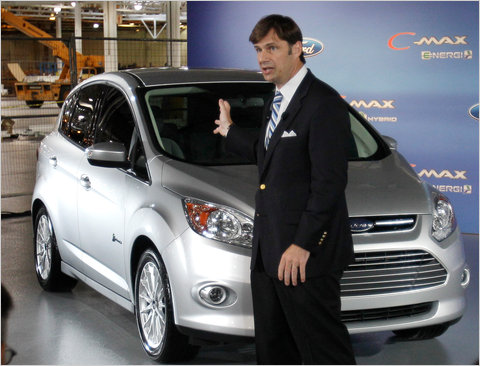
    Huevos. Pronounced way-bose.  For my non-Spanish friends that means eggs. It was reported today that Ford Motor Company has decided to drop plans to re-enter the minivan market in the U.S.  Instead, it’s turning a Detroit plant loose building small hybrid cars with the silly name C-Max. Small cars.  Hybrid only.  Let the other knuckleheads build the minivans. Huevos!

    My daughter drove from Long Island to Baltimore to see her boyfriend and the EasyPass bill just came in.  It showed about $50 in tolls round trip. Sans gas.  During rush hour, the Long Island Rail Road from Babylon to NYC (about 40 miles) costs $27 round trip.  The gub-ment is charging us healthily for transport.  Why?  Because it’s hemorrhaging money, thanks to bail outs. Who did we not bail out?  Ford. Why? Huevos.

    If you follow this blog (Google whatstheidea+Ford or GM), you’ll know that I’ve been ranting about gas guzzlers and large cars for years.  Adapting and adopting are American traits. Pioneering traits.  I Tweeted this morning that as a nation if we put as much collective energy into clean tech and green tech as we put into Anthony’s Wiener, we might actually become the nation of pioneers we once were. Peace!

    Claim and Proof…The brand plan.

    0

    As the role of marketing director gets more complicated, owing to all the new tools and arithmetic available to sellers and selling agents, the brand plan grows in importance.  I met with smart strategist Noah Brier a while ago and he asked me “How do you define a brand plan?”  Everyone has a different definition, he added.  Truism that.

    My brand plan is quite simple: One claim, three proof planks. The claim embodies or pays off the Is-Does (what a brand is and what a brand does) and the proof planks (or supports) organize the story – into 3 telling and impactful reasons to believe.  A brand plan is an organizing principle for selling more.

    I wrote a consultant this morning telling her how most companies can save mad money by investing in a tight brand plan. Rather than pay a marketing person $150,000 a year, a company can pay $90,000 per year if the brand plan is definitive.  And if the KPIs (key performance indicators) are correct.  And beyond the annualized salary savings, don’t forget the money spent on wasted tactics each year by marketing organizations — money that could be saved with a brand plan. John Wanamaker’s famous suggestion that only ‘half his advertising was working, he just didn’t know which half,’ can also be applied to marketing tactics today.  We are living tactics-palooza. More cowbell, I mean, more social media!

    My business is called What’s the Idea? for a reason. Most businesses don’t have an idea (a brand strategy) they can articulate without going all mark-babble and tripping over their tongues. One idea, three selling planks.  Pieces!

    Observe, Intuit, Package.

    0

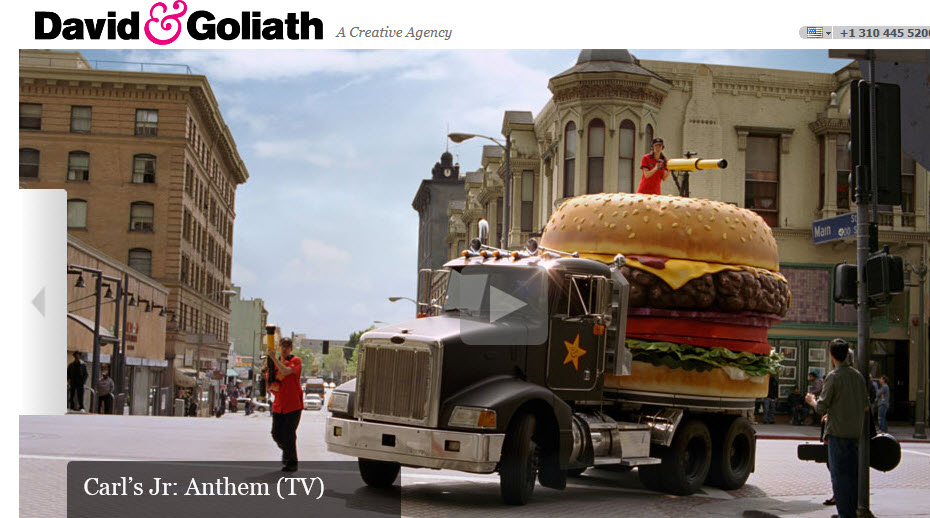
    The work of ad agency David and Goliath speaks to me.  I may not always be in the market for what they’re selling and may not always be the target, but I do know people and these guys and girls can package a message.  David Measer is a head planner at DnG and not long ago I offered him a “free day of planning,” something reserved for friends and family. He said “we are so immersive in our planning work, we don’t believe one day can really generate anything of value.”  And he’s right.  As it relates to the end idea. (But a day can generate some crazy good crumbs.)

    I was reading today about a volunteer park clean up in Brooklyn which brought to mind my archaeology days and how it helped me become a better planner. Archaeologists uncover stuff from the dirt. They plot it, ponder it, and may actually have to wait until winter in the lab to understand it – if they ever do. It’s a slow and thoughtful process, though it does offer some exciting immediate rewards.  Brand planners operate in the same exploratory sphere but with truncated timeframes. We observe and intuit purchase behavior — then package it for creative teams. We don’t have the benefit of waiting for winter or have a long mental gestation period.

    Brand planners need to be able to observe brilliantly. To see and hear only the important. Then they need to intuit the meaning, which requires context and experience. Lastly, it all has to be packaged for an art, copy and design team. In a way that inspires them to “focused” stimulating greatness. Observe. Intuit. Package. David and Goliath subscribes. Watch them grow. Peace.

    Payback is a serious hurtin’.

    0

    Chrysler paid back over $7B in loans to the U.S. government yesterday.  Did they just have than money laying around?  That s lot of Benjamins.  Did they just borrow if from a sheik?  No they earned it. Blocking and tackling my friends.  Rekindling old loyalties me droogies.  Fixing the product, getting the right new people in place and fixing the message. When Daimler moved into the Chrysler brand, they tried to do all these things but couldn’t.  Fiat and the U.S. marketing stewards did.  And now they have da monies.

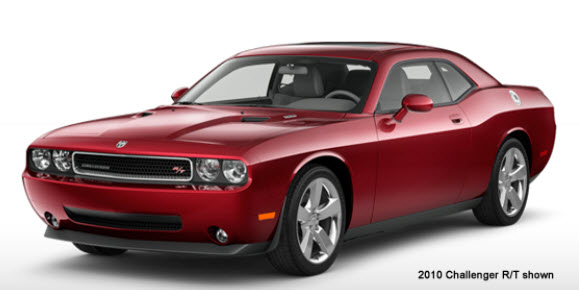
    Good blocking and tackling.  Just like Ford did.  I knew the Fiat move would be a good one…meep meep.  The company is known for stylish small cars, just what the economy ordered. But Chrysler is also making a move with Dodge, which is a bit more of a surprise. Hemis and un-mommy mini vans and a return of the muscle car for real motor heads (Can you say Challenger?).  This is Dodge’s sweet spot.

    Marketers are not talking about Chrysler in terms of cools social programs a la Ford, they are watching the rebirth of a company through focus on the 4Ps. Roots baby.  Eminem baby.  Where’s Kid Rock? GM is blocking, but I’m not so sure they’re tackling.  The foreign value brands are pretty much growing a bit over the pace of the market. Ford may want to look over its shoulder — is it losing its hunger? Is it placating the dealers once again?  Come on Chrysler. It’s pay back time! Peddle down. Peace.

    Earning it Old Skool.

    0

    As much as things change, they also stay the same. Two cases in point:  I worked with a SEO executive who makes a nice living promising companies he can get them into the top 10 in organic search no matter what the company size or standing.  All it takes, says he, is time, smarts and money.  When I asked how he builds his business, his said through referrals.  “I do good job for one customer and s/he refers me to a friend.”  The response I expected was “through search.”

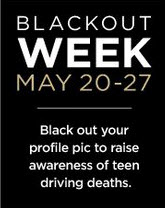
    Case two.  Allstate Insurance (pronounced  IN-surance by my southern in-laws) is undertaking a brilliant cause campaign called Save11. The program is meant to reduce the number of daily teen automobile accident deaths – currently numbering 11.  The program has started on Facebook, though you won’t find Allstate’s name anywhere on the profile page. I learned about the program on the radio.  The program kick off with Blackout week, May 20-27, and Save11 is asking everyone to black out their profile picture to bring awareness to the cause. They are in the awareness building part of the program and to build traction need mass media to spread the word. Old skool.

    (Aside:  Is anyone beside themselves that Haley was voted off last night?)

    TV viewership s building again, more web IPOs are a comin’, and maybe even the Mets will make a run.  I make a living on what’s new and what’s next, but there are some age old axioms that continue to prove themselves and marketing blocking and tackling are still things in which we must invest. Peace Bibi.

    Creeping the product

    0

    The two most exciting yet frustrating years of my work life were at a web start-up. I was director of marketing at a social media site called Zude.com. The CTO was 7/8ths genius.  A wonderful coder, an infectious and eloquent geekus, he built the world’s first drag and drop web publishing tool.  His object wrappers allowed me to tell consumers “If you can drag and drop, you can build a website.” In a world where we knew people would get tired of templated, database-driven web and social sites like Facebook and MySpace, this free-hand design tool was going to be the haps.

    I remember standing on the back steps of my home telling the CTO that the decisions we made regarding usability and positioning were billion dollar decisions. Well, we burned through $10M and I’m still on those steps. I do love those steps, by the way.

    What came out of this 2 year education was the realization that I’m an engineer whisperer. The CTO heard me, understood me, but he opted to go another route. He continued to build and add features and creep the product. He loved the rush of presenting to Robert Scoble and  Erick Schnofeld and hearing “coooool.”  Though I failed him, our CEO and investors, I learned that not all engineers can be whispered.  And probably shouldn’t be. VCs know what I’m talking about. Peace!

    Brand Planning Process and Targets.

    0

    I was talking with some entrepreneurs yesterday who have a great product.  It shows well when demoed, people who buy it love it and the product has great sales opportunity through both push (channel) and pull (consumer demand) marketing.

    We’re discussing targeting and I am using the bull’s eye metaphor with the whole radiating concentric circle schpeel. The inner ring is the most important target, the second target more populous and very influential, the third circle important, but more expensive to reach, etc. Nod, nod. I’m riffing on each target and getting pumped knowing there are lots of ways to covey and convince, landing big arrows in each target ring. The guys are feeling me.

    I know I can fix the product Is-Does because the name is so descriptive. It’s a touch misleading but still kills the competition. The product fills a need in every home though only purchased every few years.  No brand has top-of-mind awareness. And with the economy what it is, the do-it-yourselfer (DIY) crowd is looking for the solution in what Google Insights for Search calls breakout fashion. “We know, we know.”

    With a good “Is-Does” and descriptive name all that is needed is a strong brand idea that speaks to each ring of the target. To get to that idea I need to spend enough time with each ring understanding their care-abouts, concerns, how they derive pride and a few other things. All that goes into the “What’s the Idea” stock pot ready for the boil down.  This is brand planning product development.  Will it happen with my entrepreneurs? Will they invest in an idea? Stay tuned.

    Growing Markets.

    0

    The best thing that can be said about a marketer or a marketing agent is that s/he has grown a market.  The marketing and advertising mantra “sell more, to more, more often, at higher margins” is a terrific end-game, but one can do that and simply be redistributing market share. Growing markets is what’s up. So here’s a way to grow the men’s apparel market.  (I was at Fashion Institute of Technology yesterday, and tons of kids were walking around classrooms with bolts of fabric a la Project Runway – ergo the fashion interest.)  Replace the tee-shirt.

    I was thinking of all the shopping I do each year and no one’s really making a living off me.  Maybe the grocery and the beer stores.  I buy a two pair of jeans once a year(ish); maybe some mulch for the wifus.  As for dress shirts, I don’t buy them unless I spill coffee on myself before a meeting. And somehow they just appear in the closet or in Christmas boxes.  Tee-shirts, on the other hand, are flowing out of my bottom drawer.  And the drawers of most men.

    The Gap or Amazon or a smart designer with online chops should design a shirt for men that is flattering, comfortable, fashionable and functional.  And I’m not talking about that $70 tee-shirt in expensive fabric.  A new look shirt. Men love their tee-shirts but we’ll give them up if there’s something better, even if it costs more.  Then how will people know I love the Ramones??? Hmm.

    Come on marketers, think about growing your markets. Peace.