Home Blog Page 74

Starbucks Overindulgence.

0

Starbucks idea to deliver coffee (in China) is a bad one. I’m no economist but adding overhead to the business by way of delivery personnel, equipment, insurance (ish), and degradation of product (e.g., cold coffee) is a lose-lose.  But more importantly, if you make the coffee and tea more available during different dayparts in an “always-on” fashion, you dilute the special coffee reboot moments for which Starbucks is famous.

A mid-afternoon coffee run during a particularly in extremis day at work is a wonderful treat. Starbucks can and should be a daily morning occurrence but overdoing it can make it less of a delight. This was the problem with high-flying Krispy Kreme Donuts. On or about the time the stock went public, Krispy Kreme turned on the water hose and made the donuts too available. Expanding retail distribution with little brand experience forethought. You could fill up your gas tank and get a dozen. They oversaturated the market and our sweet tooth for the special treat lost its allure.

Good marketers always should leave customer wanting a little more.

Starbucks needs to slow its roll.

Peace.


Magazine Retrenchment…for now.

0

This morning’s news included a piece on Conde Nast shuttering 3 big magazine properties. The company lost in excess of $120M last year keeping print properties churning. Magazines have been under web attack for over a decade. Magazines aren’t in the readership business, they’re in the entertainment and enlightenment business. As audio and video production became more common, entertainment and enlightenment moved to the web, albeit watered down.

Conde Nast will get it right.  It just needed this kick in the ass. Content experts are content experts. Content poseurs are content poseurs.

The death of radio was predicted and it still reaches 93% of US adults weekly. The end of network TV was also predicted…nope.  

Sorry publishers like Conde Nast, Time Inc. and Meredith have bloody noses. But for now at least, the holding company approach has become a little zaftig.

Peace.


Product First.

0

I was doing a little web research on a company yesterday and started looking for signs of a brand strategy on the “About” page. Atop the About page sat this quote.

“Customers are the most important people in any business.”

Many would find it hard to disagree with the statement. When writing market plans I spend a lot of time “following the money.” (If you are interested in such things write me for a copy of my 24 Questions. Steve at WhatsTheIdea dot com.) And money comes from customers.

BUT, a big but…I don’t agree customers are the most important people; product developers earn that mantel. It is the product, you see, that excites customers into action. Sure, product developers need to study customer tastes and proclivities. Sure, they must have a sense of consumer attachments to competitive offering. But when push came to shove, it was the people at Levi’s who designed the copper rivets, the soda formulator who put the Coca in the Cola, and the algorithm jockey who indexed web information that created Google.  Those were the most important people.

Customer are the bees, but sans flowers there ain’t a lot of buzz.

Peace.   


Choices.

0

As a kid in the business I read a great book on business to business advertising. It gave an example of what a purchasing agent is up against when buying an expensive piece of industrial equipment. The agent puts together a side-by-side chart of all the specs and benefit statements for the two final vendors under consideration.  More often than not, commerce being what it is, it’s a draw. The book suggested, absent a clear winner, the logical mind takes over. The personal logical mind, that is. In order to make a decision with so many variables, the purchaser decides which of the variables is most important. Which of the 20-30 variables is the one upon a which the decision will be made.

I was reading about Harvard’s selection process yesterday and it’s pretty complicated.  SAT scores, other testing scores, GPA, ethnicity, alumni parents, future ability to donate, interview performance essay, geo-social background are all evaluated. Not unlike the chart from the book. Choices.

Brand strategy development is not dissimilar. We look at a multitude of “care-abouts” and “good-ats” and decide how to best organize the selling principle. Brand strategy helps marketers make the tough choices. It helps brands make the right choices.

Peace.


Craft Brewery Brand Management.

0

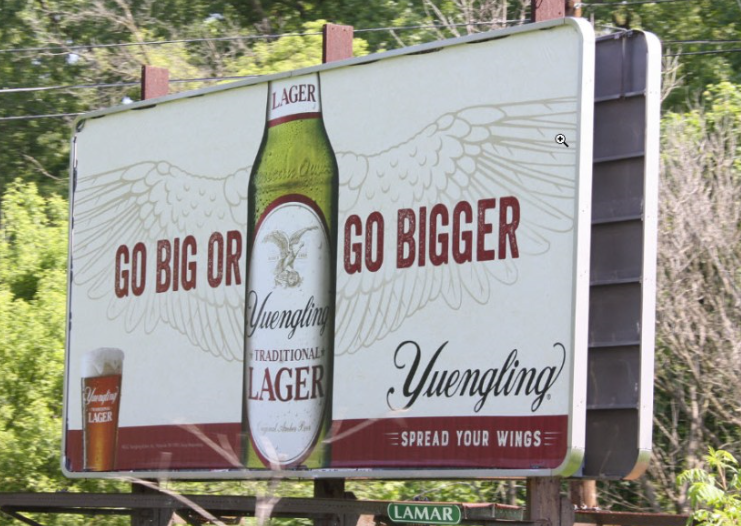
I wrote yesterday about how beer taps should be used as brand instruments to build fealty, affinity and loyalty.  There was a time when the beer brand was more important than the brewer. As evidenced by my post yesterday, it seems the brewer portfolio has become more important than the individual beer brand – especially in this craft brewing led market.

Anheuser-Busch/InBev, MillerCoors and the other beer holding companies are sharpening their investments by buying craft brewers.  It seems variety is the spice of the balance sheet these days. When I look at a craft brewer, as both a drinker and brander, I ask about the flagship beer.  The one that sets the tone for the brewer.  Typically that’s the label with the highest gross sales. For BluePoint Brewing is it’s Toasted Lager. For Highland Brewing, Gaelic Ale. For Goose Island, it’s namesake Goose IPA. There has to be an alpha brand. And I start from there.

Smart brewery marketers want consumers to order a “Toasted Lager,” “Gaelic Ale” or “Goose IPA.”  They don’t want them to order the mother ship.  As craft brewers get more sophisticated, they will hire brand managers for each label. And then it’s on.

Peace.


Beer Taps and Branding.

0

I had a discussion with an Asheville, NC brewer last year who was in the process of doing a brand redesign with a branding shop based in Texas. They did a lovely job, by the way. The topic of taps came up — taps being the long ceramic bar-top devices used to pour beer.

Having poured a little beer at the Bluepoint Brewery taproom back in the day, I recognized up close how tap designs can be a cool branding “thing.”  Bluepoint, I was told, used a California-based tap manufacturer and paid a handsome price per piece. Each tap had a unique grab, including mermaids, monks, Rastafarians, lighthouses, buoys, etc.  All distinct and memorable.  When I shared this with the Asheville brewer, who perhaps had been bitten a little too hard by the branding bug, she suggested the lack of brand continuity was a weakness.  

Out for a quaff last Friday at the Mellow Mushroom, a local joint with over 100 beers on tap, I noticed about 5 or 6 of the local brewer’s beer taps. All had the same logo, all had the same block letter typeface for the beer name, all sporting a different color for package differentiation. Very corporate. Very easy to read. Beer personality: Zero.

Blue Point got it right. Each beer is a brand. Each should be celebrated as such at the local watering hole. Peace.


Dump Some Marketing Cache.

0

The lifeblood of my business is contacts. When I’m in full-blown biz/dev mode I’m emailing lots of people I know and many I’d like to know.  Cold emails have been a building block of What’s The Idea?. If you’ve been on the receiving end you know what I’m talking about.

My intent with email solicitation is to be personal, business specific and very much “not about me.” The value I hope to produce is value on the topic of branding that speaks to the reader from their point of view.

If I write about “you” and things of interest to “you,” I may get your attention.

As an outbound writer of business development emails, I have open eyes and ears to other sellers. Therefore, I subscribe to many, many email lists and am a member of more websites than most. Sadly, I allow most of these emails to clutter my in box with nary an open. It’s time to unclutter.

Today I’m going on a crusade to unsub all the flah flah flah. Maybe it will save a tree or a planetary degree. If the email sender does not start sharing real value in my email box — value to me not them — they are gone.

Maybe next I’ll start to unfriend Twitter followers.

Dumping a little marketing cache ain’t a bad thing. Peace.


Can People Be Brands?

0

An entertainer contacted me about a year ago, inquiring about branding. Pretty smart inquiry. 

I remember pushing back when Kim Kardashian and others referred to themselves as brands – and I’m still a little leery. That said, this entertainer did need some help. As I thought more about it, the job really is about packaging. He had a stage act and from what I was told it was quite good. So what kind of packaging would set this act apart?  If we delved into “good-ats” and “care-abouts,” as we would with any brand strategy, we could certainly craft a name.  We’d obviously need a brief for that, buoyed by a claim.  (I thought of James Brown’s claim “The hardest working man ins show business.”) Then we’d define his proof planks – another part of the personal brand strategy to help organize everything – act included.

Lastly, we could dabble in his stage clothing (costume?), intro music, color palette and persona.  Have you ever seen Sebastian Maniscalco? That’s a persona. 

I’ve never done a brand strategy for a person. For a product, service, company — sure. But a  person, no. Looks like I might get a chance.  He called yesterday.  

Peace.


Lazy Comms. (A Discussion of Repetition versus Education.)

0

Repetition is an old saw in the advertising business. Reach and frequency being words we grew up on. Reach is the total target you hit with a message and frequency is the number of times it was seen by said target.  If you bonk people on the head enough times with your message, they’ll remember it, the logic goes. “Give us 15 minutes, we’ll save you 15% on your car insurance,” for instance. Repetition.

Education is another way to also gather attention. Tell someone something interesting, something they didn’t know, and they’ll work to retain it. Fill up space in the gray matter cache…it sticks. In brand strategy, I’m a big fan of education.  Remember back in the day when you used to defrag your computer?  Maximizing space by removing empty spots in the drive? Closing up duplicates?  That’s what learning does. Interesting, new information makes the brain work. It makes the brain conclude. That’s how information rises to the top.

If your marketing communications aren’t educating, they’re lazy comms.

Peace.


Proof Workshop.

0

My branding thesis is built upon the idea that 90% of marketing communications is hot air. That leaves only 10% for the good stuff: real selling. Also known as “proof” of value. In an ad brief, this might be referred to as “reasons to believe.”

Listen to a :60 second radio commercial and pull out the words that are real proof of value. A typical :60 has about 150 words. You’ll find a number of few words that purport value, e.g., best service, highest quality, scrumptious taste, but very few words of proof of value. Words that make you believe.

To prove my point, I have decided to offer up for a limited time a “Proof Workshop” to interested marketers and brand managers.  The workshop will be offered free of charge to qualifying marketing organizations. During the workshop we will go through marketing collateral, ads, PR releases, web content and point-of-sale materials to determine what’s proof and whats not. The workshop will last 90 minutes.

Along the way we may even find some proof clusters that point to an actual brand strategy.

The phones are open (516-967-3875.) So is email: steve@whatstheidea.com

Peace.