Home Blog Page 181

Advertising Flotsam

0

Nicholas Kristof is a funny dude.  In his Op-Ed piece in The NY Times today he suggested the Second Amendment (Don’t run away, it’s not one of those type of posts), affirms our “right to bear a musket.” His reference to period and  context got me thinking about advertising and spam. (Sad, I know.) Advertising used to be expensive. If you wanted to reach your custies and prospects you had to produce an ad, which cost money. Then you had to buy media, even more money. You also needed expert middle men to create the ad –either an agency or someone at the media company (“hack,” gesundheit) – also expensive.

But today?  Today, everyone can make ads. For pennies. Google AdWords. Constant Contact (email). Sponsored Tweets. Facebook. And other internet-enabled options that have created a veritable Spamapalooza.  Even before DIY advertising was common, ads weren’t that great. But now? Oye.

In this environment is an opportunity. An opportunity to break through the sea of flotsam adverting and spam — with messages that shine. The media is not the message, the message is the message. Find a voice, find your story (brand strategy), understand it and stick to it. Speak to your targets as if you are speaking to your targets – and take off that white shirt with the gravy stain on the stomach. As the kids might say “represent.”  Peace.   

Instagram’s Smart Decision.

0

instagram

Here’s the thing, everybody and her mother thinks Instagram’s decision to change its privacy policy, claiming all photos posted to the platform are now the property of Instagram and available for sale, is a bad idea.  The early naysayers are protesting by shutting down their accounts.  Are those people Instagram lovers or, as I once wrote on a brief “tech grumpies?”

In my world, where I try to look at things in the obverse to gain perspective, this might actually be a strong move for Instagram. Akin to new Coke.  The people that really love Instagram will weigh in, not shut down.  If the platform is worth saving, and I suspect it is, the masses will help with the solution. New Coke was one of the best things to happen to old Coke and this move by Facebook (recent purchaser of Instagram) will likely end up being the same – though I’m not sure Fothcbook is this devious. More likely they are stepping on their you knows. Hee hee.

Monetization is not the enemy. Lack of outside perspective is.  In 6-9 months, Instagram will have a new monetization plan in place, whereby some of the photos on the platform will be available for sale, others not, and all will be well. This is the word of the future. Peace!


Decisions, decisions.

0

When it comes to advertising and marketing, one of my favorite quotes is “Just when you think you know something about this business, someone comes along to prove you wrong.”  Sure, as we move forward through our careers we accumulated a lot of knowledge and experience, but there are always questions that come up in meetings, that defy answers.  CEOs of advertising and marketing shops, dudettes and dude paid the big bucks, admit things cone up all the time for which they don’t have answers.  That’s what keeps us on our toes.

The best we can do as decision-makers is to rely on our instincts, on our body of work and make an informed decision. One of my mentors always had an answer in meetings. And he believed it. The switch was always on or off. His opinions flowed, with grace, logic and conviction.  Was he always right? No. And he rode that wave to great career heights. Until a decision or two, while with billion dollar companies, were deemed wrong.  Hiccups.

So long as we surround ourselves with smart people, so long as we understand that we do not know everything, so long as we have humor and don’t believe ourselves the smartest person in the room, logical, informed marketing decisions will be good ones.  Add a little poetry and they can be great ones.  Decisions beat inaction and hand wringing every time. Peace.

Benefit Shoveling.

0

Most marketers speak in tongues.  What does that mean?  They shovel benefits by the pound. The reason the word “narrative” is so commonly used in ad and digital circles today is because a narrative, by its nature, puts the shovel down.  A narrative is a story with beginning, middle and end. If a good story it will have a message, a moral and funnel the reader toward a conclusion. 

Over this past week, I heard myself talking about teachable moments. Or learnable moments.  A learnable moment is when the light goes off in the listener’s brain.  When the listener hasn’t been wallpapered with benefit statements, and comes to their own conclusion.  Learnable moments stick with consumers, it sticks. If the marketer is the teacher, they get the credit. Trust ensues. As does a smidgen of loyalty.

As a kid in the business I wrote an article for Adweek (never submitted) that suggested print ads are only read if they show something you have never seen, tell something you didn’t know, or shared something truly beautiful. Narratives that accomplish these objectives can be powerful selling tools.  A narrative that doesn’t pass this litmus not so much — but it still has a better chance as a brand building device than does a shovel filled with benefits. Peace.


Contextual vs. New.

“This guy looks like he’s up to no good or he’s on drugs or something. He looks black” was a quote by George Zimmerman, taker of Trayvon Markin’s life last March 22. NBCUniversal is being sued for playing this snippet because it was edited together and aired without the dispatcher’s question “O.K. and this guy – is he white, black or Hispanic?”

Words are important, but context more so. Taking the dispatcher’s question out of the mix created a whole new context for Mr. Zimmerman’s quote.

Context is rarely the enemy of the brand planner.  For those who work on brands with limited budgets, context (an idea pregnant with meaning) is your friend. Contextual turns of a phrase, e.g., “We know where you live” for Newsday, orwebertarian” for Zude.com (combing libertarian and web), use things already in people’s brains to convey information. Webertarian was the Zude target. Though webertarain was pregnant with meaning the product name Zude had little. It rhymed with dude and was similar to Zune but that’s it.  Without millions of dollars to promote it, the name was a poor choice. 

I have a hard time remembering people’s names.  How many Brian’s can you meet in a lifetime?  The American Indians had it right: Crooked Nose, Crazy Horse, Runs Like Deer…these names are memorable, narrative and contextual.

In brand planning you can build it or you can borrow it. Building is better when you are well-funded. Borrowing is faster but can be less differentiated. For my brand ideas, I use context as an appetizer and push for the new big idea as main course. Peace!

Blogger Turned Entrepreneur.

I first ran into Marshall Kirkpatrick in the blogger’s room at the Web 2.0 Expo in 2007.  At the time he was writing for ReadWriteWeb and one of technology’s top 10 bloggers; in the rarified air with Michael Arrington, Robert Scoble, Malik Om, Erick Schonfeld and Jeremiah Owyang.

Sitting in on start-up product pitches for a living must have been hard.  Then under deadline, having to write about it, explain it and prognosticate — even harder. One would imagine that people like this would have at some point aspired to be involved in a start-up. But not so much. Mr. Kirkpatrick is an exception.  His company is called Little Bird.  If I got the Is-Does right (I sat through a webinar yesterday) Little Bird is a Social Monitoring 2.0 tool designed to help find category Posters rather than Pasters. The tool feels really smart at first pass.  

Seeing hundreds of start-up presentations over the years has prepared Mr. Kirkpatrick for the “life.”  The funding period(s), naming, first hires, code-fests, Beta testing and pitching. And more pitching.  His tech blogging background does not insure a successful tech startup, though it certainly should give him a leg up. I applaud his derring do and look forward following Little Bird’s progress.  (Nice name by the way.) Peace.

Ghost Tweeters

0

The whole purpose of having a personal Twitter is to express yourself in a timely fashion.  I use Twitter to share my personality. My un-sequestered personality.   For me, Facebook is about friends and acquaintances (near and far), LinkedIn is business, the blog is business, and Foursquare is about food, drink and places.  Twitter is all those things.  It is the most well-rounded social platform as it relates to the real me. Brands that use Twitter similarly, to share their personality, are using it most properly (governed by a brand plan, of course).

Cory Booker is a big media socialist. He is also a great man, politician and power broker. He Tweets for himself as far as I can tell.  He has people to scan social media and they don’t miss much, though the Tweets are from his thumbs. Some high profile people with Twitter accounts are so busy they have ghost tweeters. That’s bullshizz.  It’s disingenuous. And it should be against the Twitter law. If you don’t have time to share your personality with people interested in you, then you don’t get the platform.

Twitter is so, so amazing…but it is getting watered down by ghosts, sycophants and marketers. When I read some of Cory Bookers article and papers, say on Supplemental Nutrition Assistance Program, I know they are not written by him. (Or I suspect so.) And that’s okay, but at least he knows how to use Twitter.  And he had better keep his thumbs on those keys. Peace.

Lincoln Motor Carpy (sic).

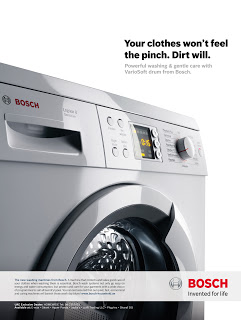
I just read a print ad for the new Lincoln Motor Company (New?) and I’m perplexed. The first part of the message is a call to non-action. It reads “Does the world need another luxury car? Not really.” Okay, so that’s out of the way. (And, with global carbon dioxide levels up 41%, I must agree.)

The next message suggests that the Lincoln brand was created not to meet the need of consumers but rather to suit Edsel Ford. The word Edsel is synonymous with utter failure BTW, but maybe the ad will change all that. The first Lincoln was created by Edsel Ford as an intrepid vacation auto — to please his own personal sensibility.  

Then the copy moves on to share some historical firsts, e.g., a shifter not on the column, push button transmission (always good to talk about the past when positioning for the future) and then discusses “engineered humanity” that puts the driver first. Huh?    

Finally there is some buried discussion about the new MKZ and a strong finish about concierge service — as if our heads weren’t spinning enough.

The tidy little bow at the end is “Call it luxury. Call it engineering humanity. We’re calling it the Lincoln Motor Company. A completely reinvented wheel, with you at its center.”  

Wheel as the company metaphor…really?  Ah, the craft. Peace.

Life and Taxes.

0

I do not agree with some people (David Brooks for instance) who believe closing tax loopholes and raising tax rates will squelch growth.  The economic theory makes sense but it doesn’t take into consideration human nature. Capitalists — and we’re all capitalists to a degree — like the positive side of the ledger sheet. It sets us a tingle. If the harsh reality sets in that loop holes are reduced and higher taxes legislated, capitalists will go through the 5 stages of grieving, then start to focus on da monies. There may be some hiring stasis, sell-offs and contraction, but the prize will always be new earnings.  And revival will follow. Our taste for growth is just too strong.

Everyone should ask how we are spending the country’s money. Everyone should ask where we send our money overseas. Secessionists have the right to want to secede. That’s freedom.  But don’t confuse freedom and capitalism.  I am no economist, but in this land whether the currency is wampum, beaver pelts, greenbacks or stock shares, the trading rules may change, but growth is the vitality that moves us forward. There is nothing more natural than growth.  Peace!