Tool. Or Not a Tool.

0

Just reading Abigail Posner’s bio on LinkedIn. It spoke of her brand and marketing approach connecting “data, people and humanity.”  Nice bracketing.  And earlier this week I was speaking to a brand strategist Kevin Perlmutter whose book Brand Desire delves into neuromarketing and emotional positioning for brands. An approach not dissimilar from that of pal Megan Kent, whose book Build an Irresistible Brand: Learn the 7 Brain-Friendly Branding® Drivers is a classic.

Both of these paths — one broad one focused — sparked a realization for me about my practice. Data, you see, is a tool. Technology another tool. And the study of humanity (through the limbic system or amygdala) analytical tools.  Strategy, on the other hand, is not a tool. Strategy is a plan. An ongoing plan with a particular goal. A strategy has a focus and success measures.  Tools definitely get you to strategy, but they are not the endgame.

Now, I’m not a “creative.” Nor a data analyst or technologist. Or Margaret Mead or Erik Erickson for that matter.  But I do know powerful, indelible brand ideas. I have a process (tool) and a framework (tool) but what I sell is strategy. The moneymaker.

Peace.


Brand Strategy Presentations.

0

Today’s post is on presenting the brand strategy. Presenting the strategy is something that shouldn’t be taken lightly. It’s the crescendo of all the work — the make-or-break moment.

If, during the presentation, you take too long, people get antsy. If you don’t set the right context, things can go off-track.  Luckily, my brand strategy framework results in a fairly simple presentation. I call my framework a “claim and proof” array.  One claim three proof planks.

The claim is the macro part of the brand strategy, a stand-in tagline that pays off the proof planks. But make no mistake, the proof planks build the brand. They are the money-makers. While the claim gets a good deal of the branding credit, it is the proof that does the convincing. The proofs organized into planks or buckets are the tangibles.  

Claim without proof is advertising. Claim with proof is branding.   

I left out a great deal of sausage making and to be honest, decision makers don’t need it. They need the boil-down of the thinking. In their language. In the consumers’ language. In the accountant’s language.  If you’ve done your homework, answers to the decision makers’ questions come easily. Then they are in control of the “buy” moment, while the sell moment is minimized.

Peace.


Truth in Life, Liberty and the Pursuit of Happiness.

0

The dissolution of truth and proof is hurting brand science.  Let me ‘splain. There was a time in American advertising when nationally broadcast TV commercials had to pass before lawyers in Network Television “Standards and Practices” departments.  If you couldn’t prove a claim, you couldn’t make it. It was a truth thing. Lesser media bodies were not so stringent, e.g., you could say stuff on local radio and print ads that weren’t particularly true and get away with it.

Fast forward to today and our current political environment where prevarication is the art of the day. Our president, for instance, often states that the inflation he inherited was the highest in the history of the United States. (Spoiler alert: I remember in the early 1980s running bank ads with CD rates at 18.5%.)  Saly, the truth today is whatever people say it is.  And that not only erodes national character, it makes marketing unbelievably hard.  

What’s The Idea? is a brand consultancy built upon creating brand positions and brand value on proof. Proof of what, you might ask?  Well, that’s where the strategy comes in — that’s what clients pay for. But recognize this, it is proof that makes a claim believable. Evidence convinces.

In the future, we will return to truth once again. Truth in politics and truth in advertising. But for today, those brands that delve into truth and proof will prosper even more. Because in an era of foggy, unsupported claims, the real truth sings like a Robert Plant lyric.

Peace.


The Idea To Have An Idea…

0

A mentor of mine, Dick Kerr, claimed to be the world’s highest paid copywriter in the 1980s — making more than a million dollars a year.

Dick’s famous corporate ad campaign for United Technologies was lauded as a wonderful, effective way to communicate shareholder value using simple words. Words not about elevators, jet engines, helicopters or air conditioners, just words about people and values. No pictures in this campaign, just clean type design and cleaner copy.

Dick was a bit of a drinker. He once offered me counsel saying “The idea to have an idea is sometimes more important than the idea itself.” Huh? Did I mention drinker?

Anyway, my company What’s The Idea? took this tipple-inspired phraseology to heart. My job is not to get clients nodding to a wealth of ideas. It is to get buy-in to one idea. That idea will frame all arguments to purchase. And those arguments are arrayed in three proof planks. All supporting he brand idea.  

How does one get to the brand idea? Ahh, the $64 million dollar question. Well, you start with lots of other ideas. Ideas that speak the consumers language. Ideas that lead to consumer preference. Ideas that resonate with corporate decisionmakers and shareholders. H.K. McCann called these truths.  But make no mistake the best brands are built on the clarion call of a single strategic idea.

Campaigns come and go, a powerful brand idea is indelible.

Peace.


Whistles.

0

Mark Pollard likes to say “Strategy is your words.” He’s right, words are crucial.  But where the rubber meets the road is in brand strategy operations.

A lot of brand strategy ends at the ad campaign. Or the tagline. Or promotion. That’s why the life expectancy a brand strategy is 2.5 years. (I made up that data point, feel free to prove me wrong.)  A brand strategy is often no more than a guide to drive an expensive tactic or two. That is, unless it’s operationalized.  And sometimes a brand strategy never gets out of the agency creative department. Nice bells. Nice whistles. Often a compromised brand strategy.

An architect once showed me an elevation for a home renovation. It’s looked good on paper but was not physically buildable. Brand strategy isn’t worth the paper/PPT unless it’s built out. Unless it is operationalized.

A well-designed, well articulate brand strategy comprises deeds, systems, measurable activities and tactics.  All supporting and delivering the strategy. As FCB’s Marilyn Laurie used to say, things that make deposits in the “brand bank.”

Strategy is a great first step. But without operations it’s just whistling.

Peace!


Intentional Brands.

0

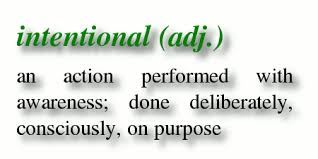
If I hear someone say the “intentional” again in a brand strategy meeting I am going to lose my cookies. It’s the most overused word in the space. The other day someone was talking about the word and was able to articulate it in ways I haven’t. In fact, it caused me to invent a new word. Actional. Okay, so it’s not a new word, it’s just underused.

The difference between intentional and actional is the former hasn’t happened.  It’s just meant to happen. It’s just talk.  As in Make America Great Again.  A nice intentional saying, but the actions that result are, well, you know…

It seems anyone who is intentional is a good talker but, perhaps, not such a good doer.

I wrote a couple of days a post entitle “Talk about it or be about it.” Same pew. Years ago I used to argue that people who claimed to be authentic, probably weren’t. Or, car salespeople who said trust me, protested too much.  

So don’t tell everyone your brand is intentional, just be and do the strategy. Find a claim you want to plant your flag on and act on the three ways you earn or prove it.

A life lesson I learned early on was that talking about yourself is boring. Being yourself, that’s a good beginning.

Good words for brand strategists.  Lose the work!

Peace


Legally Addictive Foods.

0

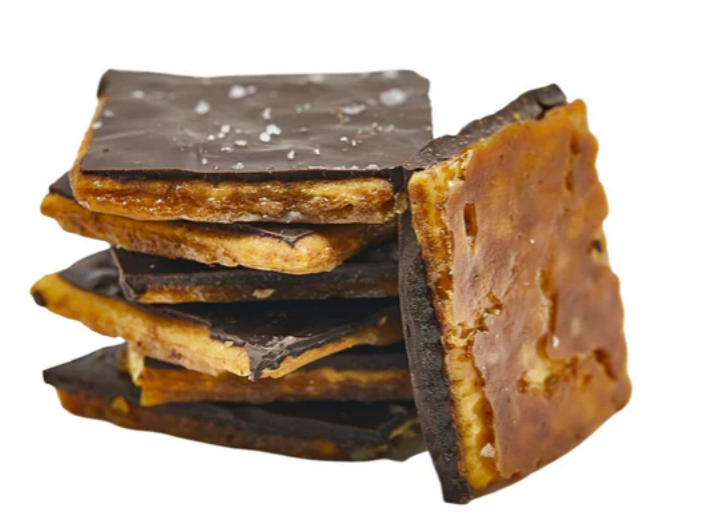
Legally Addictive is a startup in the food manufacturing space located in Asheville, NC. The founders are an ex-TV producer and a NYC marketing exec. The company is off to a great start creating and selling delectable cookie/crackers slathered in chocolate and other confections. In addition to offering a tasty, dare I say, addictive product they’re starting with a great brand name. Legally Addictive passes the Is-Does test, that is, you know what the product is and what the product does. Thirdly, they have great packaging, wonderful design and a unique color palette. Whoever the art director is hitting on all cylinders.

From a blocking and tackling standpoint the company also excels. Distribution today includes airports, Whole Foods, various specialty stores, and direct-to-consumer. Food startups can be either the hardest or easiest business to be in. Signing up retail partners is a bitch. Getting shelf space in grocery, convenience, and drug is ridiculous and don’t get me started on shipping but with a category-disruptor and smashing taste, a product can almost sell itself. And that’s Legally Addictive’s story.

Another feather in the brand’s cap is these cookies are not, I repeat not, good for you. In a sea of better-for-you claimants in the food business these guys are nonapologetic. The only positive thing you can say health-wise is that rather than eat a half bag of Oreos, one might get away eating a couple of cookies and be sated.

There is clearly a market and demographic for indulgent sweets.  The product is not inexpensive so the targeting has to be right. Consumers who can, do and will eat less-than-healthy (Can we establish that as a category?) foods are often young and/or not well-heeled. Finding youngish consumers who are higher earners limits the target. But one that can make media placement more focused and less expensive.

Keep your eyes open for Legally Addictive cookies.  They are coming to a store near you.  

Peace.

Talk About It or Be About It.

0

A football player on a recent podcast offered up some sage advice. You can “Talk about it or be about it.”  This ladies and gentlemen, is a fundie of great branding. Don’t flood the airways and byways with commoditized claims — scorch the earth with deeds. Deeds not words.

Humans have always searched for truth. Fire burns. Projectiles harm. Being nice to people is better than being mean. Deeds. Not words. Good brand planning begins with actions not words. Evidence, not prose. While “strategy is your words,” to quote Mark Pollard, it is actions and proof that convince customers. That’s what should drive strategy…and builds brands.

Over the years I have interviewed thousands of consumers. I’ve printed out stacks and stacks of paper containing transcribed observations, feelings and opinions. But all I care about is evidence of value. Evidence of product superiority. It is the highlighted evidence buried in the transcripts that the drive brand strategy.

You can tell me Memorial Sloan Kettering has the best cancer care anywhere, but if you show me the statistics of how they treat the toughest cases, that’s proof.

Commodity claims are just that. Brains are desensitized to unsupported claims but they can process proof.

Peace.     


Proof and Drama.

0

Brand strategists like me know that the arrow to the heart of consumers is proof.  Make a claim then support it with proof. Not unsupported superlative.

A Geico radio ad I heard this morning rated Geico with 97% customer satisfaction. That’s proof. All the other stuff in the spot, mostly entertainment and Gecko-ness, was flah-flah-flah.  On one hand I applaud them. It’s a customer-facing proof point. On the other hand, it’s just data. And data alone has become, A.) not really believable and B.) boring. 

Copywriters and art directors once cared about boring. About drama. “Chat GPT, tell a 97% customer satisfaction story with drama.”  I fault the ad agency for this. And the creative directors. It’s lazy ad craft. Tell a dramatic and fun real customer sat. story then say, “Imagine 97 out of 100 people saying this about your product.”  Something.

Let’s find “proof” then deliver it in an exciting wrapper. 

Peace  


Organized Proof and The C-Suite.

0

C-level executives have been known to devalue brand strategy. Politely, they nod in presentations but deep down they view it as more of a marketing thing than a business thing.  “All altruism, no profit.” 

What’s the Idea? is 100% about making money for clients. Hard stop.  

Here’s how:

Let’s start with some framework background.  At What’s The Idea? brand strategy comprises one brand claim supported by three proof planks. The proof planks are organized to bring the brand story to life, both backward and forward. Proof is the secret sauce of a powerful brand strategy. Proof convinces people.  

And while a small proportion of What’s The Idea? brand claims might come off as altruistic, mark my words the executional planks proving the claim are hard-as-nails selling points. Think of the brand claim as the strategic packaging surrounding tangible slam-dunk reasons to buy. By themselves brand claims — which may never be seen by a consumer– are headline-like. Sometimes pithy, sometimes boring, they are ideally poetic and memorable. When CEO’s, CFOs and Chief Marketing Officers, people steeped in the business fundamentals, hear the claim, the feel it and they get it. It speaks to them. Especially when brought to life by the proof planks.

Proof sells. Organized proof is branding.   

Peace.